The Volta Aluminium Company Limited (VALCO) says it is now poised to enter a profit-making phase in 2026 after management claims it successfully lifted the Tema-based aluminium smelter from a loss-making position to break-even within its first year in office.
Speaking to journalists after a guided tour of the company’s operations in Tema, the Acting Chief Executive Officer, Dr. Robert Makila Sambian, said the company inherited a financially distressed operation when his team assumed responsibility.

He explained that VALCO had been operating far below its optimal capacity for years, a situation he said was linked to recurring challenges, particularly unstable and costly power supply, an issue that contributed to declining output even before the plant transitioned to full state control.
Dr Sambian noted that although the facility was established in the 1960s to produce 200,000 tonnes of primary aluminium annually and operated profitably for decades, capacity steadily declined towards the end of 2005 when the company’s former American owners exited.

He said the plant continued to run at reduced capacity under government ownership, and for the past one and a half decades, it remained stuck at about 23 per cent capacity, making it difficult for the company to meet its operational costs.
According to Dr Sambian, when management took office, their immediate target was to reverse the company’s losses by improving performance and strengthening operations.

He said by the end of 2025, within their first year of leadership, management had elevated VALCO from a loss-making institution to a break-even operation, describing the development as a major milestone the company had not seen in many years.
With the break-even target achieved, the CEO said the company is now shifting focus in 2026 toward moving beyond survival and positioning VALCO as a profit-making institution.

Dr Sambian said VALCO’s immediate operational strategy is to increase its output to support the profit agenda, with management aiming to raise operating capacity from 23 per cent to 40 per cent.
He explained that the path to achieving this target depends on fixing key support systems, including mobile equipment and other essential operational tools needed to sustain production.
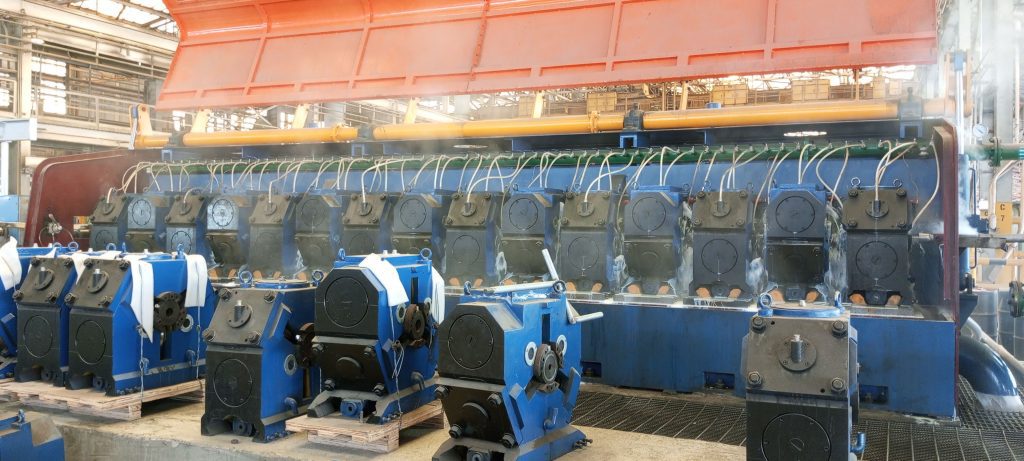
To support the ramp-up, he said the company has introduced a number of mobile interventions, including the injection of lift trucks, payloaders, tractors, tractor heads, dump trucks, melting furnaces, and other key equipment required for operational stability.
He said the interventions have already yielded results, with the company raising active pot operations from 114 to 122 and plans underway to gradually re-energise idle potlines to expand output.

He explained that VALCO currently has two potlines with a deployable capacity of 200 cells, adding that management intends to steadily bring additional idle cells back into operation.
The CEO also highlighted the company’s transition toward value addition as a critical part of the turnaround, noting that historically, VALCO primarily exported raw primary aluminium for downstream processing abroad.

He explained that under earlier ownership structures, the higher-value component of aluminium production was handled outside Ghana, meaning the country produced the raw material but did not capture the bigger economic value from finished aluminium products.
But with VALCO now fully state-owned, Dr Sambian said management is pushing a new approach that makes value addition and domestic industrial growth central to the company’s future.

VALCO’s renewed confidence comes at a time government is also pushing for major private investment to modernise the smelter.
In October 2025, government said it is actively seeking investors for a modernisation programme estimated at $2.3 billion in the short term, a move expected to support broader industrial expansion and strengthen Ghana’s aluminium value chain.

VALCO’s own modernisation framework also projects that expansion and retrofitting could increase output to 300,000 tonnes, aligning with the country’s broader integrated aluminium industry ambitions.
For Dr Sambian, the focus now is to consolidate the gains already made, strengthen production systems, and ensure that 2026 becomes the year VALCO moves firmly from break-even to sustained profitability.