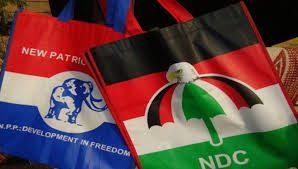
Managing Editor of the Insight newspaper, Kwesi Pratt Jnr, has cautioned against underestimating the New Patriotic Party (NPP), arguing that despite what he described as a decline in values, the party remains a significant force in Ghana’s political landscape and cannot be ignored.
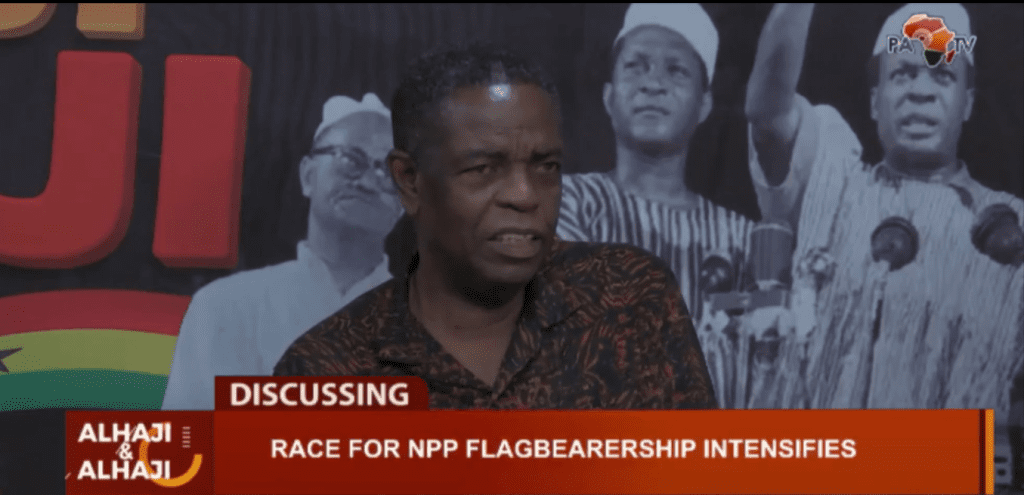
Speaking on Alhaji and Alhaji on Pan African Television, Pratt stressed that the NPP’s position in Parliament alone gives it continued relevance in national politics.
“The New Patriotic Party today is the only party represented in Parliament beyond the governing party, and therefore it has significance and has relevance,” he said.
While acknowledging that relevance, Pratt was blunt in his assessment of the party’s internal condition, stating his belief that the NPP has lost its ideological compass.
“I think that that party is dying. I believe that that party has lost its values,” he remarked, adding that some of its leaders have become “extremely reckless in their posturing.”
Despite these concerns, Pratt argued that the NPP will continue to play a critical role in Ghana’s politics over the next few years, urging political observers not to dismiss the party outright.
“For the next three years, that party will continue to play some crucial role in our politics, and it’s important to recognise that,” he noted.
Drawing on his long experience in Ghanaian politics, Pratt explained that elections are often less about endorsing preferred policies or personalities and more about expressing public dissatisfaction.
“Most times, elections are not about choosing the programme we prefer or the leadership we want; sometimes elections are about rejecting what we don’t like,” he said.
To illustrate the point, he recounted encounters on the campaign trail where voters openly expressed protest intentions, sometimes in extreme terms.
“People have told me that if you bring a mouse and pitch the mouse against this candidate, we will vote for the mouse to register our protest,” Pratt stated.
According to him, such protest voting means that unpopular leadership or poor political conduct can inadvertently elevate opponents, regardless of economic performance.
Pratt directed his strongest warning at those currently in government, stressing that political arrogance can easily erode public goodwill.
“One wrong statement at one wrong time can send you into opposition. I know Ghana politics,” he cautioned.
He argued that even strong economic indicators such as lower inflation, currency appreciation, or progress in debt management can be overshadowed by perceived disrespect or arrogance from public officials.
In a pointed example, Pratt expressed shock at a recent radio exchange in which a minister reportedly told a fellow panellist to “go back to school and learn English,” describing the remark as emblematic of conduct that can undermine an entire administration.
According to Pratt, such behaviour, if unchecked, risks alienating voters and undoing policy achievements, underscoring the need for humility and discipline in political leadership.