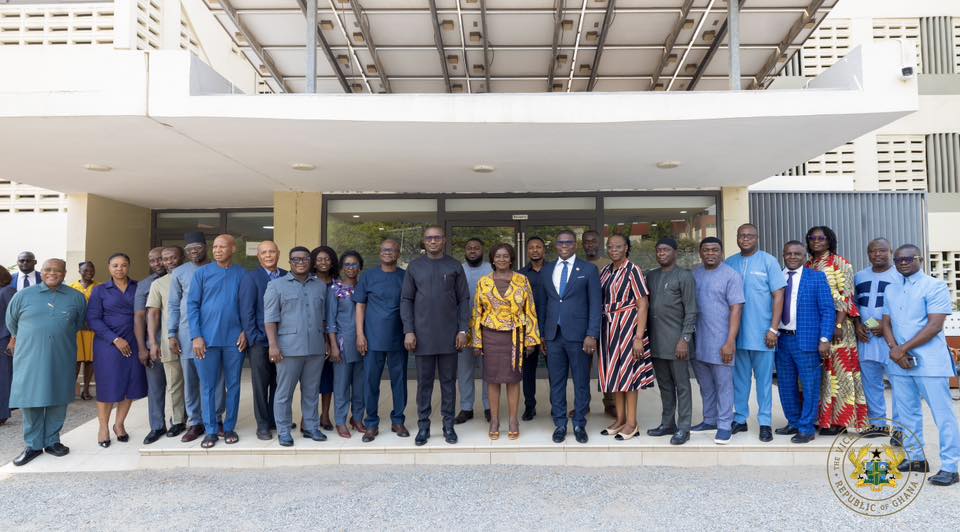
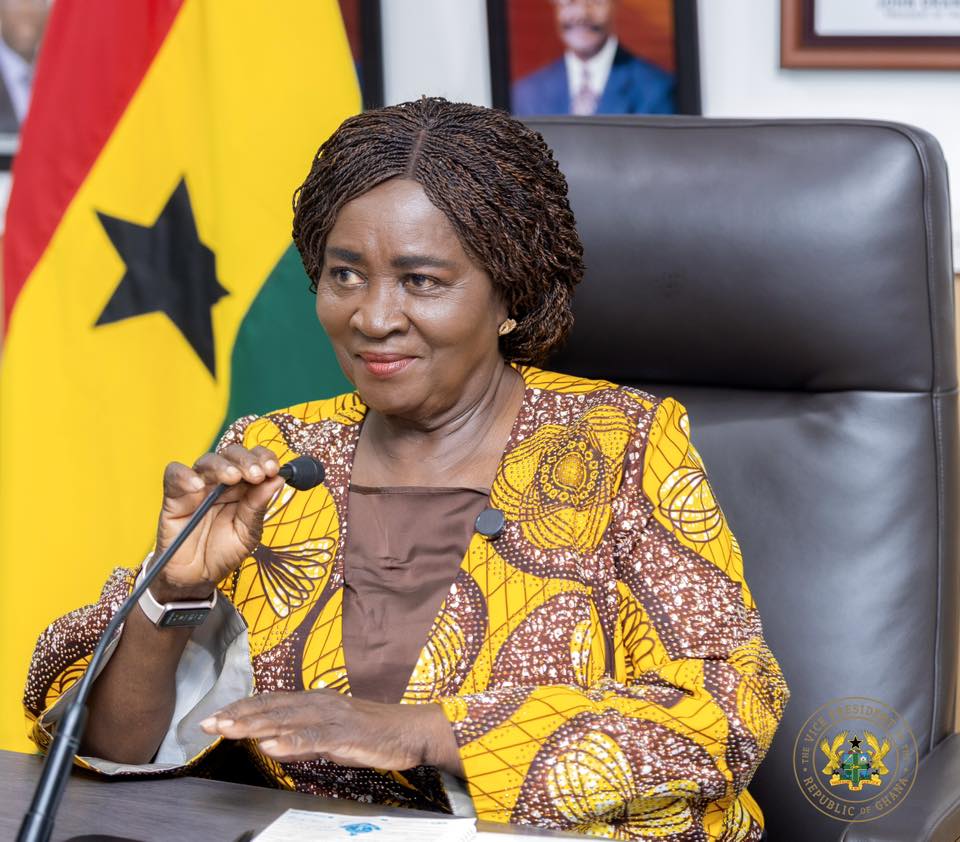
Vice President Professor Jane Naana Opoku-Agyemang has reaffirmed government’s commitment to delivering reliable, affordable, and sustainable energy for Ghanaians following a working visit to the Ministry of Energy and Green Transition.
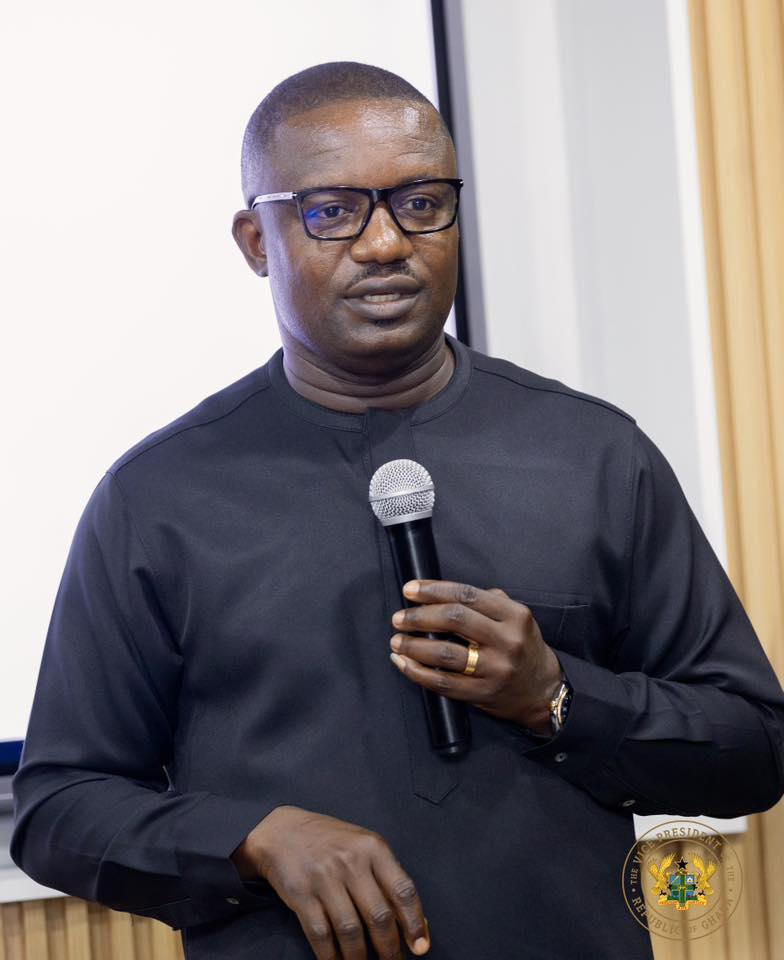
The visit, led by the Minister for Energy and Green Transition, Hon. Dr. John Abdulai Jinapor, provided the Vice President with a comprehensive briefing on the current state of the energy sector, ongoing reforms, and strategic interventions being implemented to restore efficiency, accountability, and long-term stability.
A major highlight of the briefing was decisive action taken to address procurement inefficiencies, particularly at the Electricity Company of Ghana (ECG). According to the Ministry, 347 ECG contracts were subjected to a value-for-money audit. As a result, 202 contracts, valued at US$227.6 million, £1.17 million, and €4.08 million have been terminated. The remaining 145 contracts are still under review and will be discontinued where necessary, underscoring government’s resolve to enforce transparency, fiscal discipline, and accountability across the sector.
Professor Opoku-Agyemang noted that these measures are critical in restoring public confidence and ensuring that scarce national resources are used responsibly.
The Vice President was also briefed on notable improvements in power generation and fuel supply. Ghana’s energy mix, she was told, is steadily shifting away from heavier fuels toward gas-based generation, a move expected to enhance sustainability, efficiency, and reliability in electricity delivery. Crude oil production from key fields, including Jubilee and Sankofa, is also showing signs of recovery, strengthening the country’s energy supply outlook.
One of the most significant developments highlighted during the visit was the resumption of crude oil processing at the Tema Oil Refinery (TOR). The restart of operations marks an important milestone in restoring Ghana’s national refining capacity. Processing volumes have increased considerably, signalling operational revival and renewed confidence in the refinery’s role within the energy value chain.
These gains, the Ministry explained, have been supported by improved procurement systems and strengthened cash-waterfall mechanisms, helping to stabilize the sector even as power demand continues to rise on the back of economic growth.
The Vice President was further updated on government’s strong push toward renewable energy and the green transition. Ongoing initiatives include the expansion of solar street lighting, deployment of solar-powered pumps to support agriculture, and the development of electric vehicle (EV) charging infrastructure. Efforts are also underway to reduce the cost of solar technologies to improve productivity, particularly in rural communities and the agricultural sector.
In her remarks, Professor Opoku-Agyemang commended the Minister, management, and staff of the Ministry of Energy and Green Transition and its 16 agencies for their dedication and professionalism, noting that the sector continues to grapple with legacy debts and deep-rooted structural challenges.
She acknowledged that the energy sector has, in the past, faced threats of power disruptions but said improved planning, discipline, and stakeholder engagement are now rebuilding confidence among investors and consumers.

The Vice President emphasized the need for long-term planning and the courage to review approaches that have not delivered desired results. She stressed the importance of re-strategizing where necessary to secure lasting solutions, describing energy security as a cornerstone of national development.
“Energy underpins industry, agriculture, and household livelihoods,” she noted, adding that government remains fully committed to practical and sustainable solutions that support economic growth and improve the quality of life for all Ghanaians.
Professor Opoku-Agyemang concluded by assuring the Ministry of government’s full support as it continues efforts to stabilize the energy sector, accelerate the green transition, and deliver dependable power to drive Ghana’s development agenda.