Aspiring National Vice Chairman of the National Democratic Congress (NDC), Dr. Edem Segbefia, has praised the transformative reforms undertaken by the government of President John Dramani Mahama in Ghana’s road sector, describing them as a major turnaround that has restored confidence among contractors, created jobs, and accelerated infrastructure development across the country.
Addressing NDC grassroots supporters during an interactive engagement in the Bono East Region, Dr. Segbefia said the Mahama administration inherited a road sector plagued by unpaid contractors, abandoned projects, deteriorating highways, and years of inadequate investment.
According to him, the government has since January 2025 reversed that trend through the flagship “Big Push” Infrastructure Programme, which has become the largest domestically financed road investment initiative in Ghana’s history.
“I bring you greetings and a message of hope from His Excellency President John Dramani Mahama. Before the NDC took office, the road sector was on its knees. Contractors were unpaid, projects had stalled, and farmers, traders, transport operators, and ordinary citizens suffered daily because of poor roads. Today, the narrative has changed. The Mahama administration has restored hope to the sector through the Big Push Infrastructure Programme,” Dr. Segbefia stated.
He noted that the government has committed GH¢50 billion from domestic resources within its first 16 months in office to finance road construction and rehabilitation, describing it as the largest investment ever made in Ghana’s road sector.
Dr. Segbefia explained that nearly 2,000 kilometres of roads are currently under construction simultaneously across all sixteen regions, while the introduction of a “pay-as-you-work” financing policy has ensured that projects continue without unnecessary delays.
“For the first time in many years, contractors have confidence in government because they are being paid for work done. As of April 2026, all contractor arrears had been cleared, and government does not owe any contractor working under the Big Push Programme a single cedi,” he said.
He revealed that government cleared almost GH¢10 billion in outstanding payments owed to road contractors, bringing an end to the cycle of abandoned projects that had slowed infrastructure development.
Dr. Segbefia also praised the administration’s commitment to transparency in public procurement, noting that 90.28 percent of the 1,441 road contracts awarded under the programme were procured through competitive tendering.
“Competitive procurement has restored confidence among contractors and development partners while ensuring value for money for the Ghanaian taxpayer,” he emphasized.
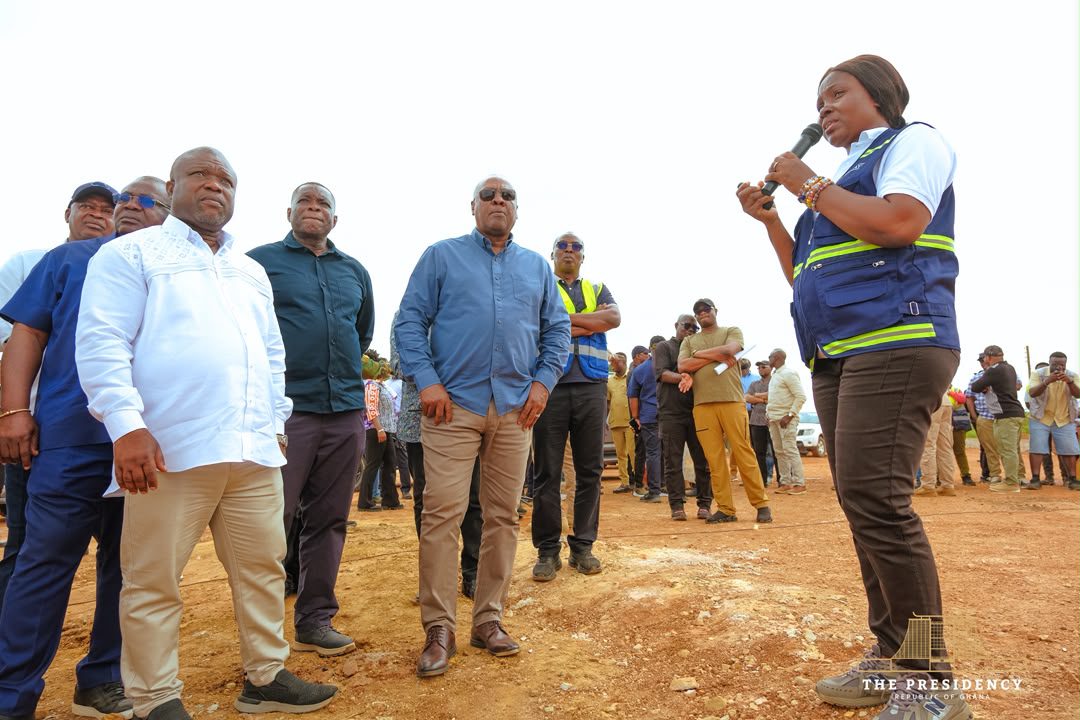
Highlighting some of the flagship projects, Dr. Segbefia pointed to the commencement of the 195-kilometre Wenchi–Bole–Sawla–Wa Road, which links the Bono, Savannah, and Upper West Regions.
According to him, the project is expected to reduce travel time between the affected communities from approximately six hours to less than three hours, lower vehicle operating costs by about 30 percent, and reduce road crashes by an estimated 45 percent.
He added that town roads in Bamboi, Banda, Nkwanta, and Tinga are also being upgraded under the same initiative.
Dr. Segbefia further disclosed that government has accelerated work on several inherited projects, including the 33.4-kilometre Ofankor–Nsawam Dual Carriageway, while other strategic road projects across the country continue to progress steadily.
“The focus is no longer limited to Accra and Kumasi. Communities across all sixteen regions are witnessing visible road construction. Our goal is to connect farming communities to markets and strengthen Ghana’s transport links with Burkina Faso and the wider Sahel region,” he explained.
The aspiring National Vice Chairman stressed that the road sector reforms are already producing significant economic and social benefits for ordinary Ghanaians.
He said improved roads are reducing transport costs, increasing farmers’ incomes by enabling faster movement of produce to market, lowering post-harvest losses, and improving access to education, healthcare, and commercial opportunities.
Dr. Segbefia further disclosed that construction of the Wenchi–Bole–Sawla–Wa Road alone is expected to create approximately 1,800 direct jobs and 4,500 indirect jobs, providing employment opportunities for thousands of young people.
“When people see graders, engineers, and asphalt in their communities, they see evidence that the NDC delivers on its promises. These projects are creating jobs, improving livelihoods, and restoring confidence in government,” he noted.
He said improved feeder roads and town roads are reconnecting previously isolated communities to district capitals, making it easier for traders, students, health workers, and businesses to move safely and efficiently.
According to Dr. Segbefia, the government’s infrastructure programme provides NDC grassroots supporters with tangible achievements they can confidently present to voters.
“The road sector that was broken and idle before 2025 has become Ghana’s biggest construction site. These investments are putting money into people’s pockets, making travel safer, reducing the cost of doing business, and creating opportunities for our youth. That is a story every branch executive can proudly tell,” he stated.
Calling on party faithful to remain united behind President Mahama’s development agenda, Dr. Segbefia urged grassroots members to continue supporting government policies that are transforming communities across the country.
“Comrades, these reforms matter because they mean fewer accidents, lower transport costs, faster movement of goods and people, more jobs, and stronger local economies. When roads work, the economy works, and the ordinary Ghanaian benefits.
Let us remain patient, united, and committed to supporting the government as it delivers on the promises we made to the people. Together, we will build a stronger Ghana and together we will share in the benefits of that progress,” he concluded.
Story: Patrick Asford Boadu