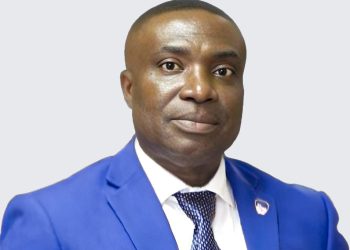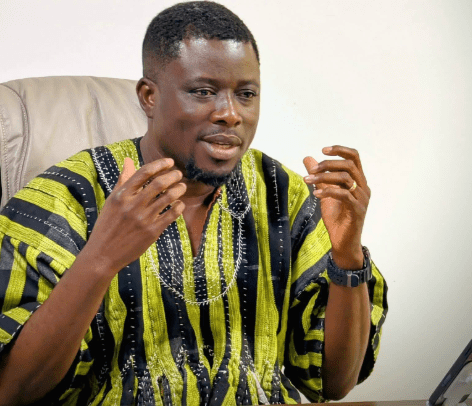
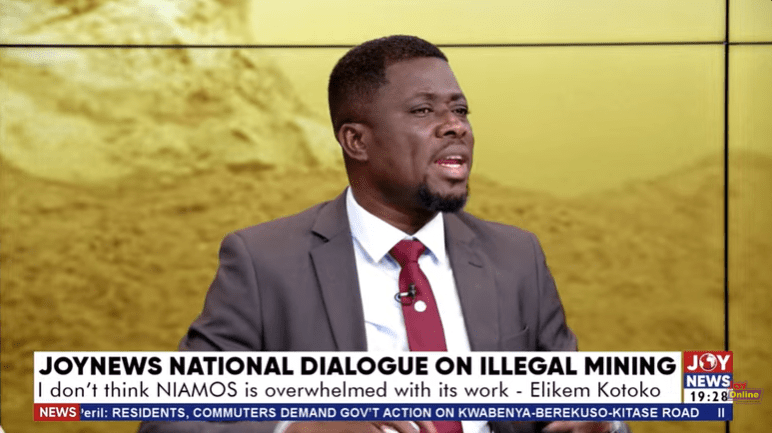
Deputy Chief Executive Officer of the Forestry Commission, Elikem Kotoko, has thrown his weight behind intensified national efforts to combat illegal mining, warning that the environmental destruction caused by galamsey poses a direct threat to the future of every Ghanaian.
Speaking on the JoyNews National Dialogue on Illegal Mining, Mr. Kotoko expressed confidence in President John Dramani Mahama’s commitment to confronting the crisis, insisting that the fight against environmental degradation must be pursued without fear or favour.
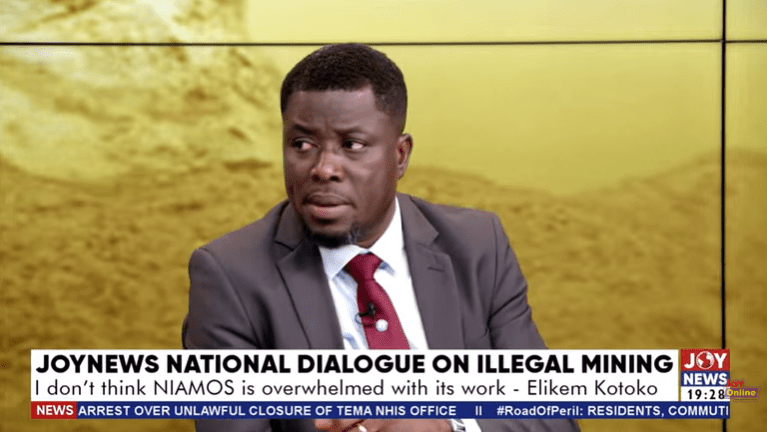
“Right is right and wrong is just wrong,” he said, adding that under no circumstances should there be justification for activities that degrade the environment or threaten the country’s survival.
His comments come in the wake of growing public outrage following investigative revelations and renewed scrutiny of enforcement agencies and state actors alleged to be complicit in illegal mining activities.
Mr. Kotoko noted that government had been engaged in high-level deliberations, including an emergency Cabinet meeting, and indicated that action could follow once documentary evidence has been formally submitted to the appropriate authorities.
He suggested that while interdictions are not automatic, they may become necessary where there is risk of interference with investigations.
“When the process begins fully, I will not be surprised at what steps are taken,” he said, cautioning against prematurely undermining decisions that may soon be announced.
The Deputy CEO acknowledged that enforcement efforts must go beyond forest reserves to cover all lands affected by illegal activity.
“There are two parties involved. Those who engage in the illegality, and the state actors who must show the willingness to confront it,” he noted.
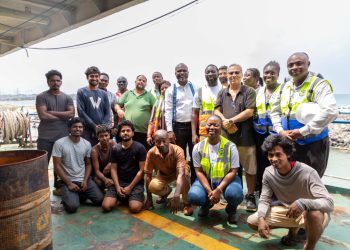
He called for stronger coordination among agencies, including the National Anti-Illegal Mining Operations Secretariat (NAIMOS) and the Blue Water Guards, emphasizing that enforcement must sometimes involve decisive force to deter offenders.
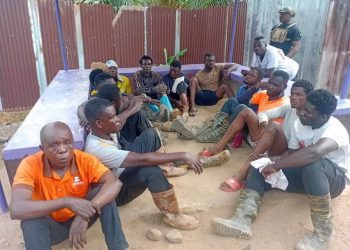
Mr. Kotoko revealed that from January to date, numerous arrests have been made but stressed that arrests alone are insufficient.
“What we need now is effective prosecution,” he said, urging deeper collaboration with the Attorney General’s Department to ensure that cases lead to meaningful legal consequences.
He referenced recent judicial reforms, including extended court hours and increased court capacity, as signs that the judiciary is also preparing to support the anti-galamsey effort.
Beyond enforcement, Mr. Kotoko delivered a sobering message about the long-term impact of environmental degradation. He warned that indifference today could result in irreversible damage to future generations, including health complications, deformities, lost economic opportunities, and diminished quality of life.
“You may think it is not happening in your neighbourhoods today. But in a decade or two, you may see the consequences,” he said.
He cautioned against treating the issue as distant or localized, stressing that polluted water bodies and destroyed ecosystems affect everyone: “Nobody should say this is not near me. It concerns all of us.”
While acknowledging that the scale of destruction will take time to reverse, Mr. Kotoko maintained that the fight against illegal mining requires collective national resolve.
“It is not for the President alone. It is for government and for the people of Ghana,” he said.
He further noted the dangers faced by enforcement officers, pointing out that security operatives have lost lives in the line of duty and that operations often require careful reconnaissance to avoid ambushes.
Illegal mining, he concluded, is no longer merely an environmental concern but a national survival issue requiring coordinated action, effective prosecution, and sustained political will.