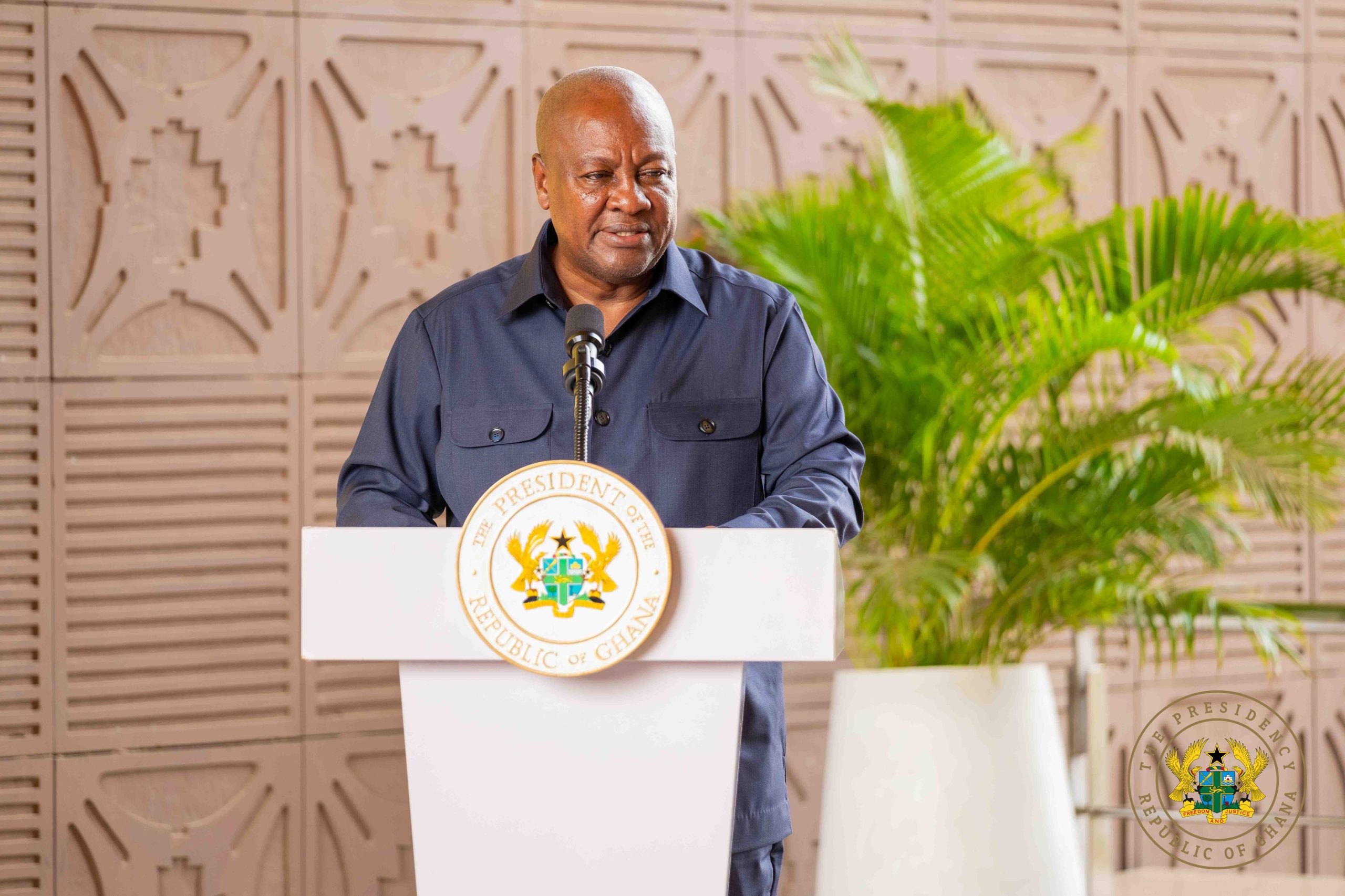
President John Dramani Mahama has announced the establishment of a GH¢1 billion Bawku Restoration Fund, to be disbursed over a three-year period to support development in six districts affected by the protracted Bawku conflict.
The fund will finance the construction and rehabilitation of roads, health and educational facilities, irrigation dams, and income-generating projects, as part of efforts to restore livelihoods and promote long-term stability in the area.
The Minister for Finance will serve as Chair of the implementation committee, overseeing the disbursement and accountability of the fund.
Major Infrastructure and Agricultural Investments
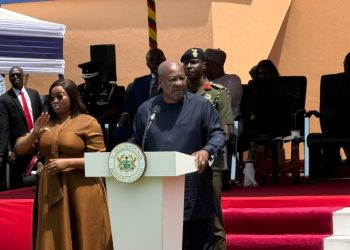
Addressing chiefs and stakeholders from the Upper East Regional House of Chiefs at the Jubilee House when they paid a courtesy call on him, President Mahama outlined a series of major development initiatives for the Upper East Region, including plans to construct a first-class road linking the Upper East and Upper West regions through Navrongo and Tumu to Wa.
The project will be undertaken under the government’s flagship Big Push programme to accelerate infrastructure development.
In the agricultural sector, the President announced the introduction of a new high-flesh tomato variety suitable for processing, alongside plans to revive the Pwalugu Tomato Factory to support farmers, reduce post-harvest losses, and boost agro-industrialisation.
On energy and irrigation, President Mahama disclosed that government is exploring a phased approach to the Pwalugu Multi-Purpose Dam, a hybrid hydro-solar project expected to generate over 100 megawatts of power.
The project will also bring at least 10,000 hectares of land under irrigation and serve as a critical flood control mechanism for communities along the White Volta Basin.
The President further confirmed progress on the proposed Bolgatanga Airport, following parliamentary approval of an airport infrastructure development levy, and assured traditional authorities of continued investments in water supply and rural electrification, largely funded through domestic resources.
Commitment to Chiefs’ Welfare and Accountability
President Mahama acknowledged the personal sacrifices chiefs make in caring for their people and pledged continued collaboration with traditional authorities. He assured them of gradual improvements in their allowances as the economy stabilises and grows.
He also announced plans to roll out a nationwide Government Accountability Series, which will see the President and his team visit all 16 regions to inspect development projects and engage chiefs and stakeholders in open dialogue. Similar accountability engagements, he said, will be replicated at the district level.
“We will work closely with you as custodians of our culture and partners in development,” President Mahama assured.
Story: Patrick Asford Boadu