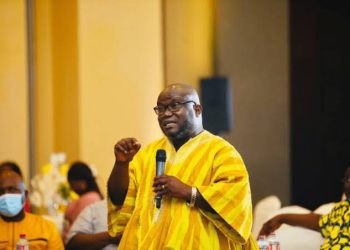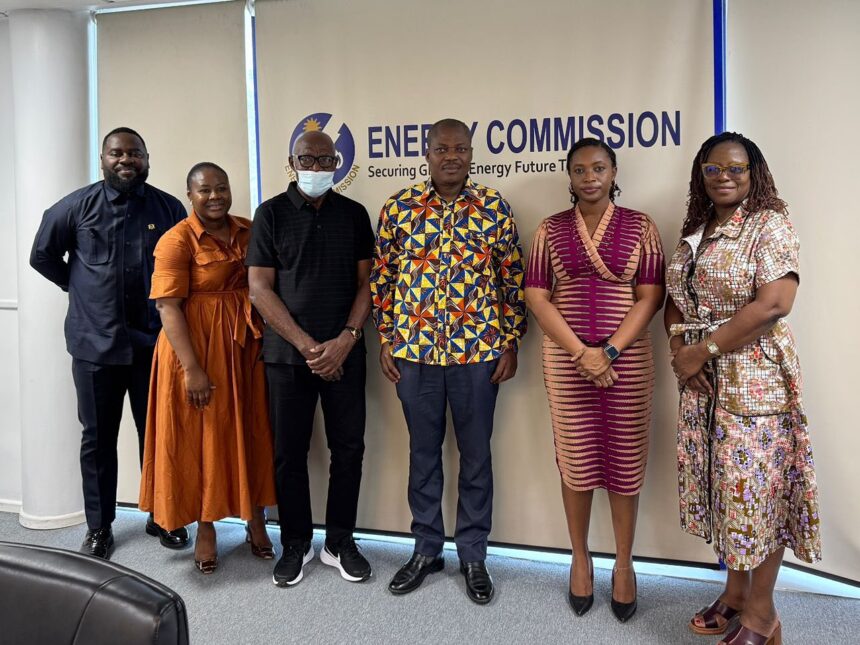
The Energy Commission is poised to embark on what its leadership describes as a “sprinter-pace” transformation under the stewardship of Board Chairman Prof. John G. Gatsi and Acting Executive Secretary Adwoa Serwaa Bondzie.
The renewed leadership has outlined an ambitious reform agenda aimed at restoring public confidence in the Commission, strengthening corporate governance and ethical standards, diversifying revenue streams, and expanding the institution’s national footprint.
As part of its decentralisation drive, the Commission plans to extend its physical presence across the country. The expansion will begin with the establishment of an office in Ho in the Volta Region, followed by additional offices in the Upper West, Savanna, Ashanti, and Western Regions.
According to the Board Chairman, the Ho office is expected to be officially inaugurated next month, while the remaining offices in Wa, Kumasi, Takoradi, and Damongo are projected to become operational before the end of March.
The expansion is expected to enhance regulatory oversight, improve service delivery, and bring the Commission’s operations closer to stakeholders nationwide.
Under Prof. Gatsi’s leadership, the Commission also intends to reinforce its regulatory mandate, with particular focus on renewable energy and electric vehicle (EV) development.
Plans are underway to regulate and expand EV charging infrastructure across the country to support the growing adoption of electric vehicles and promote sustainable energy transitions.
The Commission is also intensifying port monitoring activities to enforce compliance with standards governing the importation and use of electrical wiring, appliances, and renewable energy products. In addition, public education campaigns on energy efficiency and conservation are expected to be scaled up.
Within a five-month period between August and December last year, the Commission invested a substantial portion of its internally generated funds, yielding notable returns. The move reflects a strategy aimed at strengthening financial sustainability while enhancing operational capacity.
The leadership says these reforms collectively signal a deliberate effort to reposition the Energy Commission as a proactive, efficient, and forward-looking regulator capable of responding to Ghana’s evolving energy landscape.
Story by: Henry George Martinson