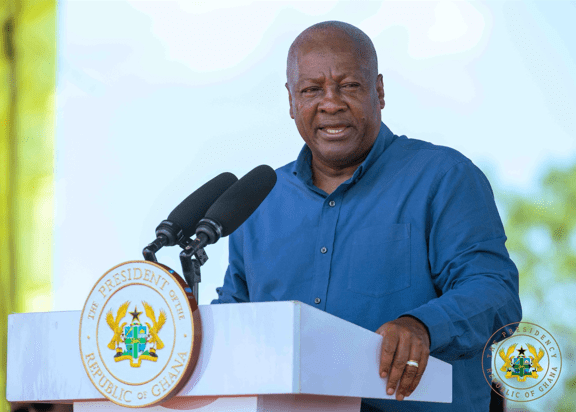
President John Dramani Mahama has reinforced his pledge that no Ghanaian will be left behind in accessing healthcare, highlighting a new support layer under the Free Primary Healthcare Programme to cover advanced treatments, including dialysis for kidney patients.
Speaking at the official launch of the programme, the President explained that the initiative is designed to work alongside the National Health Insurance Scheme (NHIS) to ensure continuous care from early diagnosis to advanced treatment.
According to him, patients diagnosed with conditions such as hypertension or diabetes at the primary healthcare level will be referred to district hospitals under the NHIS system for further treatment.
However, in cases where specialised care is required, particularly for advanced conditions like kidney failure, patients will be supported under the Ghana Medical Trust Fund, also known as Mahama Cares.
“If your illness is advanced and you need dialysis, you will be referred to the Ghana Medical Trust Fund, and you can access dialysis free of charge,” he stated.
President Mahama said the intervention is part of a broader strategy to tackle the rising burden of non-communicable diseases (NCDs) in Ghana.
He noted that conditions such as hypertension, stroke, cardiovascular diseases, cancers, and kidney failure have become the leading causes of illness due to changing lifestyles.
“Non-communicable diseases have become the heaviest disease burden in Ghana,” he said, stressing the urgent need for preventive measures.
The President explained that a key component of the programme will focus on public education, encouraging Ghanaians to adopt healthier lifestyles to reduce their risk of developing such conditions.
This, he said, will include guidance on diet, physical activity, and general health practices, with services extended to communities to promote early detection and prevention.
“We are trying to prevent these diseases before they become complicated,” he emphasised.
The Free Primary Healthcare Programme is expected to strengthen Ghana’s healthcare system by prioritising early diagnosis, preventive care, and access to specialised treatment, particularly for vulnerable populations.