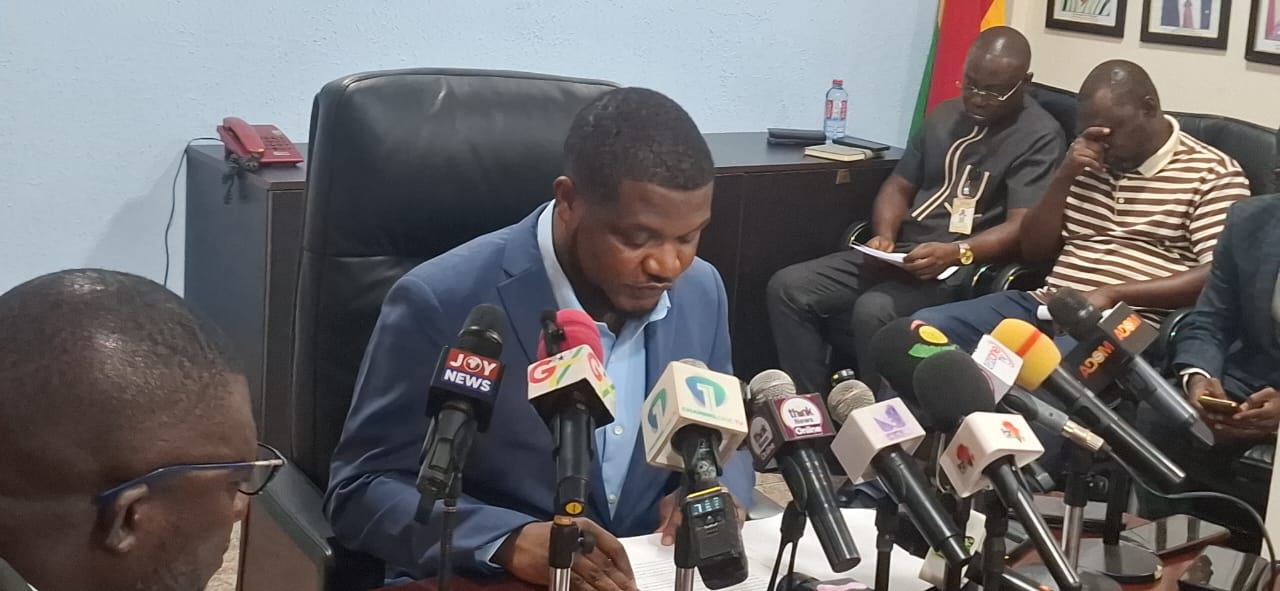
Following the recent announcement by the government to revoke the mining leases of Adamus Resources Limited, the Minerals Commission has provided a comprehensive breakdown of the illegalities that prompted the action.
The Commission clarified that the decision to terminate the Akango, Salman, and Nkroful leases was an evidence-based measure to halt “systematic and flagrant” breaches of Ghana’s mining laws.
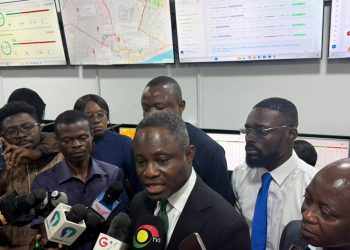
Isaac Andrews Tandoh, Chief Executive Officer of the Commission explained that a routine inspection by the Inspectorate Division established that the company had unlawfully assigned portions of its mineral rights to third parties. This action was taken without prior ministerial consent, representing a direct violation of Section 14 of the Minerals and Mining Act, 2006.
The investigations revealed that active mining operations were being conducted at the Akango and Salman concessions using heavy machineryincluding excavators and bulldozers without approved operating plans or permits. Of particular concern to the Commission was the involvement of foreign nationals in unauthorized activities.
“Foreign nationals, especially Chinese nationals, were engaged in illegal mining activities at a site located several kilometers from the infrastructure with no access to the company’s processing plant,” Tandoh stated.
The Commission described the operations as environmentally destructive and substandard, citing significant land disturbance and the risk of water contamination through unregulated chemical pollutants.
While regulatory frameworks typically allow for a notice period to remedy breaches, the Commission argued that immediate revocation was justified because the public interest and environmental safety demanded “urgent action” against deliberate illegalities.
The CEO further noted that the revocation serves as a precedent for the industry, asserting that “illegality will not be disguised as investments.” He confirmed that the Commission is collaborating with the Attorney General to pursue criminal charges against the company’s directors under the Minerals and Mining Amendment Act, 2019.
In addition to the enforcement update, the Commission addressed the ongoing transition toward indigenous participation in the sector. Under the Local Content and Local Participation Regulations, contract mining for surface operations is now reserved for Ghanaian-owned companies.
Tandoh emphasized that this is not an “exclusionary policy” but a strategy to ensure “full beneficiation of our mineral resource,” noting that the majority of multinational operators in Ghana have already complied with these standards.
The Minerals Commission concluded by reiterating its role as a vigilant regulator, warning that any company, domestic or international, acting with impunity or endangering the nation’s land and water will face the full rigors of the law.
Story By: Eric Boateng