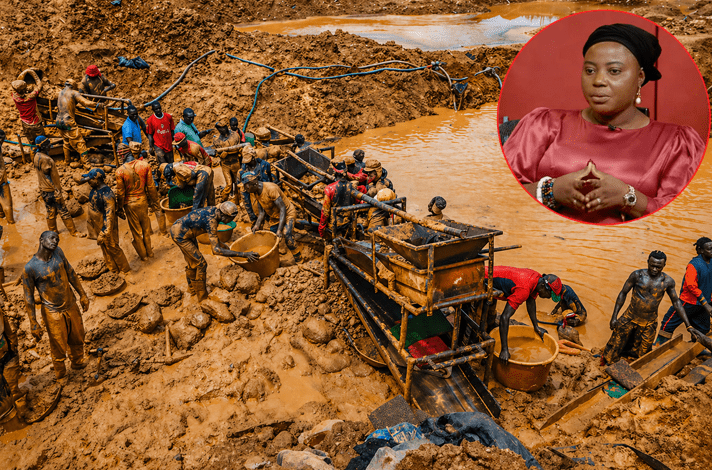
The National Coordinator of the Responsible Cooperative Mining and Skills Development Programme (rCOMSDEP), Ama Mawusi Mawuenyefia, has called for urgent and decisive national action to tackle illegal mining, warning that galamsey has become a deeply entrenched crisis that can only be addressed through a bold and coordinated strategy.
She described illegal mining as a persistent threat to Ghana’s environment, economy, and public health, stressing that the problem requires more than fragmented interventions.
“The issue of galamsey is a cancer that has come to stay with us,” she said, emphasising the need for sustained and comprehensive action.
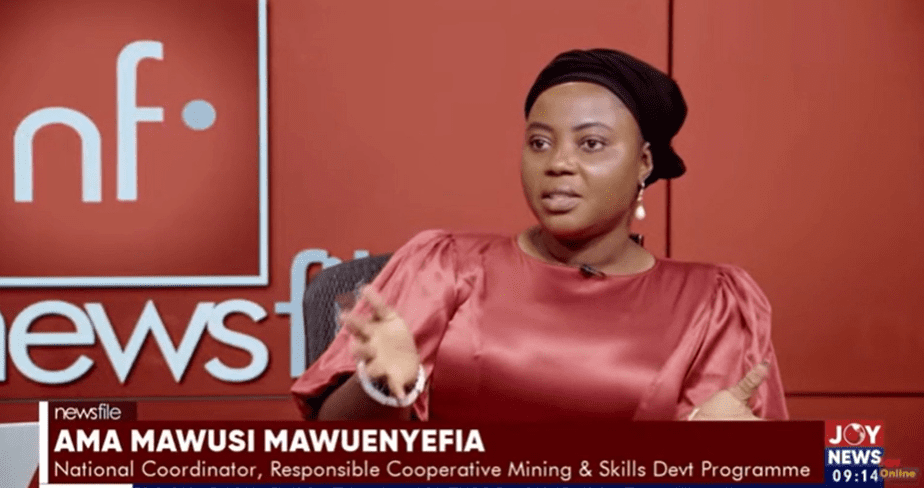
According to her, government has made significant progress over the past year by shifting from reactive measures to a more structured and holistic approach aimed at addressing the root causes of the problem.
She explained that authorities first undertook a thorough assessment of the drivers of illegal mining, identifying a complex mix of economic pressures, rising global gold prices, and in some cases, outright greed.
“At the heart of this is greed, but you also recognise that people are looking for livelihood opportunities,” she noted, adding that the surge in gold prices has further intensified illegal mining activities.
The Coordinator stressed that any effective response must integrate regulation, enforcement, livelihood support, and environmental restoration, rather than relying on isolated or short-term solutions.
As part of this approach, she revealed that government has undertaken a comprehensive review of the Minerals and Mining Act and related policies, engaging stakeholders across the country to identify gaps and strengthen the legal framework.
However, she cautioned that the challenge goes beyond legislation, pointing to weak enforcement as a critical issue.
To address this, she highlighted efforts to strengthen coordination among security agencies, including the police, military, immigration, and national security, to ensure intelligence-led operations and more effective enforcement.
She noted that this integrated approach is designed to replace past reliance on loosely structured task forces, which often delivered limited results.
Beyond enforcement, the Coordinator underscored the importance of formalising small-scale mining through cooperative models that provide structure, oversight, and support for miners.
Under the rCOMSDEP initiative, illegal miners are being encouraged to transition into regulated operations through access to training, logistics, and institutional support.
“When you formalise the trade, you take them away from the illegalities,” she explained.
She also pointed to ongoing environmental rehabilitation efforts, including initiatives aimed at restoring polluted water bodies and reclaiming degraded lands, as critical components of the broader strategy.
Ama Mawusi Mawuenyefia maintained that tackling galamsey effectively will require sustained national commitment that balances enforcement with economic opportunity and environmental protection.
“At the end of the day, the approach needs to be holistic,” she stressed.