President John Dramani Mahama has raised concerns over growing challenges confronting the global health system, warning that declining international support for healthcare programmes could have devastating consequences for developing countries.
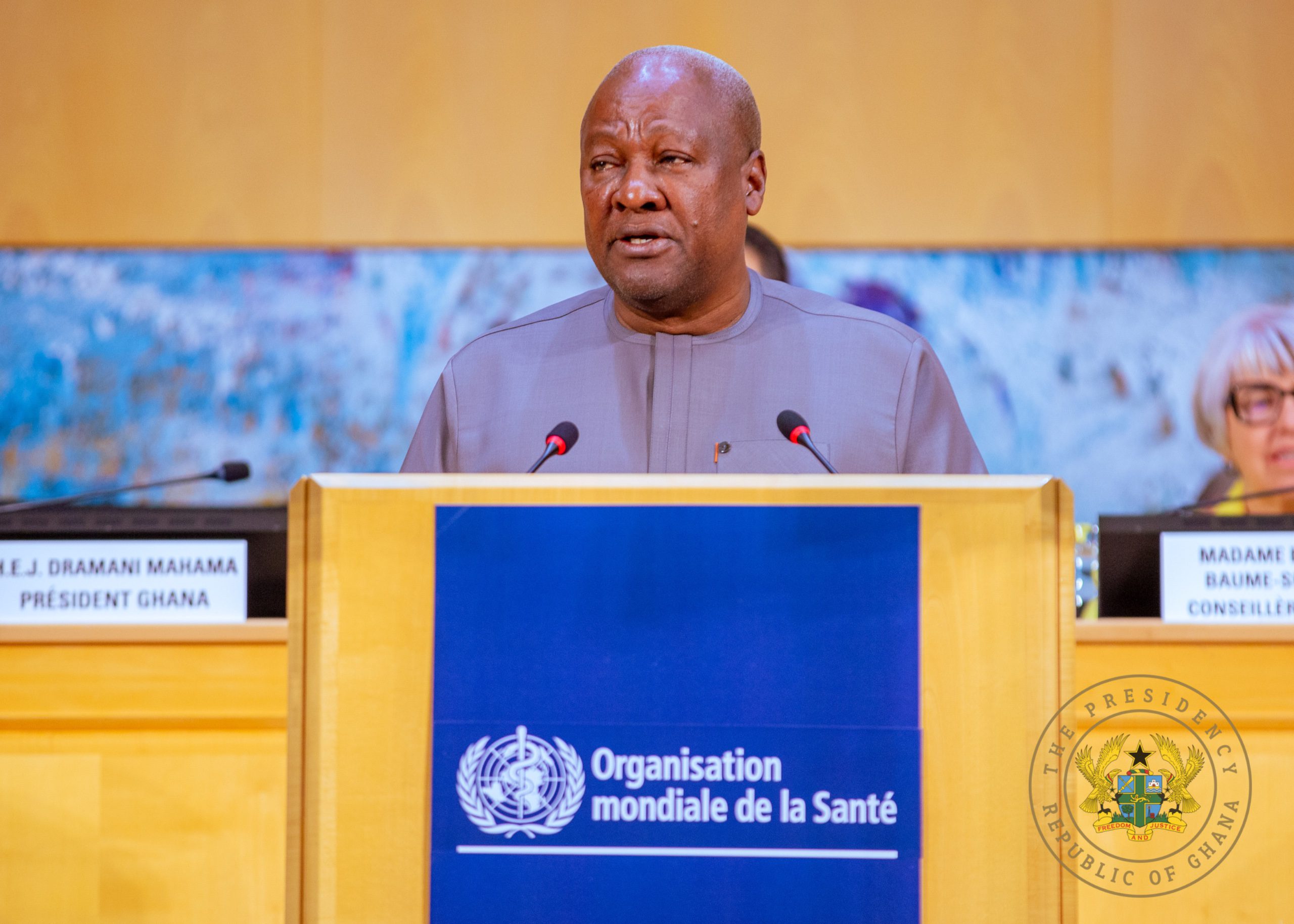
Speaking at the 79th World Health Assembly in Geneva organised by the World Health Organization, President Mahama said the global health sector was currently facing significant uncertainty due to cuts in humanitarian assistance and overseas development support.
“We are meeting at a time when the global health system is facing uncertainty. Humanitarian assistance is declining, overseas development support is being reduced, and major international partners are withdrawing funding from health programmes,” he stated.
The President noted that the WHO itself had been affected by funding reductions following the withdrawal of support from the United States, leading to programme cuts and staff retrenchments.
“Even the World Health Organization has not been spared. The withdrawal of support from the United States has led to programme reductions and staff retrenchments,” he added.
President Mahama disclosed that Ghana lost approximately 78 million dollars following the closure of USAID-supported programmes, affecting critical healthcare services including malaria interventions, maternal and child health, nutrition programmes, HIV/AIDS treatment, testing, and the supply of antiretroviral medicines.
“In Ghana, we lost about 78 million dollars following the closure of USAID programmes. This affected malaria interventions, maternal and child health, nutrition programmes, HIV/AIDS treatment, testing, and the delivery of antiretroviral medicines,” he said.
According to the President, similar developments were unfolding across Africa. He cited South Africa, where the withdrawal of PEPFAR support disrupted HIV treatment and affected the operations of many clinics.
“If these trends continue, millions of preventable deaths could occur, and poverty levels could worsen across many developing countries,” President Mahama warned.
The President explained that the worsening global health situation informed the convening of the African Health Sovereignty Conference, known as the “Accra Reset,” in August 2025.
He said the initiative was aimed at building resilient and self-sustaining healthcare systems across Africa rather than relying heavily on foreign donor support.
“The purpose of the Accra Reset Initiative is not to lament declining donor support, but to build systems that are able to sustain themselves,” he stressed.
President Mahama argued that the old model of dependency was no longer sustainable and called on African governments to take responsibility for financing and strengthening healthcare delivery systems on the continent.
“African governments must take responsibility for financing and strengthening healthcare delivery on the continent,” he stated.
He further emphasized that healthcare expenditure should be viewed as a strategic investment directly linked to economic growth and national development.
President Mahama’s remarks formed part of broader discussions at the Assembly on reforming the global health architecture and strengthening healthcare resilience in developing countries.
Story: Patrick Asford Boadu