The Bank of Ghana has warned that escalating global tensions and rising energy prices are creating fresh risks for Ghana’s economy, despite significant gains in macroeconomic stability and investor confidence in recent months.
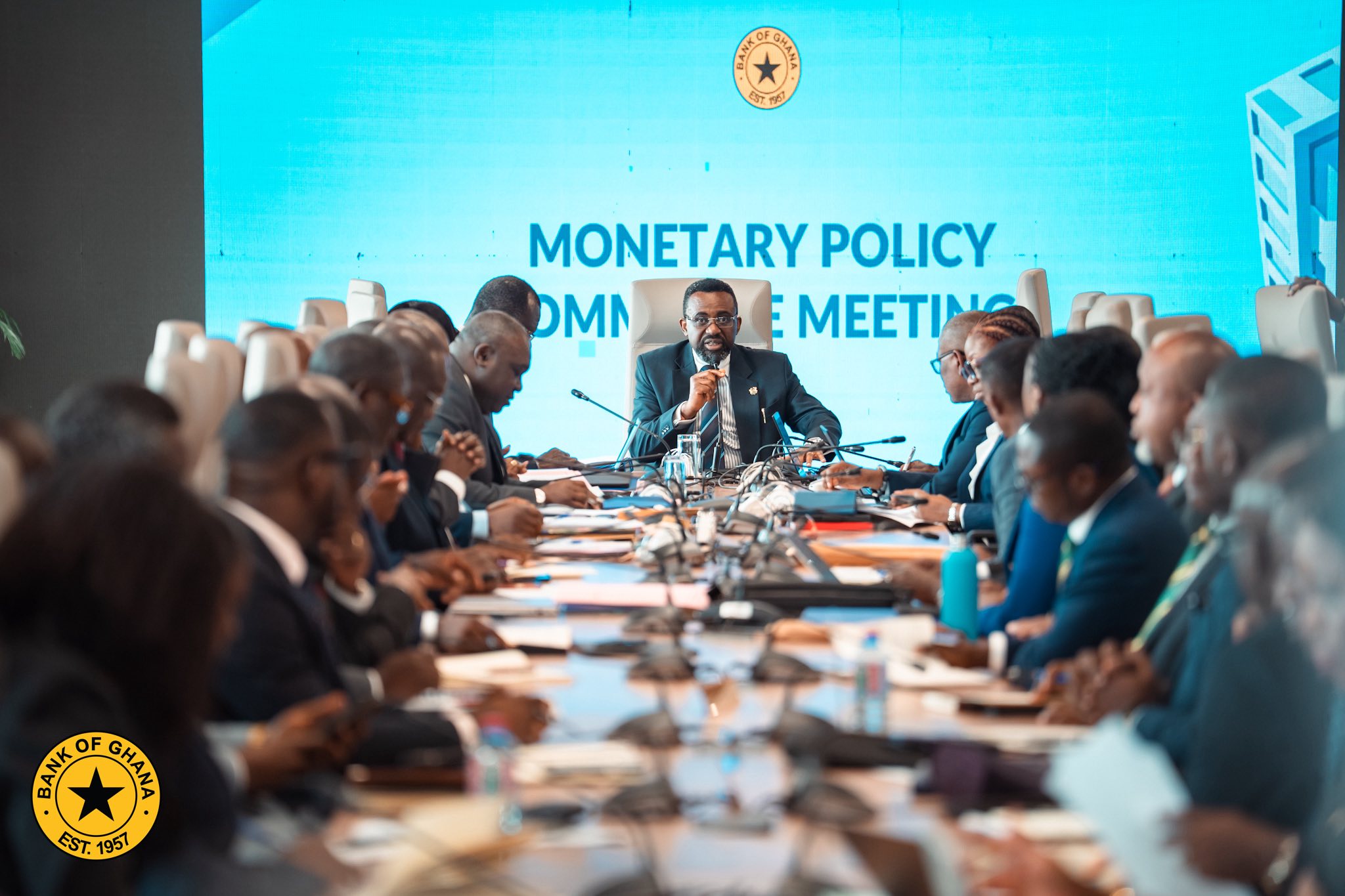
Opening the 130th Monetary Policy Committee (MPC) meeting in Accra, the Governor of the Bank of Ghana, Dr Johnson Pandit Asiama, described the current economic environment as one of “heightened policy complexity,” where domestic recovery is increasingly being threatened by worsening external conditions.
According to him, Ghana’s economy has shown strong signs of resilience since the last MPC meeting in March, driven by sustained reform efforts and improving economic fundamentals.
“The initial conditions of the Ghanaian economy have improved, and they have done so meaningfully,” he stated.
However, Dr Asiama cautioned that the ongoing conflict in the Middle East, particularly disruptions linked to the Strait of Hormuz, is creating significant pressure on global energy and commodity prices.
“The conflict has not abated, and its economic consequences are now visible in the global data,” he warned.
The Governor disclosed that the International Monetary Fund (IMF) has already revised downward its 2026 global growth projections from 3.3 percent to 3.1 percent due to the adverse effects of the conflict on global demand and supply chains.
He noted that the surge in global fuel prices poses serious risks for Ghana as a commodity-exporting but energy-importing economy, with the impact expected to transmit through higher transport costs, import bills, and consumer prices.
Dr Asiama revealed that inflation in Ghana has recorded its first increase since December last year, raising concerns about renewed price pressures.
Still, he pointed to several positive indicators within the domestic economy, including a stronger current account position, improved debt sustainability, growing investor confidence, and the successful return of domestic bond issuance.
According to him, Ghana’s current account surplus in the first quarter of 2026 exceeded that of the same period last year by approximately $652 million.
He also highlighted government’s successful issuance of a seven-year bond instrument and plans to raise $1 billion through local currency bonds to finance cocoa purchases for the 2026/2027 crop season.
The Governor described the move as a strategic shift aimed at reducing Ghana’s reliance on foreign currency borrowing.
He further disclosed that government has temporarily reduced regulatory margins on petroleum products in an attempt to cushion consumers against rising global crude oil prices and limit inflationary pressures.
Despite the progress, Dr Asiama stressed that the economy still faces significant vulnerabilities, including energy supply disruptions, external commodity price shocks, and concerns over inflation expectations.
He also indicated that the Bank of Ghana is closely monitoring the effectiveness of monetary policy transmission, particularly its impact on lending conditions, credit growth, and broader economic activity.
“The economy will need a strong banking sector,” he stated, stressing the importance of maintaining financial stability while ensuring banks support private sector expansion.
The MPC meeting, which runs over three days, is expected to assess inflation trends, interest rate adjustments, financial sector stability, and the broader economic outlook before announcing a policy decision later this week.