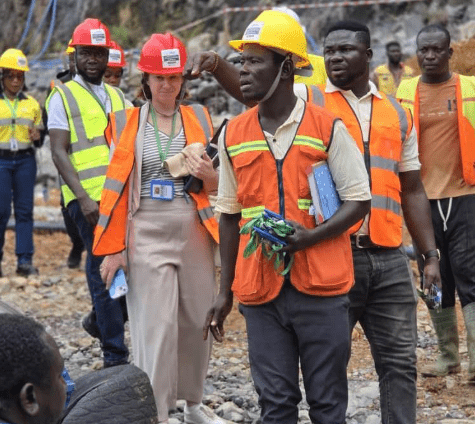
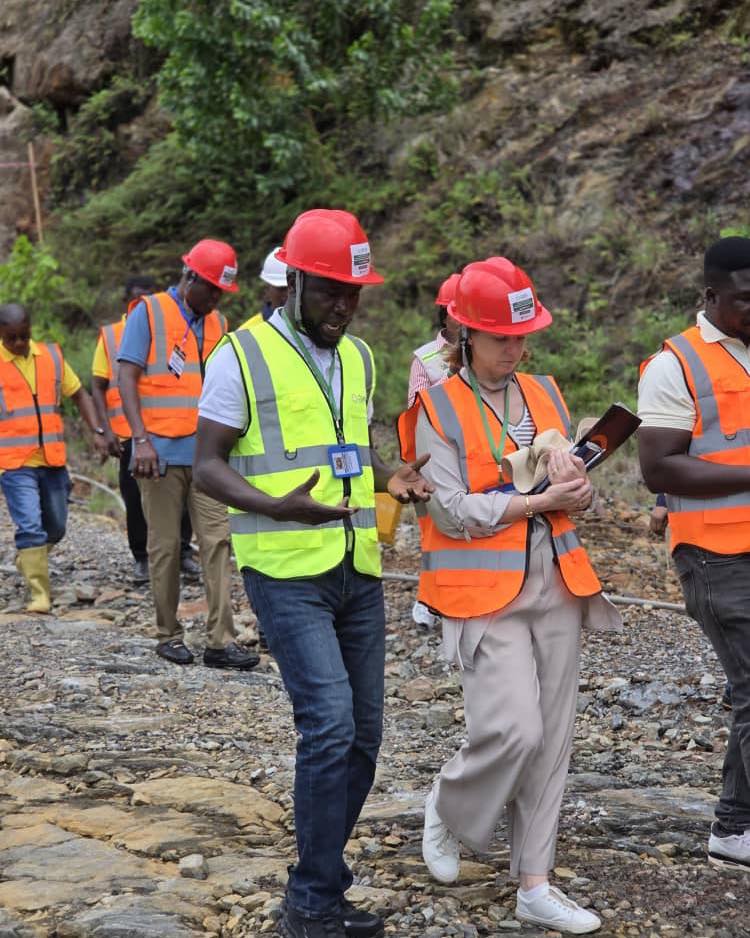
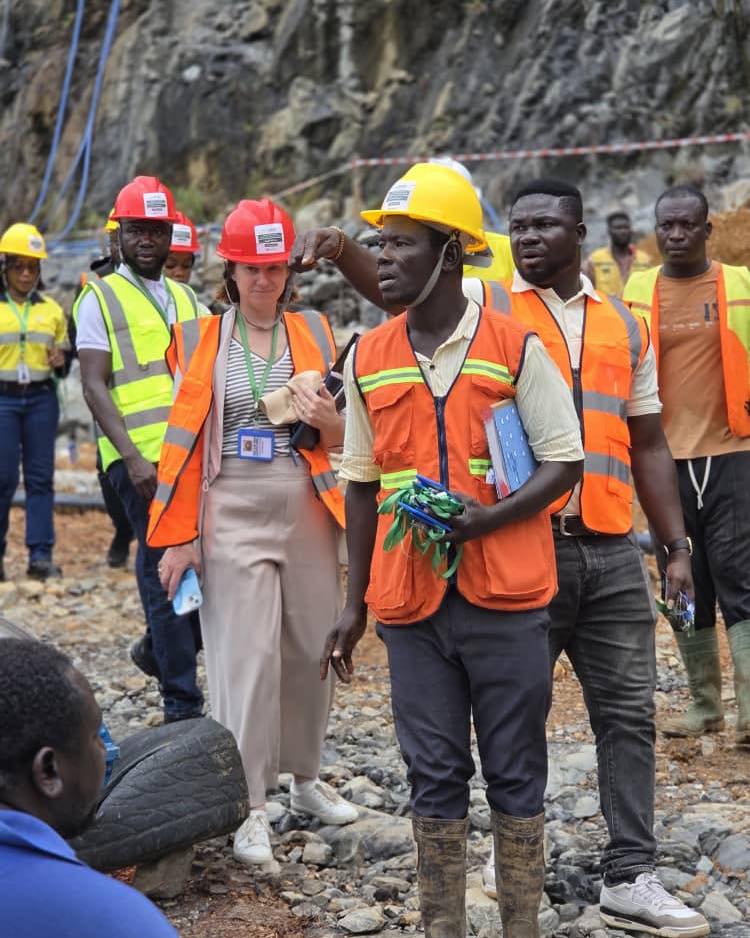
A delegation from the World Bank has visited the Anwiah–Teleku–Bokazo Cooperative Mining Site in the Ellembelle Municipality to assess Ghana’s ongoing efforts to formalise and regulate the artisanal and small-scale mining sector under the Responsible Cooperative Mining and Skills Development Programme (rCOMSDEP).
The working visit formed part of the World Bank’s growing interest in supporting initiatives aimed at promoting responsible, sustainable, and environmentally conscious mining practices in Ghana.
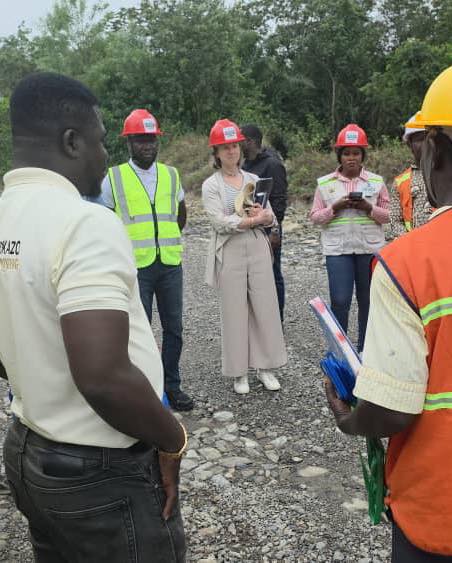
The inspection exercise provided officials with the opportunity to observe operations on the ground and evaluate compliance with key regulatory and safety standards within the cooperative mining framework.
Particular attention was given to occupational safety measures, environmental protection practices, child labour prevention mechanisms, and broader responsible mining standards being implemented at the site.
The delegation comprised representatives from rCOMSDEP, the World Bank Group, the Ministry of Lands and Natural Resources, the Ghana Landscape Restoration and Small-Scale Mining Project, the Environmental Protection Authority (EPA), as well as traditional leaders from the host communities.
The visit underscores increasing international confidence in Ghana’s efforts to reform the small-scale mining sector through structured, lawful, and community-centred approaches.
The Responsible Cooperative Mining and Skills Development Programme was introduced as part of government’s broader strategy to tackle illegal mining, protect water bodies and forest reserves, and create sustainable livelihood opportunities within mining communities.
Under the initiative, small-scale miners are being encouraged to operate within a regulated cooperative system backed by skills training, environmental accountability, and strict operational standards.
The World Bank delegation’s visit also highlighted the importance of collaboration between government institutions, development partners, regulators, and local communities in building a mining sector that balances economic opportunity with environmental sustainability.
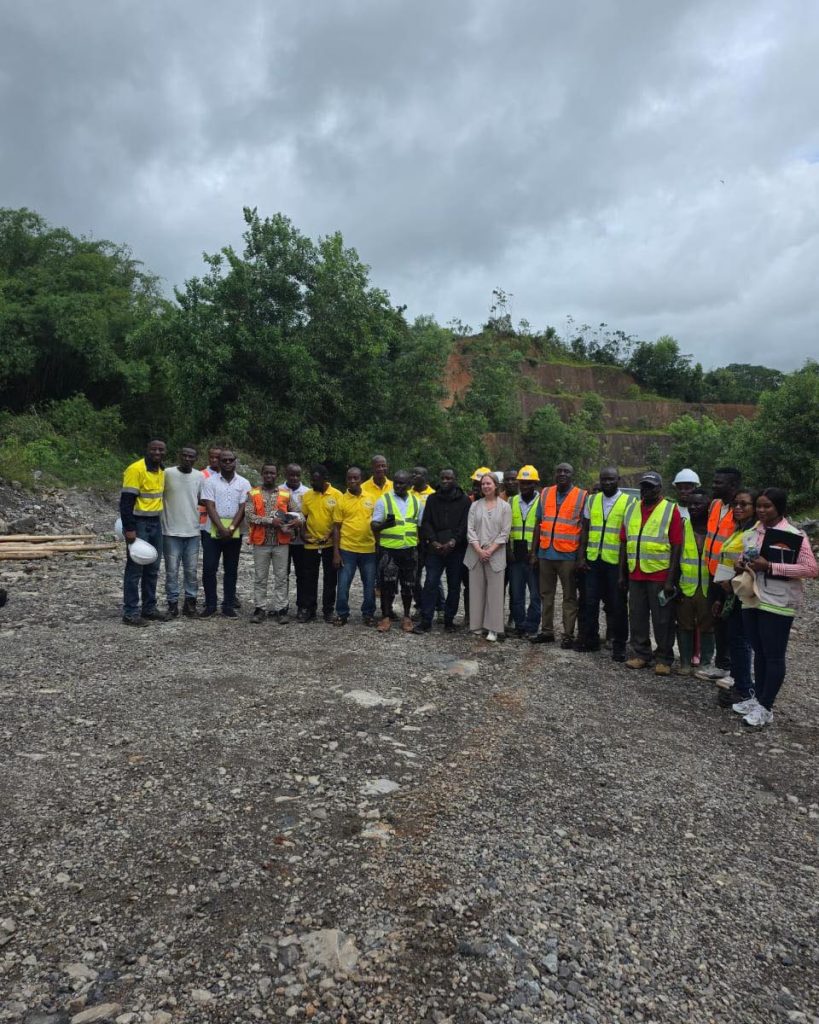
rCOMSDEP reiterated its promise to deepening partnerships and advancing a formalised mining regime that promotes responsible extraction practices while safeguarding communities and natural resources.
The programme maintains that sustainable small-scale mining remains critical not only to local economic development but also to restoring public confidence in Ghana’s fight against illegal and environmentally destructive mining activities.