The Ghanaian government has moved to secure the future of the Adamus Resources Limited mine by directing the Minerals Commission to maintain special control and operational oversight of the facility, while firmly rejecting speculation that the mining asset has been sold or is being prepared for sale.
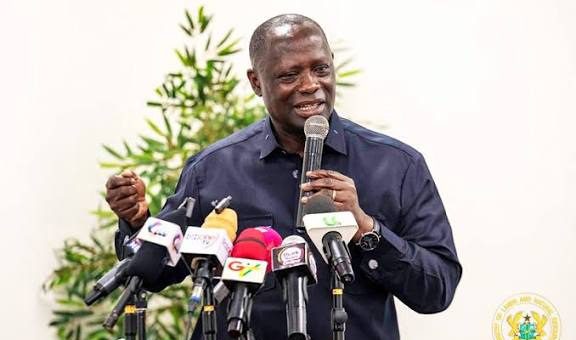
The directive from the Minister for Lands and Natural Resources, Hon. Emmanuel Armah Kofi Buah, represents a significant new development in the continuing Adamus Resources dispute and follows the administrative review of the company’s petition challenging the revocation of its Akango, Salman and Nkroful mining leases.
At the heart of the arrangement is the committee established to review Adamus Resources’ petition and examine the circumstances surrounding the lease revocation. The committee has exercised operational oversight of the mine since April 14, helping to ensure that the facility remained functional while the government addressed the regulatory and administrative issues surrounding its future.
Under the Minister’s latest directive, the committee will continue providing operational oversight, but will report through the Minerals Commission. The new reporting arrangement is intended to strengthen institutional continuity and place the ongoing supervision of the mine within the statutory regulatory structure responsible for Ghana’s mineral resources.
“The immediate priority is continuity: protecting jobs, preserving the value of the mining asset and ensuring that the mine remains operational while the outstanding regulatory matters are addressed.”
The government’s position is particularly significant for employees, contractors, suppliers and communities whose economic activities are linked to the Adamus operation. By maintaining operational oversight, the authorities are seeking to prevent the dispute over the leases from triggering unnecessary disruption to employment and economic activity around the mine.
But alongside the operational directive comes an equally important clarification. Government has categorically stated that it has not engaged in discussions with any party to sell the mine and has not sold the Adamus mining asset to anyone. The statement seeks to draw a clear line between government’s current oversight arrangements and speculation concerning a possible change of ownership.
“Operational oversight should not be confused with ownership or a sale transaction. The government’s stated position is that no sale of the mine has taken place.”
The latest development follows the government’s earlier action concerning the three Adamus mining leases after regulatory concerns were raised by the Minerals Commission. Among the issues examined were allegations of unauthorised assignment of mineral rights, mining outside approved areas and failures relating to required environmental and forestry approvals.
The regulatory review also brought financial obligations into focus, including outstanding mineral rights fees, royalties, tax liabilities and other commitments attributed to the company. Environmental financial assurances and broader compliance responsibilities were also considered as authorities assessed the circumstances surrounding the mine and its leases.
The committee’s review gave Adamus Resources an opportunity to present its petition and respond to the concerns underpinning the government’s decision. The continuation of operational oversight now creates a framework under which the mine can continue functioning while the relevant authorities implement the decisions and address outstanding obligations.
“For the workers and host communities, keeping the mine operational is not merely an administrative decision; it is about protecting livelihoods and preventing avoidable economic disruption.”
The government is consequently confronted with a delicate policy balance. It must enforce Ghana’s mining laws and protect public revenue while ensuring that legitimate economic activity, employment and the value of an operating mining asset are not unnecessarily compromised.
The Minerals Commission is expected to play a central role in the next phase. As the country’s statutory mining regulator, it will be responsible for ensuring that operations remain subject to applicable legal, technical, environmental and financial requirements while the government’s position on the affected leases is implemented.
The Adamus case therefore extends beyond one mining company. It touches on wider questions about Ghana’s management of mineral resources, investor confidence, environmental accountability, public revenue and the protection of communities whose economies depend on mining.
“The Adamus case is increasingly becoming a test of whether Ghana can enforce regulatory standards while simultaneously protecting jobs, public assets and investor confidence.”
For investors and industry observers, the government’s latest position offers one immediate certainty: there has been no sale of the mine. The operation remains under an official oversight arrangement, with the committee continuing its work through the Minerals Commission and with government focused on maintaining continuity.
The next stage will depend on how effectively the Minerals Commission and the committee implement the operational framework, address outstanding regulatory and financial issues and ensure that the mine continues to operate within Ghana’s legal and environmental requirements.
The Adamus saga has therefore entered a new phase. What began as a dispute over mining leases has evolved into a broader test of Ghana’s regulatory resolve and its ability to reconcile enforcement with economic continuity. For workers, host communities, investors and the wider mining industry, the government’s latest directive will be closely watched as authorities seek to protect both the integrity of Ghana’s mining regime and the future of a strategically important mining operation.