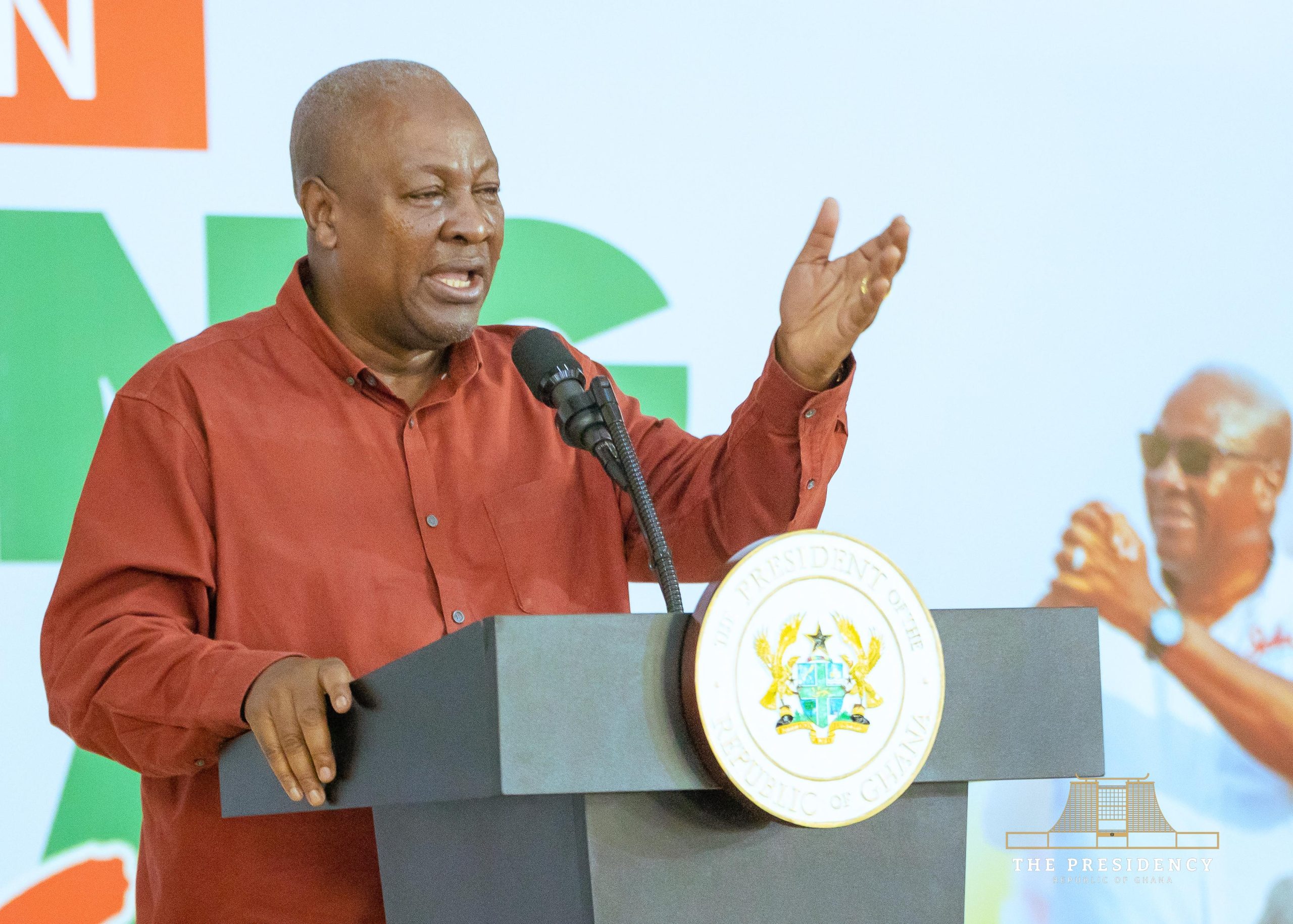
President John Dramani Mahama has announced plans to construct a new regional hospital at Goaso, establish three additional psychiatric hospitals and build a multi-purpose stadium in the Ahafo Region as part of efforts to improve healthcare delivery and sports development.
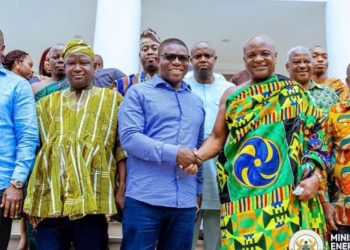
He made the announcements during a community engagement with residents and traditional authorities at Goaso in the Ahafo Region, where he responded to concerns about infrastructure, healthcare, education, employment, security and local governance.
President Mahama said the proposed Goaso Regional Hospital would provide healthcare services befitting the status of the Ahafo regional capital.
He explained that when the new facility becomes operational, some staff at the existing Goaso Hospital would be transferred to the regional hospital, allowing the current facility to be renovated and upgraded to serve as a municipal hospital.
“This approach will expand healthcare infrastructure in the region while ensuring that the existing hospital continues to serve the people of Goaso and surrounding communities,” he said.
Three new psychiatric hospitals
On mental healthcare, President Mahama disclosed that the government was making arrangements to establish three additional psychiatric hospitals to expand access to specialised services across the country.
He said the proposed facilities would be located in Kumasi to serve the middle belt, Tamale for the northern part of the country, and the Volta Region to serve the eastern part.
Ghana currently has three major psychiatric hospitals, and the additional facilities are expected to decentralise psychiatric care and reduce pressure on existing institutions.
The President also announced plans to strengthen specialised nursing services, particularly critical care, through training programmes at selected nursing training institutions.
He said the initiative would equip nurses with the skills required to manage critically ill patients and potentially improve their employment opportunities locally and internationally.
Chiefs’ role in governance
On the role of traditional authorities in governance, President Mahama reiterated his commitment to strengthening the participation of chiefs in local administration and development.
He said the government was pursuing the commitment through the ongoing constitutional review process, following a request for proposals from the Regional Houses of Chiefs and the National House of Chiefs.
According to him, the National House of Chiefs has submitted its proposals, which have been forwarded to the Constitutional Review Committee for consideration and recommendations.
The government is also considering expanding the representation of appointed members in district assemblies to include traditional authorities, women and other groups whose participation could strengthen local governance.
President Mahama said the government would await the committee’s recommendations before determining the constitutional and legislative changes required.
He added that the committee was also considering issues relating to mineral royalties and the possible creation of additional constituencies.
The President disclosed that about 95 applications had been received for the creation of new constituencies, but stressed that any increase in the current 275 constituencies would require careful consideration of its legal, administrative and financial implications.
Road infrastructure and Accra-Kumasi Expressway
Addressing concerns about roads in the region, President Mahama acknowledged that the government could not construct or rehabilitate every road in the country simultaneously.
He said road projects would be implemented in phases according to priorities and available resources.
The President directed the Minister for Roads and Highways to take note of concerns raised by traditional authorities and residents and ensure they were considered in the government’s road development plans.
He also promised to investigate concerns regarding the operations of the Highways office at Duayaw Nkwanta, following reports that staff were operating from Goaso instead of their designated location.
He said the relevant authorities would be asked to establish the circumstances and take the necessary corrective measures.
On the proposed Accra-Kumasi Expressway, President Mahama disclosed that the tendering process for selecting a contractor had commenced and that the feasibility study had been received.
He said the preparatory processes were progressing to enable construction to begin, adding that the project was expected to reduce travel time and improve the movement of people and goods along the busy corridor.
Security services recruitment
President Mahama said the government was strengthening the country’s security services through recruitment to address personnel shortages and improve operational capacity.
He disclosed that 5,000 personnel had been recruited into the Ghana Armed Forces, 4,000 into the Ghana Police Service and another 2,000 across other security services.
He said the government intended to continue recruitment in subsequent years, with a target of 40,000 personnel across the relevant services between 2025 and 2028.
The President encouraged qualified young people interested in joining the security services to apply through the established recruitment processes.
He emphasised that selection should be based on merit, qualifications and the requirements of the respective services.
Food security and farmers’ welfare
On agriculture, President Mahama said the government was constructing storage facilities to improve its capacity to preserve agricultural produce and purchase more from farmers during harvest periods.
He explained that inadequate storage and limited access to reliable markets often forced farmers to sell their produce at unfavourable prices or risk post-harvest losses.
The proposed facilities, he said, would help preserve food, manage supplies and enable the government to purchase produce when necessary.
He added that further details would be communicated when the arrangements were ready for implementation.
The President also assured traditional authorities that the government would continue to consider their welfare, including allowances, as the economy improved and government revenue increased.
He acknowledged the role of chiefs in maintaining peace, resolving disputes and supporting development in their communities.
New stadium for Ahafo
President Mahama further announced plans for a new stadium in the Ahafo Region, explaining that the facility would accommodate multiple sporting disciplines rather than football alone.
He said the project would provide opportunities for young people to develop their sporting talents, support competitions and promote sports development across the region.
The President also encouraged Newmont to strengthen its skills training programmes and create more opportunities for young people in Ahafo to acquire skills relevant to employment in the mining industry.
Education and school infrastructure
On education, President Mahama said the government was implementing measures to improve infrastructure and the quality of education in senior high schools.
He disclosed that 30 Category C schools were expected to be upgraded to Category B, while another 30 Category B schools would be upgraded to Category A.
He said the upgrades were intended to improve school facilities and expand opportunities for students to access quality secondary education.
The President also highlighted the STAR-J project, supported by a US$500 million World Bank facility, which he said was intended to address challenges associated with the double-track system and improve access to secondary education.
He explained that schools not included in the immediate upgrading exercise could still benefit from interventions under the STAR-J project.
On concerns about Technical and Vocational Education and Training (TVET), President Mahama promised to engage the sector minister to examine the issues raised and determine the appropriate action.
He described technical and vocational education as an important avenue for equipping young people with practical skills for employment and entrepreneurship.
Traditional authorities and protocol appointments
Responding to concerns about protocol appointments and access to employment, President Mahama acknowledged that some people felt overlooked in favour of others.
However, he said the presidency had a responsibility to represent the entire country fairly and avoid favouritism that could undermine public confidence.
He said appointments would be guided by the relevant procedures and the need to ensure fairness.
On mineral royalties, the President explained that allocations were made to Metropolitan, Municipal and District Assemblies, as well as traditional authorities.
He said the Constitutional Review Committee was considering the matter and that the government would await its recommendations before deciding on the appropriate way forward.
Ghana-US health cooperation
President Mahama also addressed concerns about health support previously provided by the United States Agency for International Development (USAID).
He said the American side had returned to review the arrangements and that discussions would be held to determine the way forward.
“We believe that through dialogue and engagement, we can work towards arrangements that protect Ghana’s health priorities and sustain essential services,” he said.
He assured residents that the government would continue to engage its international partners to protect the country’s healthcare priorities.
The President further promised to draw the attention of the Chief Fire Officer to concerns about the fire station and the need to improve fire and emergency response services in the region.
The community engagement formed part of President Mahama’s interaction with residents and traditional authorities to address development priorities and outline the government’s intended interventions in the Ahafo Region.
Story: Patrick Asford Boadu