The Minerals Commission has defended the termination of mining leases and prospecting rights held by Northern Ashanti Mines Limited, formerly Owere Mines, over alleged breaches of Ghana’s mining laws, including the accumulation of more than US$8.3 million in unpaid statutory fees spanning several years.
In a strongly worded statement issued on Tuesday, October 27, 2026, the Commission insisted that the termination followed due process and warned that the company would not be allowed to retain mineral rights without meeting its legal and financial obligations.
The Commission also served notice that it would pursue the recovery of all outstanding amounts owed by the company, notwithstanding the termination of its mineral rights.
According to the statement, Northern Ashanti Mines accumulated US$8.33 million in unpaid Annual Mineral Right fees on its mining leases between 2010 and 2025, in addition to US$49,928 owed on prospecting licences between 2019 and 2025. The combined outstanding amount stands at US$8,379,928.
The Commission explained that the company acquired a mining lease covering 595 cadastral blocks in January 2010 but subsequently failed to meet its statutory obligation to pay annual mineral rights fees under Section 24 of the Minerals and Mining Act, 2006 (Act 703).
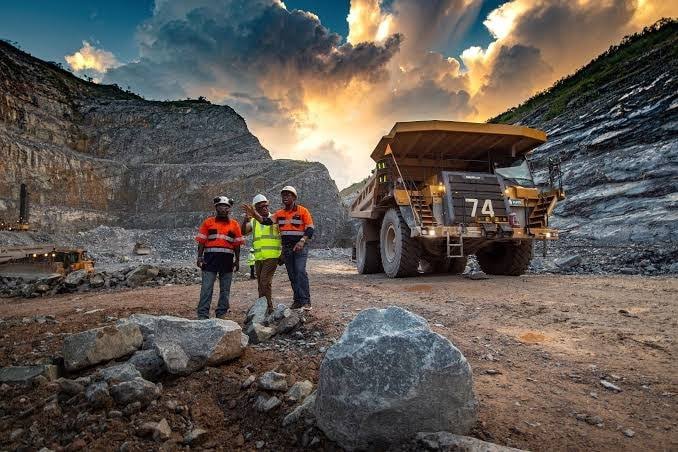
It further alleged that the company had failed to undertake meaningful mining operations on the concession for more than two years, contrary to Section 69(1) of the Act.
The Minerals Commission said it issued formal Notices to Remedy Breach to Northern Ashanti Mines on April 14, 2025, demanding payment of the outstanding fees.
However, the company allegedly failed to comply within the stipulated period.
Following the unresolved breaches, the Commission notified the Minister for Lands and Natural Resources on April 7, 2026, requesting the issuance of a termination notice.
The Minister subsequently approved the request on April 24, 2026, after which the Commission proceeded with the termination process on April 30, 2026.
The Commission maintained that the process complied with the Minerals and Mining Act and the Minerals and Mining (Licensing) Regulations, 2012 (L.I. 2176).
It rejected suggestions that the termination was arbitrary or unlawful, insisting that Northern Ashanti Mines had been given sufficient opportunity to regularise its operations.
“The law is the law. Mineral rights are not an inheritance. Once granted, a holder must abide by the rules, whether they are an indigenous company or not,” the Commission stated.
It stressed that compliance with statutory payment obligations and the requirement to undertake meaningful mining operations were fundamental conditions for retaining mineral rights in Ghana.
The Commission further explained that the terminated mineral rights had reverted to the State, which remains the lawful owner of Ghana’s mineral resources.
It emphasised that the termination did not absolve Northern Ashanti Mines of financial liabilities accumulated before the revocation.
“The Commission reserves the right and shall pursue the company to pay all the sums it owes to the State,” the statement declared.
The Commission also defended the State’s responsibility to protect assets associated with the terminated mineral rights against encroachment, unlawful occupation or other interference.
It cited Section 70 of Act 703 as providing the relevant legal framework governing mining assets following the termination of mineral rights.
The statement comes amid a dispute between the Minerals Commission and Northern Ashanti Mines over the termination of the company’s mineral rights.
The Commission accused the company of conducting a media campaign aimed at generating public sympathy despite having instituted legal proceedings challenging the government’s decision.
According to the Commission, Northern Ashanti Mines had acknowledged receipt of the termination notice and subsequently taken the matter to court.
It described the company’s decision to pursue public advocacy alongside the judicial process as inappropriate, accusing it of circulating misleading accounts of the circumstances surrounding the termination.
The Commission insisted that it would not be distracted from enforcing Ghana’s mining laws.
The dispute is now before a court of competent jurisdiction, where the company’s challenge to the termination is expected to be determined.