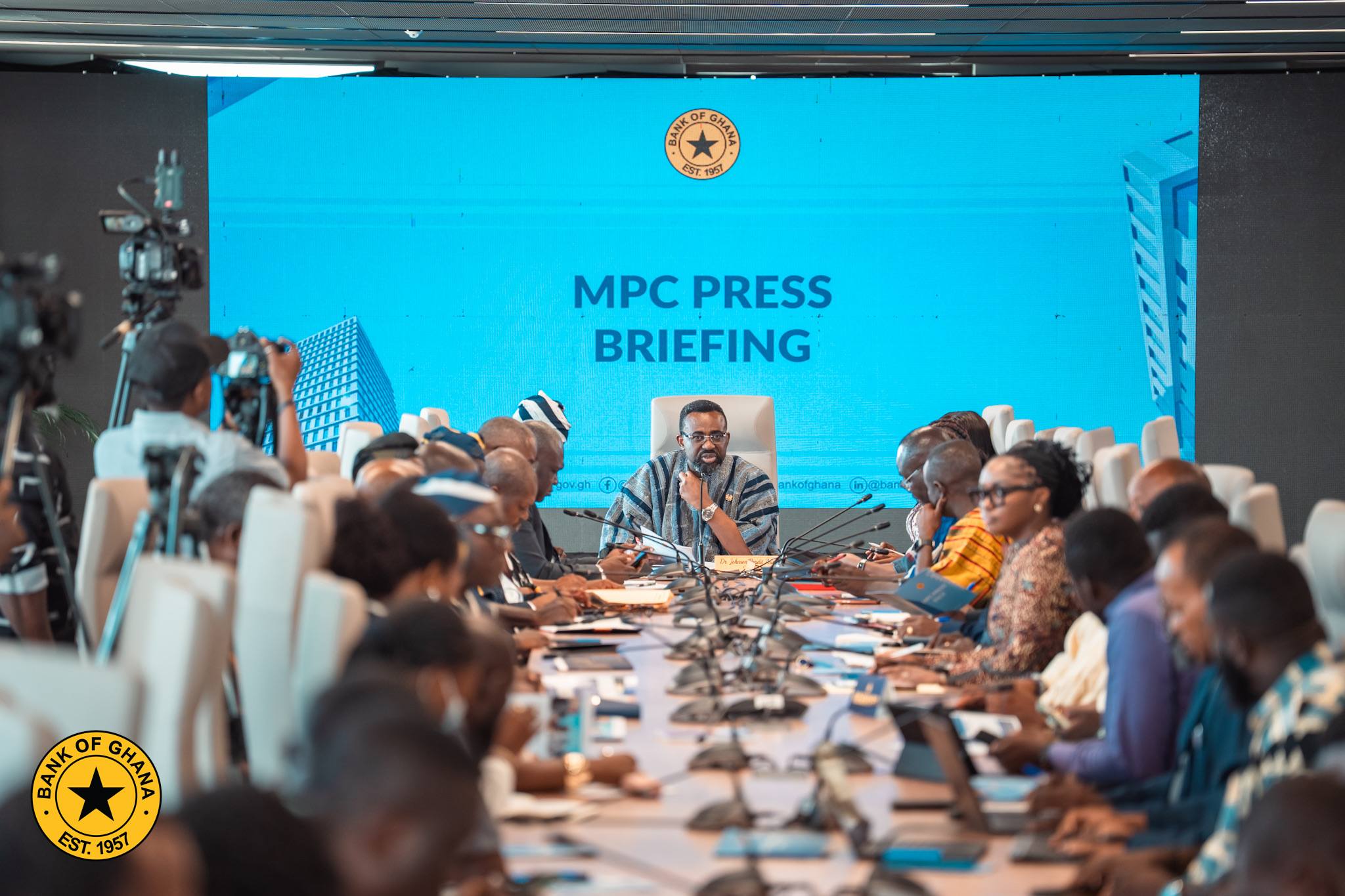
Governor of the Bank of Ghana, Dr. Johnson Pandit Asiama, has strongly defended the central bank’s decision to sell 18 tonnes of Ghana’s gold, insisting the move was strategic, transparent and yielded significant financial gains.
Responding to criticism from IMANI Africa’s Kofi Bentil during the 129th Monetary Policy Committee (MPC) press briefing, the Governor said the decision must be understood within the context in which it was taken, stressing that it was part of a broader diversification strategy.
He explained that at the time the decision was made, global conditions did not point to a sustained surge in gold prices.
“At the time, everyone thought prices had peaked… there was no indication that the crisis was going to escalate,” he said, noting that geopolitical developments have since driven renewed volatility in global markets.
Dr. Asiama emphasized that gold remains a highly volatile commodity, and decisions taken by the Bank are based on prevailing market conditions rather than hindsight.

“What that tells you is that it’s very volatile. There’s no guarantee that it will stay at those levels forever,” he stated.
The Governor dismissed suggestions of wrongdoing, insisting that the transaction followed due process and delivered strong financial returns.
“Remember the transaction, we made a profit of over $1.3 billion… there are no losses, nothing lost whatsoever,” he revealed.
He further clarified that proceeds from the transaction form part of Ghana’s international reserves, which continue to support the country’s external stability.
While defending the past decision, Dr. Asiama indicated that the Bank’s current strategy is to accumulate gold, given expectations that prices could rise further in the medium term due to ongoing geopolitical tensions.
According to him, reserve management requires flexibility, noting that the earlier sale and current accumulation efforts are separate strategies tailored to different economic conditions.
In a direct response to his critics, the Governor challenged Mr. Bentil to engage the Bank directly instead of making public accusations.
“He should stop all those wild allegations… we are transparent, we are ready to walk him through it,” Dr. Asiama said.
The remarks underscore the Bank of Ghana’s position that its gold management decisions are guided by market realities, strategic reserve management and the need to safeguard the country’s economic stability.