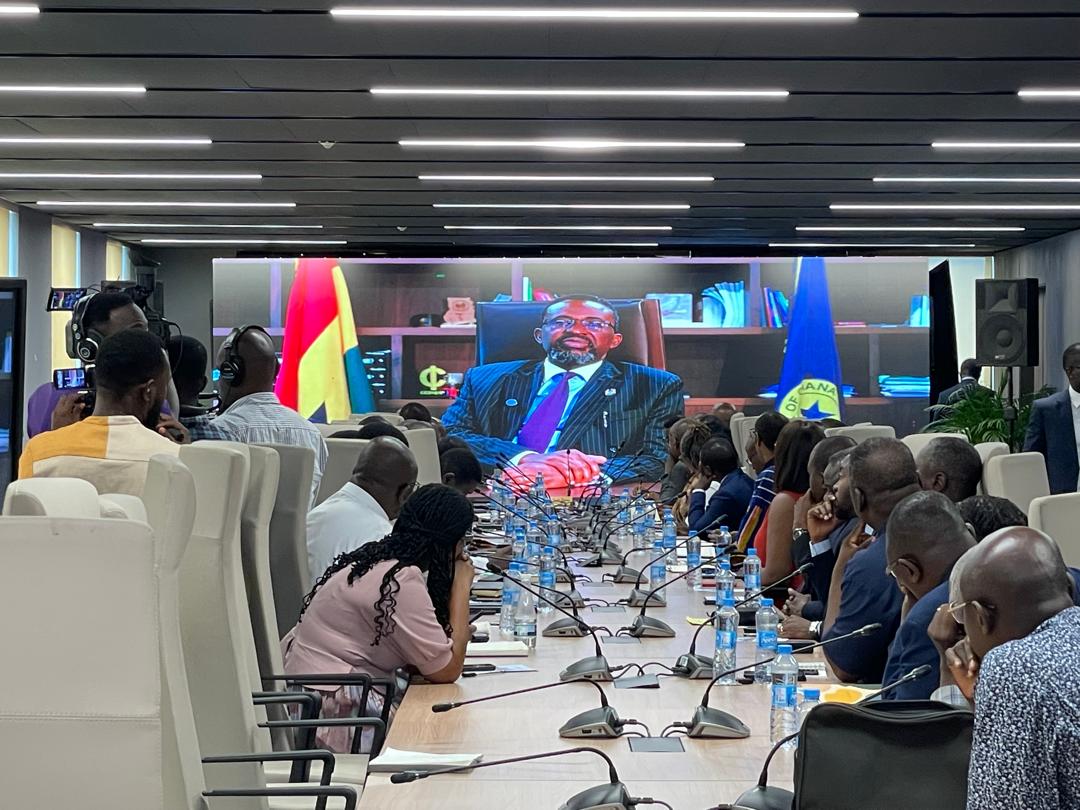
The Governor of the Bank of Ghana (BoG), Dr Johnson Pandit Asiama, has dismissed concerns that the introduction of non-interest banking amounts to the introduction of a religious system into Ghana’s banking sector.
According to him, the initiative is neither designed to promote a particular faith nor create a religious category within the country’s financial system.
Dr Asiama explained that non-interest banking is a legally recognised banking activity, with Parliament having already provided for it under Section 18(1)(R) of the Banks and Specialised Deposit-Taking Institutions Act, 2016 (Act 930).
Speaking at a meeting with the clergy on non-interest banking and finance in Accra on Monday, August 31, the Governor said the Bank of Ghana’s responsibility was limited to providing the regulatory and supervisory framework for institutions that choose to offer such products.
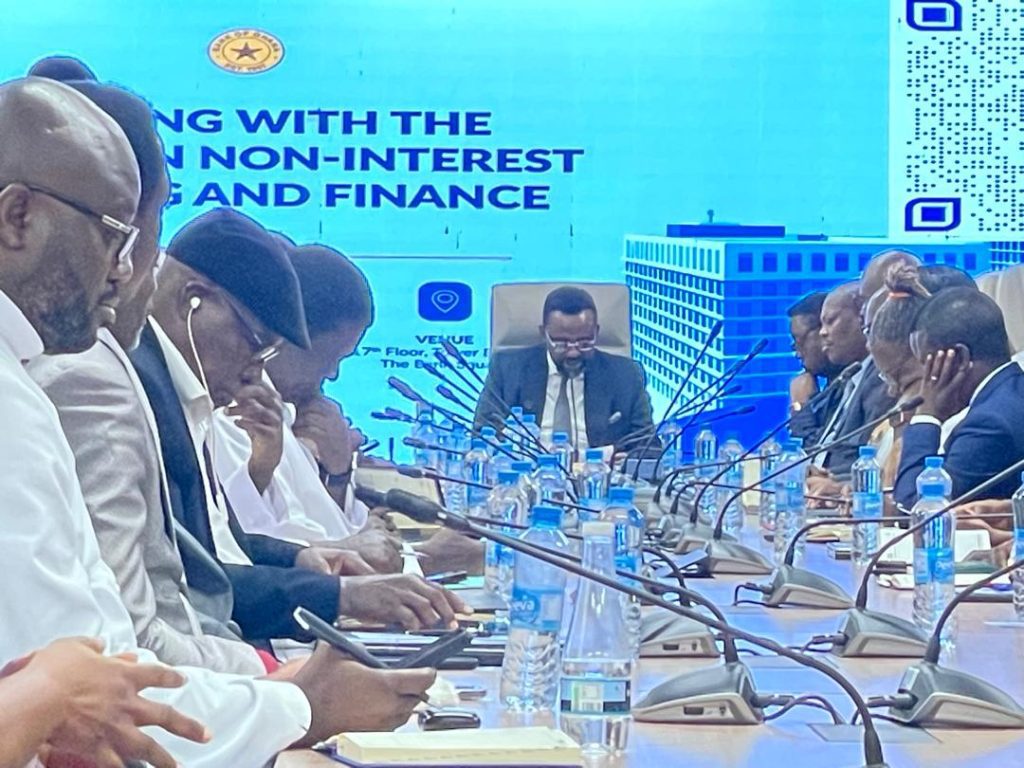
“Our role is simply to provide the regulatory and supervisory framework within which licensed institutions may offer this inclusive and non-discriminatory model of commercial banking as a complement to conventional banking and not a replacement of it,” he said.
‘We are not regulating religion’
Dr Asiama stressed that the central bank was not seeking to regulate religious beliefs or give any religious body authority over Ghana’s banking system.
“The bank does not pronounce on religious beliefs, not at all. Our responsibility is to regulate the institutions and the products that are offered,” he stated.
He said the same regulatory discipline that applies to conventional financial institutions would apply to non-interest banking.
This includes oversight of payment systems, fund transfers, capital sources, leadership and governance.
He also cautioned that no person or institution may carry on non-interest banking business without a Bank of Ghana licence.
“Non-interest products remain fully subject to the controls that protect depositors and the financial system,” Dr Asiama added.
Why BoG is promoting non-interest banking
The Governor said the Bank of Ghana’s interest in non-interest banking was driven by its mandate to promote financial sector development, stability and financial inclusion, rather than religious considerations.
He said the model could expand access to financial services, increase product diversity and give consumers greater choice.
Under the framework, non-interest banking involves financial intermediation that avoids the payment and receipt of interest, excessive uncertainty, gambling and investments in prohibited activities.
Instead, the products are structured around transactions backed by real economic activity and productive assets.
“The products are structured differently, but they remain commercial financial products,” he stressed.
According to him, the framework is built around fairness, transparency, equity and risk-sharing, while linking finance to production, responsible growth and shared prosperity.
BoG engages Christian leaders
Dr Asiama disclosed that the central bank had undertaken extensive consultations with Ghana’s Christian community and Islamic leadership before finalising the regulatory framework.
He said the Bank had engaged the Christian Council of Ghana, Ghana Pentecostal and Charismatic Council, Ghana Catholic Bishops’ Conference, National Association of Charismatic and Christian Churches, selected churches and Christian civil society organisations.
It also held engagements with Islamic leaders and subsequently brought Christian and Islamic leaders together.
He said the consultations reinforced the need for public communication that was inclusive, respectful of Ghana’s religious diversity and clear that non-interest banking products would be available to everyone.
The Bank published an exposure draft on December 9 last year and invited public comments before publishing the final Guidelines for the Regulation and Supervision of Non-Interest Banking in Ghana on January 13 this year.
Dr Asiama said the Bank had since produced documentaries and two sets of frequently asked questions to improve public understanding of the framework.
Five-member advisory council inaugurated
The Governor also highlighted the establishment of the Non-Interest Financial Advisory Council (NIFAC), which was inaugurated on August 18.
He said the five-member council would advise the Bank of Ghana on the effective regulation and supervision of non-interest banking institutions.
NIFAC may also support the Securities and Exchange Commission and the National Insurance Commission as the broader non-interest financial ecosystem develops.
The council includes at least one independent member and at least one woman, with its membership combining local expertise with international experience in non-interest banking.
Dr Asiama, however, was emphatic that the council would not usurp the authority of the Bank of Ghana or give religious bodies regulatory powers.
“Let me say that again: their technical advice does not displace the Bank of Ghana’s supervisory, enforcement or regulatory authority, nor does it confer that authority on any religious body,” he said.
‘Public education cannot be one-way’
The Governor said the meeting with the clergy was part of the Bank’s continuing efforts to address concerns and improve public understanding of the new framework.
“Public education cannot be one-way,” he said.
He acknowledged that some aspects of the framework may still be unclear to sections of the public and said the Bank was prepared to listen and improve its communication.
“Where our communication has been insufficient, we have to and we must improve it and answer questions respectfully and with the facts,” Dr Asiama said.
He urged religious leaders to help the Bank understand how the framework was being received within their communities and identify areas where further clarification was required.
The Governor said the ultimate objective was to ensure that Ghanaians who wish to use non-interest financial products could do so within a properly regulated, transparent and inclusive financial system, while maintaining the stability and integrity of Ghana’s banking sector.