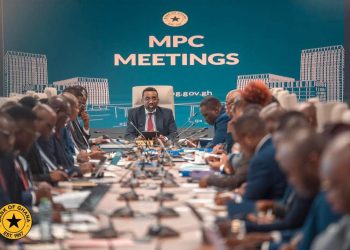
The Bank of Ghana has placed the government’s 2027 Budget, commercial bank lending rates and domestic liquidity conditions under scrutiny as its Monetary Policy Committee considers whether adjustments to the country’s monetary policy framework are necessary.
Governor Dr Johnson Pandit Asiama says the committee must establish whether existing monetary policy measures are effectively influencing borrowing costs, private sector credit and economic activity, while ensuring that government spending does not undermine recent macroeconomic gains.
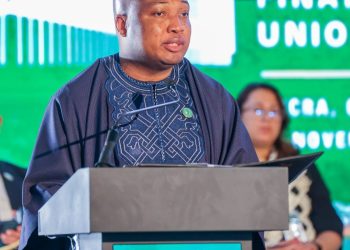
Addressing the opening of the Bank’s final Monetary Policy Committee meeting for 2026, Dr Asiama stressed the importance of aligning fiscal and monetary policies to preserve economic stability.
He explained that the government’s renewed emphasis on productive investment and economic growth under the 2027 Budget required a careful assessment of its implications for inflation, liquidity and exchange rate stability.
“The objective is to ensure that the fiscal and monetary policy frameworks remain coherent and mutually reinforcing in preserving macroeconomic stability,” he stated.
The Governor directed the committee to examine the size and composition of the fiscal surplus, government financing arrangements and the timing of public expenditure.
He warned that the interaction between government spending and monetary policy could significantly influence domestic liquidity conditions and the effectiveness of the central bank’s policy decisions.
Beyond fiscal developments, Dr Asiama called for a comprehensive review of how monetary policy decisions were transmitted through the banking system.
He said particular attention must be given to money market conditions, bank funding costs, commercial lending rates and access to credit for the private sector.
The review comes as Ghana seeks to consolidate improvements in macroeconomic stability while creating conditions for increased investment and sustained economic activity.
Dr Asiama also called for a deeper examination of Ghana’s external sector performance, particularly the sustainability of current account surpluses and whether foreign exchange earnings were translating into lasting reserve accumulation.
He maintained that strengthening external reserves remained essential to protecting the cedi against future shocks.
According to the Governor, the committee’s deliberations would determine whether the existing monetary policy stance and operational framework remained appropriate for the changing economic environment.
“The policy choices we make at this MPC round will shape the conditions under which the economy enters 2027,” he emphasised.