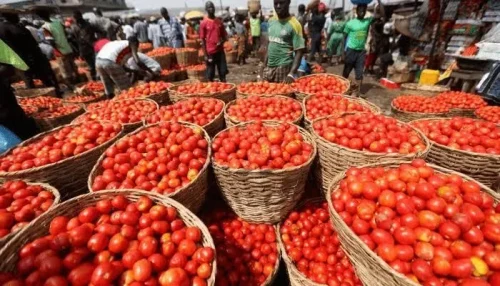
The government of Burkina Faso has officially lifted its temporary ban on tomato exports, a move expected to revive cross-border trade and ease financial pressure on local farmers.
The restriction, which was introduced earlier to stabilize domestic supply and control rising food prices, had significantly limited the flow of tomatoes to neighboring countries. While the policy helped ensure availability within Burkina Faso, it also led to losses for producers who depend heavily on regional markets.
With the ban now removed, traders have resumed shipments, particularly to nearby countries where demand for Burkinabè tomatoes remains high. Farmers across key growing regions have welcomed the decision, expressing optimism about recovering lost income and reducing post-harvest waste.
The Ministry of Trade, Agribusiness and Industry in a statement released on April 2, 2026 described the new development as a positive outcome of ongoing bilateral engagements between Ghana and Burkina Faso.
The statement revealed that one of five key meetings held by Trade Minister Elizabeth Ofosu-Adjare and her Burkinabe counterparts on the margins of the WTO MC14 in Yaoundé, Cameroon, directly contributed to the removal of trade restrictions.
The Ministry assured the public that it would continue to collaborate with Burkinabe authorities and local stakeholders to maintain a smooth and mutually beneficial trading environment.
Ghanaian tomato traders have welcomed the decision by Burkina Faso to lift its suspension on fresh tomato exports, a move expected to ease supply pressures and stabilize local markets.
The ban on export of tomatoes from Burkina Faso was announced on March 19 by the Bukinabé authorities, a development that deepens supply challenges in Ghana.
Officials say the move comes after improved harvest yields and a more stable local market. Authorities have also indicated plans to monitor prices closely to prevent sudden spikes that could affect consumers.
Agricultural experts believe the reopening of exports will strengthen regional food trade and support economic activity, especially for smallholder farmers and transport operators who rely on the tomato value chain.
As trucks begin to cross borders once again, the decision marks a turning point for Burkina Faso’s agricultural sector, signaling renewed confidence in both production levels and market stability.
Story By: Eric Boateng