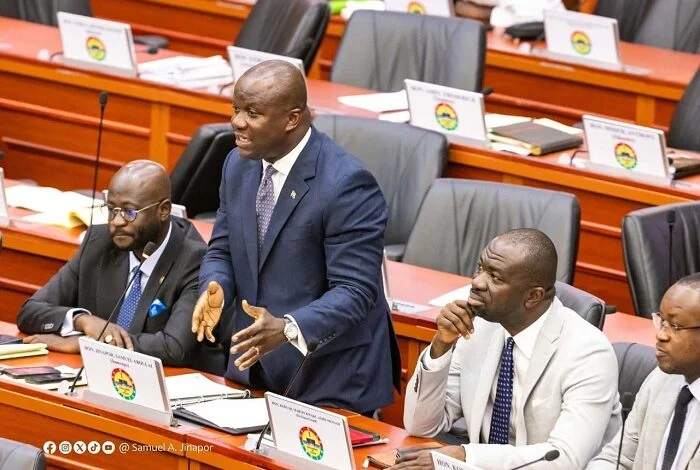
Fraud and Security Analyst Richard Kumadoe has challenged politicians making allegations about the unlawful issuance and alleged sale of Ghanaian diplomatic passports to substantiate their claims, warning that unverified accusations could undermine the integrity of the country’s diplomatic and security systems.
Speaking on Radio Gold, Mr Kumadoe insisted that serious allegations involving diplomatic passports must be supported by credible evidence, particularly when individuals categorically claim that some passport holders are not legally entitled to possess the documents.
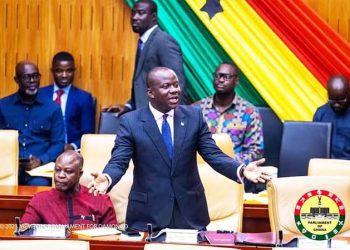
His comments come amid controversy over the issuance of diplomatic and service passports, which escalated in Parliament on November 3, 2026, when Speaker Alban Bagbin ordered the removal of Damongo MP Samuel Abu Jinapor following his allegation that diplomatic passports were being sold for between US$10,000 and US$50,000.
The allegation was challenged by Majority Leader James Agalga, who demanded supporting evidence. The confrontation subsequently resulted in a walkout by Minority MPs in solidarity with Mr Jinapor.
Reacting to the controversy, Mr Kumadoe questioned the implications of publicly suggesting that Ghanaian diplomatic passport holders were unqualified to possess the documents without establishing the facts.
“What happens if we ourselves start suggesting that our diplomatic passport holders are people who are not qualified to hold those diplomatic passports? There has to be proof, isn’t it?” he questioned.
Drawing on his security intelligence background, he explained that there was a fundamental distinction between expressing suspicion and making a definitive allegation, stressing that categorical accusations demanded verifiable evidence.
He argued that concerns about the eligibility of diplomatic passport holders could be investigated through authorised travel-history checks to establish the documents individuals used, their travel status and relevant departure or arrival records.
Mr Kumadoe criticised what he described as the tendency of political actors to make serious public accusations without adequate verification, insisting that the responsibility to provide evidence applied equally to everyone, including Members of Parliament.
He warned that circulating unsubstantiated allegations could mislead the public, damage institutional credibility and undermine legitimate accountability efforts.
The security analyst maintained that suspected abuses of Ghana’s diplomatic passport system deserved thorough investigation, but insisted that the seriousness of such allegations required equally credible proof.
He urged public officials and political commentators to exercise greater responsibility in their pronouncements, stressing that accusations involving national security and diplomatic integrity must be established through evidence rather than political assertions.