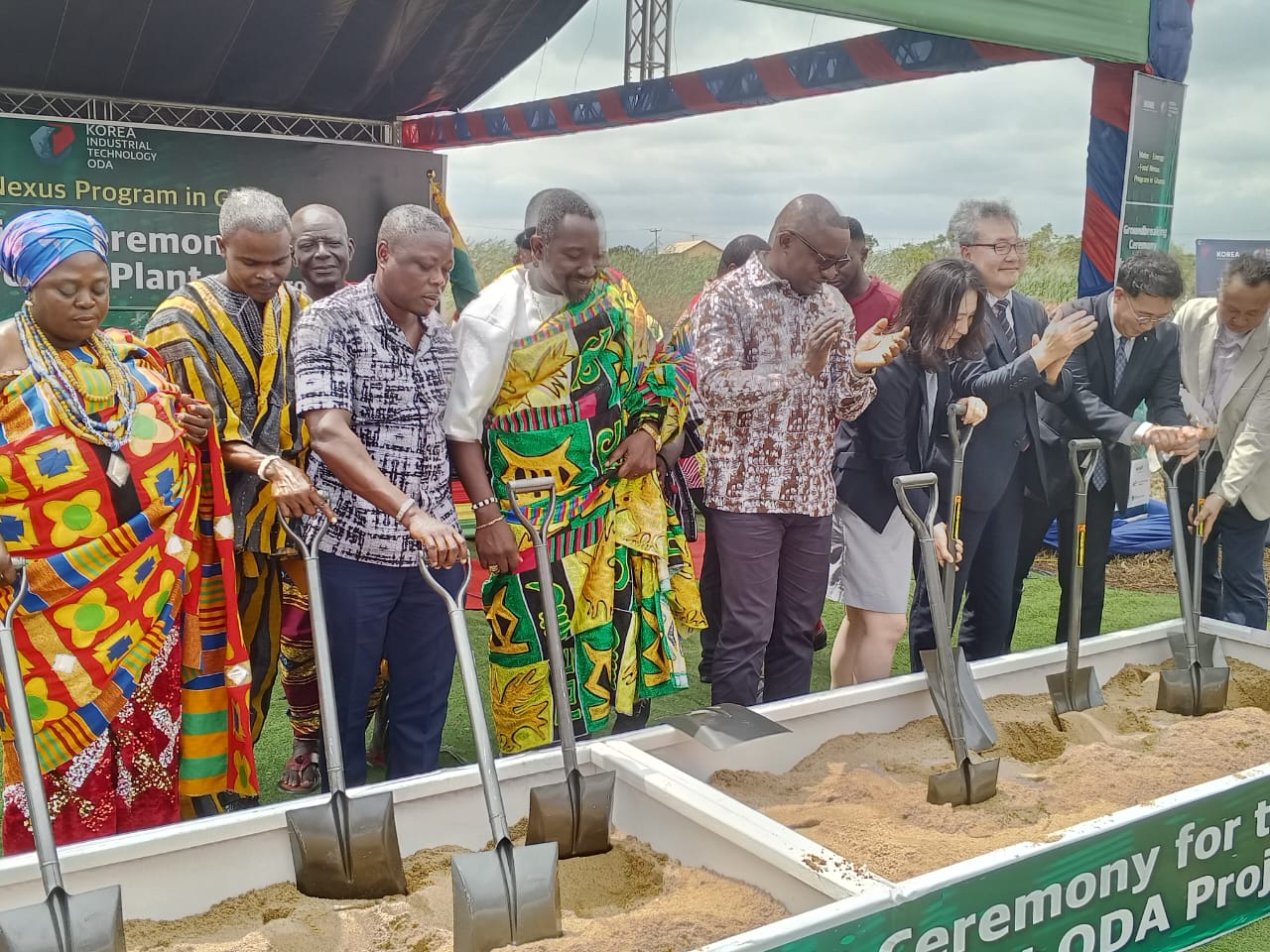
The Minister for Energy and Green Transition, John Abdulai Jinapor, has officially launched construction on the groundbreaking Water-Energy-Food Nexus Project at Dawhenya, marking a “giant step” toward Ghana’s sustainable development goals.
Speaking at the ceremony, Abu Jinapor affirmed the government’s commitment to deploying renewable energy, ensuring food security, and tackling critical national challenges, including land encroachment and reliance on food imports.
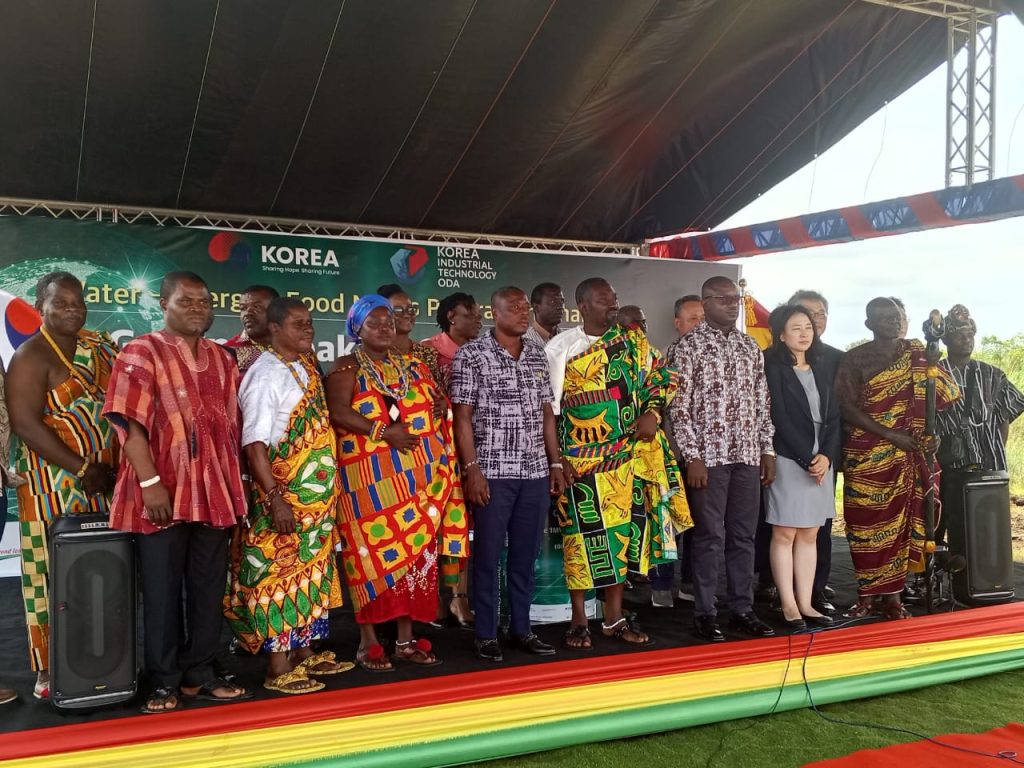
Integrated Project to Secure Food and Water
The Dawhenya project centers on the construction of a one-megawatt integrated solar power system, which will directly support agricultural activity at the irrigation site.
”This is clearly in line with the ministry’s vision,” the Minister stated, highlighting the shift in the ministry’s mandate to focus on renewables. He emphasized that the project is a model for a “green, circular economy,” where clean energy directly supports productivity, improves livelihoods, and strengthens climate resilience.
He unveiled a far more extensive plan to roll out a massive solar-backed irrigation system across the country, starting with pilot projects in three selected regions in the coming weeks.
”This will provide, one, water for irrigation, and two, will integrate drinking water, so that communities where they do not have water will utilize this water to provide them with potable drinking water as well,” he explained.
John Jinapor stressed the economic necessity of the initiative, noting that less than four percent of Ghana’s land is currently irrigated despite the country’s vast potential, including the running of the White and Black Volta Rivers. This project, he argued, will help boost food security, reduce the import bill, and consequently strengthen the currency.
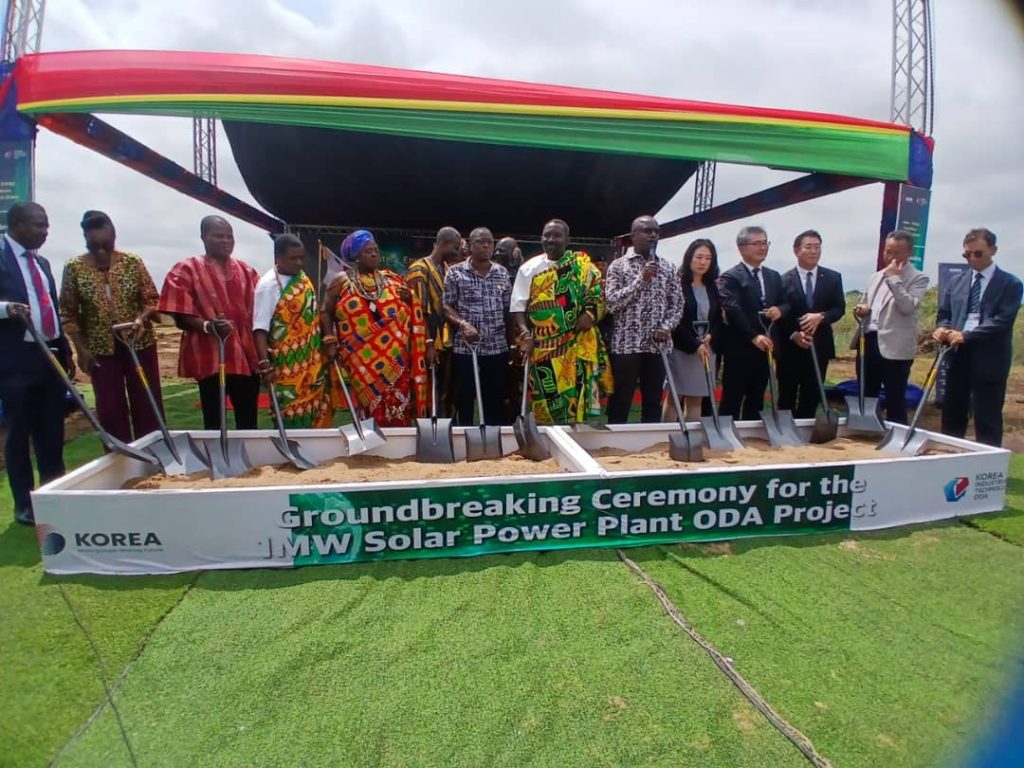
Tackling Encroachment and Inflation
Acknowledging the traditional authorities, led by the Paramount Chief, the Minister directly addressed the issue of land encroachment plaguing the area.
”Let me assure you that I’ll take this to the highest level. Government will work in partnership with the traditional authority to ensure that the lands are protected,” he pledged. He further asserted that revamping the irrigation scheme and returning the land to productive agricultural use is the most effective way to address the menace of encroachment.
He also linked the project to the broader economic fight, reminding the audience that food inflation was a major driver of the overall inflation rate in 2024.
”We cannot continue to import tomatoes, continue to import onion from our Sahelian countries, when we have better arable land and water resources,” he stated, positioning the Dawhenya project as a decisive step to make Ghana the nation’s “food basket.”
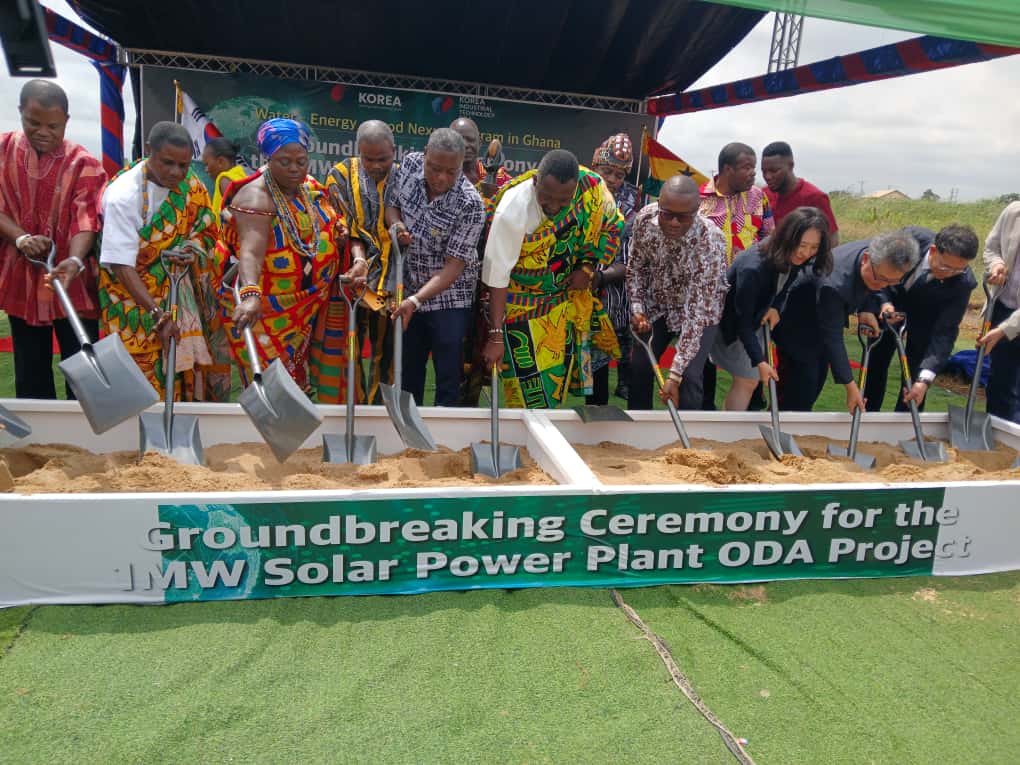
Commitment to Partners and Timelines
John Abdulai Jinapor used the platform to extend the government’s gratitude to the Korean Ambassador and the Korean government for their partnership, underscoring the importance of utilizing their technology while securing internal funding for the broader roll-out.
He also commended local and international partners for their “vision, resources, and technical expertise,” specifically acknowledging the Director for Renewable Energy and Green Transition, Engineer Seth Mawu, for his tireless efforts.
In a firm directive to the contractors, the Minister demanded strict adherence to project boundaries and timely completion. “We do not want to skip our timelines,” he said, promising personal, unannounced visits to monitor progress.
Concluding his remarks, Abu Jinapor encapsulated the significance of the event, “Today, as we lay these projects, we are not just doing a foundation, but providing a resilient, climate-smart agriculture future for Ghana… a foundation for innovation, sustainability, and prosperity for generations to come.”
Story by: Eugenia Ewoenam Osei