In 2017, Ghana’s Free Senior High School (SHS) policy was introduced with the ambitious goal of transforming the educational landscape.
The policy aimed to increase access to secondary education, alleviate financial burdens on families, and reduce disparities, especially between rural and urban areas.
While the initiative has successfully broadened access, significant challenges persist in areas of quality, funding sustainability, and systemic inequalities.
A thorough revision of the policy, informed by careful evaluation of historical context and sustainable funding sources, is essential to ensure that Free SHS fulfils its promise.
Colonial Legacy and Educational Inequities: Rural vs. Urban
Ghana’s educational system is heavily shaped by its colonial past. Under British rule, the educational system was structured to produce a small elite class that would serve colonial interests, leaving much of the population, especially in rural areas, with limited access to quality education.
Schools in urban regions, were geared towards training future administrators, while schools in rural regions were under-resourced and neglected or non-existent all.
This disparity has persisted in the post-colonial era, with urban areas continuing to benefit from better infrastructure, trained teachers, and higher educational standards, while rural regions remain disadvantaged.
The introduction of Free SHS was initially seen to address these historical inequities, but the policy’s implementation has not fully bridged the gap between rural and urban areas.
While urban schools even struggle to accommodate the surge in students brought by Free SHS, rural schools continue to face severe challenges such as overcrowded classrooms, inadequate teaching materials, and insufficient school infrastructure.
The rural-urban divide remains stark, and despite the policy’s universal implementation, targeted interventions are required to address the disparities that continue to affect the quality of education in rural regions.
For example, while schools in urban centres have benefited from decades of infrastructure investment, rural schools have struggled to keep pace with increased enrolment.
Free SHS has exacerbated existing disparities by overloading schools in rural areas that were already operating with insufficient resources.
The Challenge of Quality Education: Overcrowding and Teacher Shortages
Access to education, while critical, is only part of the equation. For education to be transformative, its quality must also be prioritised.
The implementation of Free SHS, while successful in expanding access, has created significant quality challenges.
One of the most pressing issues is overcrowding. Government reports indicate that SHS enrolment figures increased dramatically after the policy’s introduction.
The number of SHS students grew from 813,000 in 2017 to over 1.2 million in 2023, placing immense pressure on infrastructure.
Schools that were once under-utilised are now overcrowded, with classrooms exceeding capacity.
While urban schools like Achimota have seen a surge in students, many rural schools have been unable to expand infrastructure to accommodate the influx. This overcrowding has strained the teacher-student ratio, contributing to a decline in academic performance.
In addition to overcrowding, there is a shortage of qualified teachers. Many teachers, already overworked, face increasing challenges due to the rapid expansion of Free SHS.
The teacher-student ratio, which was already high in some areas, has worsened, particularly in rural regions. In many rural schools, the teacher-student ratio stands as high as 1:60, which is far from ideal for ensuring quality education.
The Feeding Grant System: A Rural-Urban Comparison
Before the implementation of Free SHS, one of the key challenges faced by rural areas, particularly was the lack of a reliable feeding grant system.
Students from low-income families in these regions often struggled with the costs of food, accommodation, and transportation.
While the government attempted to address this through feeding grants for rural schools, the system was poorly funded and inconsistent.
Many schools in rural areas relied heavily on these grants, but they were often delayed or insufficient, leading to disruptions in students’ meals.
In contrast, urban schools were more self-sufficient, with better access to local resources and private support to supplement their feeding needs.
Schools in urban areas had well-established networks and consistent access to resources.
With the introduction of Free SHS, the feeding system became more standardised, but rural schools continued to face difficulties in ensuring that every student received consistent meals.
This was exacerbated by the government’s heavy reliance on fluctuating oil revenues to finance the policy, which further strained the ability to provide these essential grants, especially during periods of oil price volatility.
Budgetary Allocation and Funding Sources: Crunching the Numbers
The financial sustainability of the Free SHS program remains a critical concern. Between 2019 and 2023, the total budgetary allocation for Free SHS amounted to GHS 11.3 billion.
The following is a breakdown of the budgetary allocation over the years:
| Year | Amount (GHS) |
| 2019 | 1,662,641,924.00 |
| 2020 | 2,429,257,748.00 |
| 2021 | 1,974,021,968.00 |
| 2022 | 2,300,000,000.00 |
| 2023 | 2,957,502,092.00 |
| Total | 11,323,423,732.00 |
Funding for the program has primarily come from the Government of Ghana (GoG) and the Annual Budget Funding Amount (ABFA), which derives from oil revenues.
However, the sustainability of this funding model has been called into question due to the volatility of global oil prices.
In 2020, for instance, the government relied on the ABFA for about 90% of its funding for Free SHS. By 2023, the program was entirely funded by the ABFA due to the government’s inability to borrow from international capital markets.
This reliance on a single source of income raises serious concerns about the long-term sustainability of the policy.
The receipts from the ABFA over the same period show concerning fluctuations:
| Year | ABFA Receipts (GHS) | Free SHS Spent (GHS) | Percentage Spent on Free SHS |
| 2019 | 2,496,427,506.00 | 720,070,662.00 | 29% |
| 2020 | 1,514,800,000.00 | 1,297,763,595.00 | 86% |
| 2021 | 1,438,320,000.00 | 763,180,024.00 | 53% |
| 2022 | 5,333,910,000.00 | 930,846,000.00 | 17% |
| 2023 | 5,584,836,210.00 | 2,957,502,092.00 | 53% |
The analysis shows that the ABFA has been heavily relied upon to fund Free SHS, but there are notable fluctuations in funding availability, highlighting the unsustainable nature of this approach.
Sustainable Funding for Free SHS: The Case for VAT
Value Added Tax (VAT) is one of the most reliable forms of taxation globally, providing governments with a stable and broad-based revenue source.
Ghana’s current VAT rate is set at 15%, with an additional 2.5% allocated to the Ghana Education Trust Fund (GETFund), another 2.5% earmarked for the National Health Insurance Scheme (NHIS), and a 1% COVID-19 Levy introduced as a temporary measure during the pandemic.
However, it is important to note that the NHIL, GETFund, and COVID-19 Levy are not technically VAT.
Instead, they function more like sales taxes, not subject to the input-output mechanism that governs VAT.
In comparison, the European Union (EU) has an average VAT rate of 21.6%, with rates ranging from 17% to 27% across its member states. Ghana’s VAT rate of 15% is relatively low by these standards, and there is significant room for adjustment to meet the growing fiscal demands of the country. A modest increase of 1.5% or 2.5% in the VAT rate, raising it to a total of 23.5% to 24.5%, could generate between GHS 1.8 billion and GHS 2.3 billion annually – close to the GHS 2.2 billion required each year to sustain the Free SHS program.
This makes VAT an ideal candidate for long-term financing of the policy.
For modelling purposes, even an effective rate of 20% – inclusive of the GETFund, NHIL, and COVID-19 Levy – still leaves room for effective computation and alignment with global VAT standards.
Such an approach would provide a stable, predictable source of funding for Free SHS while keeping within the frameworks of global best practices for financing public services.
Unlike volatile oil revenues or regressive taxes like the E-Levy, VAT is a broad-based and stable revenue source.
This is crucial for the long-term sustainability of programs like Free SHS, which require consistent funding.
By increasing the portion of VAT allocated to the GETFund, which directly supports education, the government can ensure that financing for Free SHS remains robust and reliable.
VAT applies to a wide range of goods and services, making it more equitable as it spreads the tax burden across all sectors of the economy.
This ensures that the financing of education is not overly reliant on a few sources, and it mitigates the risk of fluctuating revenues from oil or the disruptive nature of digital transaction taxes like the E-Levy.
Furthermore, VAT is easier to administer, harder to evade, and can generate steady revenue even during times of economic uncertainty, unlike the often-unpredictable nature of oil revenues or the transient COVID-19 Levy.
Global Best Practices
Countries with established VAT systems, like those in the European Union, effectively use VAT to fund essential public services, including education, healthcare, and infrastructure.
With an average VAT rate of 21.6% across EU nations, Ghana’s VAT rate is on the lower end. By gradually increasing the VAT rate – specifically the portion allocated to the GETFund – Ghana can align its taxation system with global standards and ensure consistent funding for Free SHS and other social programs.
This approach would also help broaden the tax base by including the informal sector, which remains largely outside the scope of many other forms of taxation.
The informal economy in Ghana is substantial, and increasing VAT compliance among informal traders and businesses would contribute to more inclusive national revenue generation.
As Ghana continues to expand the Free SHS program, ensuring sustainable and predictable funding is vital. The current reliance on volatile sources like oil revenues and regressive taxes like the E-Levy is not a sustainable solution for financing long-term initiatives. Increasing the VAT rate – particularly the portion allocated to education GETFund – offers a stable, broad-based revenue source to secure the future of Free SHS.
By aligning Ghana’s VAT system with global standards, the government can provide consistent, reliable funding for education while maintaining fiscal stability.
A modest increase in VAT, ideally set at 20% or slightly higher, would allow Ghana to meet its financial needs for Free SHS and ensure that this landmark policy remains viable and sustainable for generations to come.
Global Standards and Future-Proofing Education
To meet global standards, Ghana must invest not only in access but also in quality. Countries like Finland and South Korea have demonstrated that achieving quality education requires consistent investment in teacher training, curriculum development, and student support systems.
Ghana should prioritise STEM education, vocational and technical training, and digital literacy to prepare students for the future workforce.
A Call for Comprehensive Revision
The Free SHS policy has been a major success in increasing access to secondary education, but its future success will depend on addressing the challenges of overcrowding, teacher shortages, funding sustainability, and quality improvement.
A comprehensive revision is necessary to ensure the policy fulfils its promise, particularly in rural regions. By securing sustainable funding sources, investing in infrastructure, and prioritizing quality education, Ghana can build a more inclusive and future-ready education system for all.
The time to reset is now!
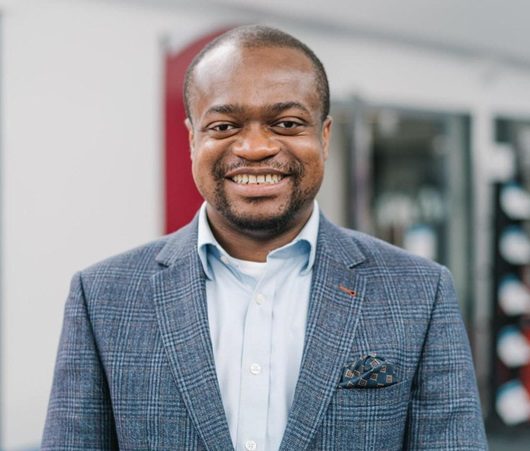
The writer is Sharif Mahmud Khalid, BA (Hons), MSc (Oxon), MBA, PhD, FRSA is an Associate Professor of Accounting & Finance. He is a Fellow of the Royal Society of Art