The Ghana Gold Board (GoldBod) has signed a major refinery agreement with Royal Ghana Gold Refinery, marking another significant step towards Ghana’s drive to process and add value to its mineral resources locally before export.
Under the agreement, GoldBod will supply up to one metric tonne of gold every week to Royal Ghana Gold Refinery for local refining, reinforcing government’s broader industrialisation and mineral value addition strategy.

The partnership marks GoldBod’s second refinery agreement in 2026, following an earlier deal with Gold Coast Refinery, as authorities intensify efforts to reposition Ghana as a major gold refining hub on the African continent.
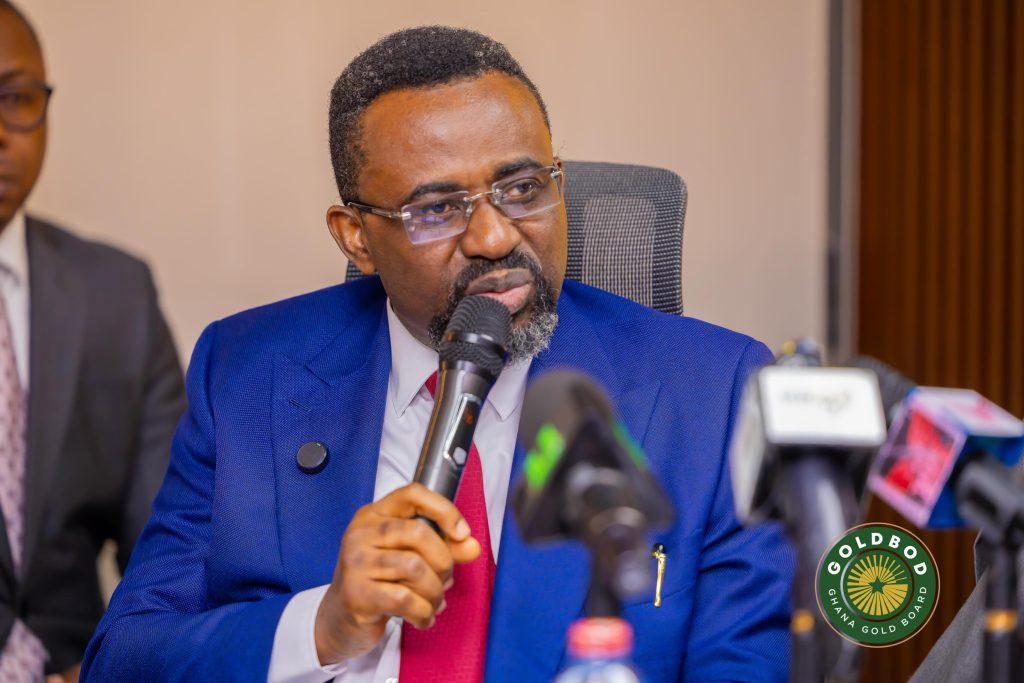
Speaking at the signing ceremony, the Chief Executive Officer of GoldBod, Sammy Gyamfi Esq., said the agreement aligns with President John Dramani Mahama’s vision of ensuring that all mineral resources mined in Ghana are refined locally before export by the year 2030.
According to him, Ghana can no longer continue exporting raw mineral resources while losing substantial economic value, jobs, and industrial opportunities to foreign markets.

The agreement is expected to significantly improve Ghana’s capacity to retain refining fees, recover valuable mineral by-products, and strengthen local participation within the gold value chain.
The partnership will also create new employment opportunities, deepen technical expertise within the mining sector, and support broader economic transformation efforts.
Mr Gyamfi stressed that local refining remains critical to building a more resilient and self-sustaining mineral economy capable of maximizing national benefits from Ghana’s vast gold resources.

The Bank of Ghana and Royal Ghana Gold Refinery also pledged their support towards advancing the country’s industrialisation agenda and strengthening Ghana’s position within the global gold market.

The latest refinery agreement comes at a time when government is pursuing broader reforms within the mining sector aimed at increasing local content, enhancing value addition, and ensuring that Ghana captures a greater share of the economic returns from its natural resources.
The growing focus on local refining could help reduce Ghana’s long-standing dependence on raw commodity exports while accelerating industrial growth and foreign exchange earnings.
With Ghana remaining Africa’s leading gold producer, strengthening domestic refining capacity will be crucial to transforming the country’s mineral wealth into long-term national development and economic prosperity.