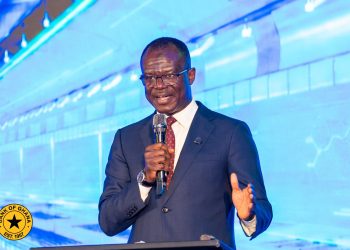
The Deputy Chief of Staff (Administration), Nana Oye Bampoe Addo, has in a speech delivered on behalf of the First Lady, H.E. Lordina Mahama, at the 79th Speech Day of Aburi Girls Senior High School, emphasize key educational reforms and urged students to uphold ethical conduct in the digital age.
Addressing the theme, “A Legacy of Light: Influencing Future Generations,” she celebrated Aburi Girls SHS as a true “Light on the Hill,” or “Bepow So Hann,” for its 79 years of dedicated service to molding the character and dreams of the Ghanaian girl-child.
“Senior High School Education occupies a very critical position in Ghana’s educational framework because it helps shape the ideologies, work ethics, patriotism, and character of our young men and women,” she stated. She affirmed that the National Reset Agenda under His Excellency John Dramani Mahama is specifically targeting the SHS level to strengthen institutions like Aburi Girls to produce morally grounded, academically excellent future leaders.
The Deputy Chief of Staff highlighted several significant reforms and investments undertaken under President Mahama’s leadership to transform the educational sector. She countered critics by confirming that the Free SHS policy has not only been sustained but significantly improved. Funding is now reliable, with the Ghana Education Trust Fund (GETFund) allocation uncapped and GH¢5 billion specifically allocated to ensure the policy’s continuity and improvement.

She announced, “Today, we have rather said ‘bye-bye’ to the double track that disrupted quality study hours for our children.” The 2026 budget allocates GH¢33.3 billion for completing E-blocks and expanding infrastructure, including GH¢ 2 billion for the construction of 200 new Junior High School (JHS) blocks, 200 primary schools, 200 kindergartens, 400 teacher bungalows, and 400 sanitation facilities.
Additionally, the budget includes GH¢292 million for free sanitary pads for girls. Cabinet approved a new arrangement on November 7, 2025, to decentralise food procurement for the School Feeding Programme, ensuring that all grains, poultry, and eggs will be sourced exclusively from local Ghanaian producers, reinforcing the “Made-in-Ghana” campaign.
To remove financial barriers, the “No Fees, No Stress” policy, launched on July 5, 2025, covers academic fees for all first-year students in public tertiary institutions, with over 120,000 students having received refunds as of September 2025. Furthermore, the government launched the Free Tertiary Education for Persons with Disabilities on October 24, 2025.
The government has also made mother-tongue instruction compulsory in all basic schools to strengthen foundational learning and directed the reinstatement of Parent-Teacher Associations (PTAs). It is also implementing a new curriculum that reintroduces Religious and Moral Education (RME) and civic education to strengthen character formation. Finally, the Ministry of Education has revived the ‘Teacher Dabr3’ initiative, which includes the construction of 400 teacher bungalows, as part of a long-term plan to deliver 50,000 housing units for teachers across the country.
Nana Oye Bampoe Addo dedicated a significant portion of her speech to the challenges and opportunities presented by Artificial Intelligence (AI) and new media, calling it a “double-edged tool.” She cautioned the students against the negative aspects of the digital landscape, stating, “It is becoming common to see young people chasing clicks, likes, or fame by exposing themselves online, courting controversy, insulting elders, or attacking school authorities.”

“These paths do not build character.” The Deputy Chief of Staff issued a clear directive to the students, “As daughters of this institution, you must protect your dignity. You must safeguard the reputation of your families and the integrity of this school. Every action online leaves a footprint, and you must choose footprints that inspire, not ones that you will regret.” She urged the school authorities, teachers, and alumni to introduce workshops and short courses in AI, media literacy, digital creativity, and vlogging.
This, she argued, is essential because holistic education now includes ethical social media use and understanding how the digital economy works, skills crucial for new jobs and careers. In closing, she commended the teachers, leadership, and alumni for their unwavering commitment to the school’s legacy and encouraged all prize winners and students to continue to be the “Shining Light” for Ghana and the world.
Story By: Eric Boateng