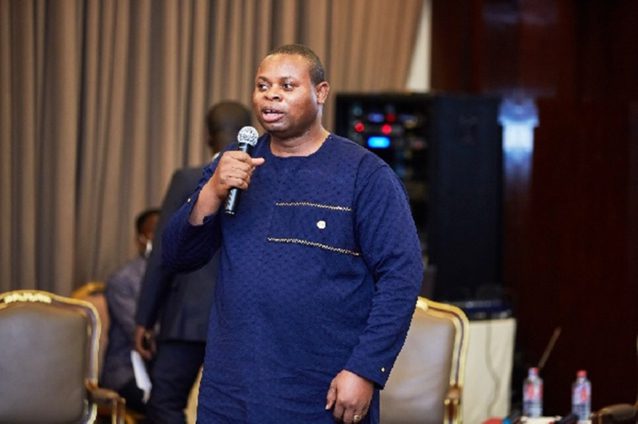
Founding President and Chief Executive Officer of IMANI Centre for Policy and Education, Franklin Cudjoe, has warned that persistent operational weaknesses at Ghana’s ports could expose the country to increased drug trafficking and other security threats while imposing significant costs on businesses and consumers.
Mr Cudjoe is calling on President John Dramani Mahama to demand urgent action from officials responsible for Ghana’s ports, arguing that congestion, prolonged cargo clearance and weak controls could create opportunities for criminal networks to exploit the system.
His concerns come amid renewed scrutiny of narcotics trafficking in West Africa and recent seizures of drugs linked to Ghana. On September 10, French customs reportedly intercepted nearly 3.9 tonnes of cocaine in Dunkirk from a container that had departed Ghana, while Ghanaian police seized 866 parcels of suspected cocaine at a warehouse within the Tema Harbour enclave in August.
Mr Cudjoe said developments across the sub-region suggest that international trafficking networks are increasingly exploiting West Africa as a transit route, making effective security and surveillance at Ghana’s ports critical.
“Well, Mr. President, we do not want to be known as the cocaine coast. Please give your port officials ultimatums to prevent drugs from entering Ghana,” he said.
He warned that weaknesses in port operations could have implications beyond narcotics, arguing that inadequate controls could potentially be exploited for the movement of weapons and other security threats.
Tema Port delays hurting businesses
Mr Cudjoe also raised concerns about the deteriorating efficiency of cargo clearance at the Tema Port, saying prolonged delays were creating additional costs for businesses and opening opportunities for alleged manipulation, collusion and extortion.
His concerns over congestion come as government agencies acknowledge significant operational pressure at the port. The Ghana Ports and Harbours Authority has attributed the situation partly to increased import traffic, empty-container movements and road congestion.
Transport Minister Joseph Bukari Nikpe has also acknowledged the impact of prolonged clearance times, warning that additional costs arising from delays are ultimately transferred to consumers through higher prices. Government has consequently begun engagements aimed at accelerating container inspections and clearance.
The economic impact has already become evident in some industries. Cement manufacturers have cited extended vessel waiting times and mounting demurrage costs in introducing a temporary GH¢12 surcharge on each bag of cement. Industry estimates put demurrage costs at as much as US$50 million during the first eight months of 2026.
Mr Cudjoe argued that such inefficiencies eventually extend beyond importers, as businesses incorporate demurrage and other port-related expenses into the prices charged to consumers.
He also warned that persistent difficulties at the ports could damage Ghana’s attractiveness as a business and trading destination.
Quoting a business owner affected by the situation, Mr Cudjoe said: “We don’t have a problem paying people, but the lack of expediency to industry and no sense of the damage causing businesses and even to the government revenue.”
Mr Cudjoe is therefore urging the government to treat the challenges at Ghana’s ports as both an economic and national security concern, with stronger controls against illicit trafficking accompanied by urgent reforms to improve cargo clearance and reduce the financial burden on businesses.