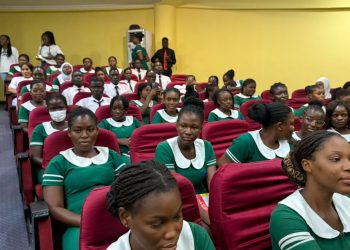
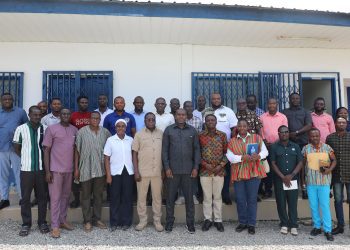
The Ministry of Health, through the Ghana Health Service (GHS), has launched a comprehensive Human Papillomavirus (HPV) Vaccine Campaign, a critical national effort aimed at significantly reducing the burden of cervical cancer among young girls. This initiative marks a pivotal step in safeguarding the health of future generations in Ghana.
Speaking at a recent stakeholders’ meeting at the Health Promotion Division of the Ghana Health Service, Professor Samuel Kaba Akoriyea, Director General of the GHS, highlighted the severe impact of cervical cancer, noting it as a leading cause of cancer-related deaths among women in the country.
“The introduction of the HPV vaccine is a significant stride towards reducing the number of women affected by this devastating disease,” Professor Akoriyea stated. He emphasized the preventive power of the vaccine, asserting that vaccinating girls before viral exposure is key to preventing the disease and saving lives.
The campaign will primarily target girls aged nine, an age group identified as most vulnerable to HPV infection and where the vaccine’s efficacy is highest prior to any exposure. While the vaccine requires a single dose for full protection, the initial strategy involves an intensive vaccination drive for girls aged 9-14 years. This will precede the routine integration of the vaccine for both in-school and out-of-school girls, with the main vaccination campaign slated to commence in September 2025.
Professor Akoriyea further revealed an ambitious target, where approximately 2.2 million girls are expected to receive the HPV vaccine. He assured that the GHS has meticulously prepared for this extensive rollout, implementing a comprehensive plan that includes essential training, robust communication strategies, efficient data management, stringent safety surveillance, and systematic monitoring and evaluation.
The country’s readiness extends to logistical capabilities, with Professor Akoriyea confirming the availability of necessary cold chain facilities and logistical support. The vaccines are currently securely stored in national cold rooms and are slated for distribution to regional cold rooms across the country in the coming weeks.
Collaborating closely with the Ghana Health Service is the Ghana Education Service (GES). Theresa Oppong Mensah, the National School Health Education Program (SHEP) Coordinator for GES, underscored the vital role of educating young individuals about the impacts of HPV and empowering them with knowledge for prevention.
Oppong Mensah affirmed GES’s commitment to the intervention, stating, “For GES, we are fully prepared for this exercise, and we play a key role in this. Having collaborated with the Ghana Health Service on other school health interventions, we are equally committed to supporting this one.” She pledged that teachers and parents would be thoroughly educated on the benefits of the vaccine to ensure smooth and effective administration.
“We will conduct intensive education in schools, utilizing our teachers and district officers. The children themselves are powerful tools we use all the time, and we will leverage them again,” Ms. Oppong Mensah explained. “We will work in collaboration with the Ghana Health Service to develop educational materials for the children, and our PTAs will be fully informed. We are ready to provide any required support for this particular exercise.”
Story By: Eugenia Ewoenam Osei