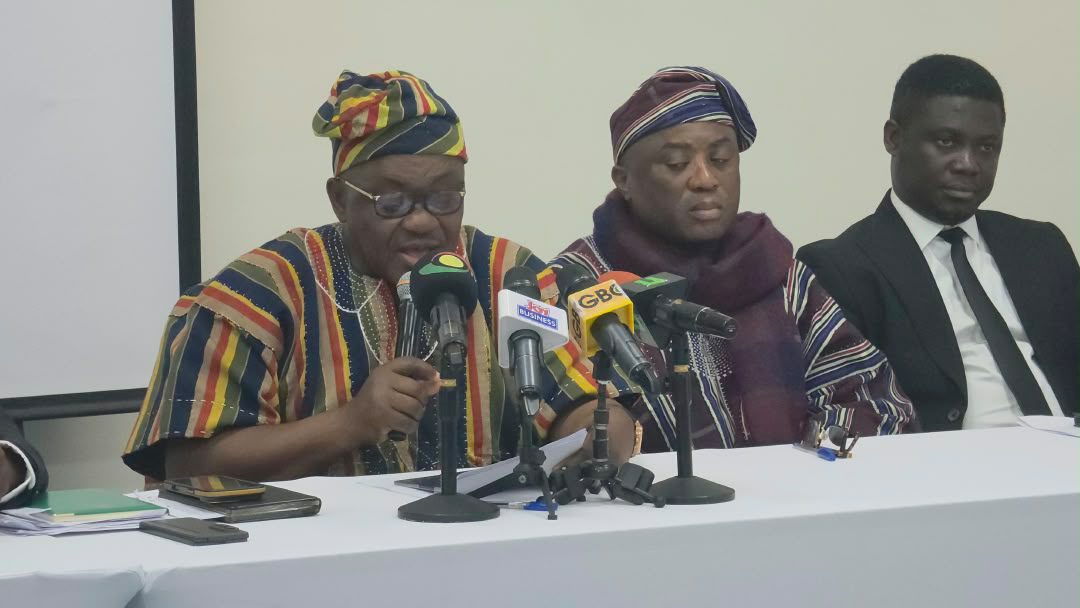
The Government of Ghana and Organised Labour have signed a two-year public service remuneration agreement covering 2027 and 2028, setting out salary increases for workers under the Single Spine Salary Structure (SSSS).
Under the agreement, public sector workers will receive a 9 per cent increase in total remuneration in 2027, comprising an 8 per cent across-the-board increase in base pay and an additional one percentage point allocated to Conditions of Service.
For 2028, the parties have agreed to a 10 per cent across-the-board increase in base pay, effective January 1, 2028, calculated on the applicable base pay as of December 31, 2027.
The agreement, signed on Wednesday, October 28, is expected to provide greater certainty for workers and government expenditure planning while supporting industrial harmony during the transition from the Fair Wages and Salaries Commission (FWSC) to the proposed Independent Public Emoluments Commission (IPEC).
The negotiations were conducted under the Public Services Joint Standing Negotiating Committee (PSJSNC), with the government represented by the FWSC and the Ministry of Finance, and Organised Labour represented by public service unions and institutions.
Government Highlights Significance of Agreement
Speaking at the signing ceremony, the Minister for Finance, Dr Cassiel Ato Forson, described the agreement as a historic milestone in Ghana’s public sector remuneration negotiations.

He commended Organised Labour and the government negotiating team for their cooperation, understanding and commitment to the national interest.
According to him, the agreement marks the first time the government and Organised Labour have reached a two-year pay arrangement for public service workers.
Dr Forson said the agreement went beyond salary adjustments, explaining that it was intended to protect workers’ incomes, provide families with greater financial certainty and enable the government to plan and manage public expenditure responsibly.
He maintained that the agreement demonstrated that improving workers’ remuneration and maintaining responsible public financial management could be pursued simultaneously.
Inflation Protection Clause Included
The agreement also contains a provision to protect workers’ incomes against significant inflationary pressures.
The parties considered prevailing inflation and government projections for 2027 and 2028 in determining the 2028 base pay adjustment.
Under the arrangement, the PSJSNC will reconvene to review the 2028 base pay if the year-on-year inflation rate for December 2027 exceeds 16 per cent, representing twice the 8 per cent midpoint of the government’s inflation projection.
The provision is intended to provide a mechanism for reviewing the agreed adjustment if inflation rises significantly beyond expectations.
The TUC Secretary-General, Bro. Joshua Ansah, said the 2027 base pay adjustment was above the prevailing inflation rate, which he put at 5.3 per cent.
He acknowledged, however, that the increase might not fully address the financial pressures facing workers.
“While the agreement may not meet every expectation, it represents progress in our efforts to protect workers’ purchasing power,” he said.
Mr Ansah added that the parties had also agreed to reconvene and reopen negotiations if inflation in 2028 exceeded 10 per cent or reached a level that substantially eroded workers’ purchasing power.
He stressed that Ghanaian workers deserved fair remuneration, equitable conditions of service and adequate protection against the rising cost of living.
FWSC Emphasises Industrial Harmony and Compensation Reforms
The Chief Executive of the Fair Wages and Salaries Commission, Dr George Smith-Graham, said the negotiations were particularly significant because they coincided with an important period in Ghana’s public sector compensation reform agenda.
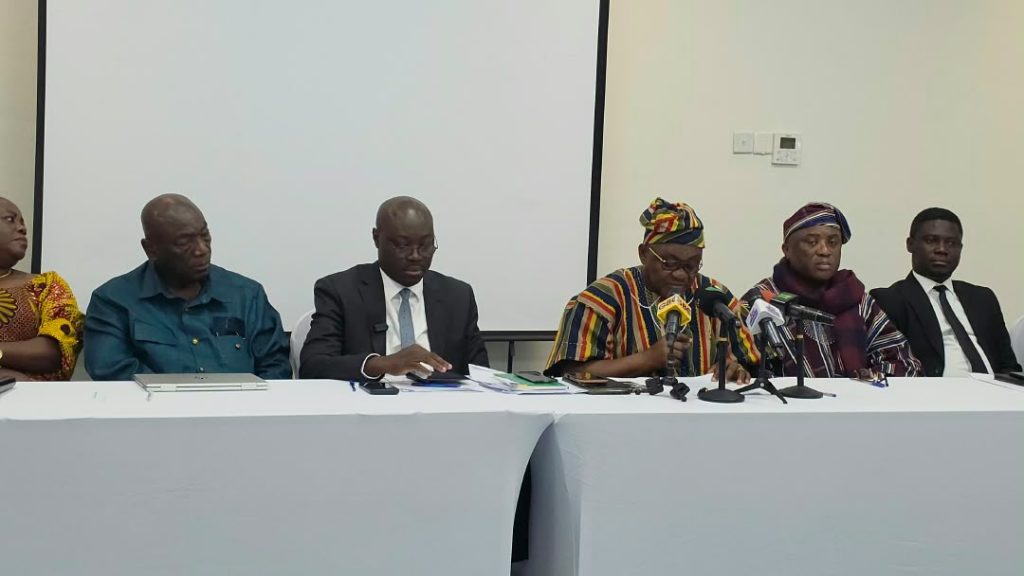
He explained that the decision to adopt a two-year remuneration framework reflected a shared commitment to industrial harmony, predictable public expenditure, income security for workers and stability during the institutional transition to IPEC.
Dr Smith-Graham praised both parties for demonstrating maturity, mutual respect and a willingness to compromise while balancing workers’ welfare with the country’s economic realities and fiscal sustainability.
He acknowledged the contributions and sacrifices of public sector workers to national development, while recognising the government’s responsibility to maintain fiscal discipline.
As the FWSC prepares for the transition to IPEC, he said the overarching objective remained the promotion of equal pay for work of equal value, fair rewards for productivity and a compensation system that advances equity, efficiency and national development.
Allowances and Reforms to Be Reviewed
Beyond the salary increases, the agreement provides for a review of allowances during the transitional period to address existing distortions in the public sector compensation system.
The government has also committed to consulting Organised Labour quarterly on reforms affecting public service remuneration.
The agreement further clarifies that the FWSC will continue to perform its lawful functions until any transfer of responsibilities to IPEC takes legal effect.
The two-year framework is therefore expected to serve not only as a remuneration arrangement but also as a basis for managing compensation reforms during the transition.
Agreement Signed by Government and Labour Leaders
The agreement was signed on behalf of the government by Dr George Smith-Graham, Chief Executive of the FWSC, and on behalf of Organised Labour by Bro. Joshua Ansah, Secretary-General of the Trades Union Congress (TUC).
The Minister for Finance, Dr Cassiel Ato Forson, and the General Secretary of the Ghana National Association of Teachers (GNAT), Mr Thomas T. Musah, witnessed the signing.
Both parties reaffirmed their commitment to maintaining industrial harmony and improving productivity across Ghana’s Public Service.
The agreement takes effect on January 1, 2027, and will remain in force until December 31, 2028.
Story by Osman Issah Abadoo