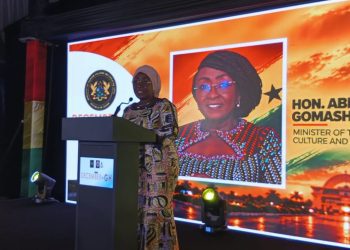
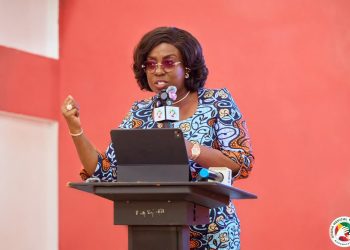
Minister for Foreign Affairs and Regional Integration, Shirley Ayorkor Botchwey has affirmed government’s determination to significantly improve the health sector of the country.
According to her, the National Health Insurance Scheme (NHIS) under the current government has improved significantly, through the introduction of technologically enhanced procedures, in its delivery and health coverage.
Madam Ayorkor Botchwey said this when the Africa Regional Director of the Catholic Relief Services (CRS), Jennifer Overton and a delegation paid a courtesy call on her.
The purpose of the visit was to provide highlights of the organization’s work in Ghana over the past 63 years as well as share CRS 5-year strategic plan.
She also indicated that in furtherance of Governments Health infrastructure drive, a firm commitment had been made for the execution of Agenda 111, that establishes the framework for the construction of over 100 District Hospitals, seven Regional.
According to her, the launch of Ghana’s largest drone delivery service has improved healthcare delivery, by rapidly delivering emergency essential vaccines, life-saving medications and blood products, especially in hard-to-reach areas.
Madam Ayorkor Botchwey also lauded the relevance of the intersection between the Christian faith and the developmental projects championed by the Catholic Relief Services and applauded their activities in the agricultural and sanitation sectors as they are in tandem with the Governments developmental agenda.
The Foreign Affairs Minister underscored the importance of the commitment made by President Akufo Addo on measures to fight the pandemic as well as the acquisition and deployment of vaccines to mitigate the continued spread of the virus in Ghana.
However, she lamented the challenge posed by the outbreak of COVID-19 to health service delivery all over the world and commended the CRS for its efforts to fill in some gaps at community levels in Ghana in the collective fight to save humanity.
Additionally, she expressed appreciation for the establishment of the Emergency Relief Fund (ERF) and the COVID-19 Emergency Respond Fund (COERF) through which timely emergency relief services were provided to flood victims in various parts of the Upper East Region in 2020 and the collaborative efforts to fight against the COVID-19 pandemic, particularly among the frontline staff.
She said Ghana was concerned about the worrisome security situation in the Sahel region and was therefore deeply engaged in international mediation efforts to restore peace and security in the Sahel.
Madam Ayorkor Botchwey noted with appreciation the efforts of CRS to help broker peace in the Sahel Region through its Sahel Peace Initiative (SPI).
ABOUT CATHOLIC RELIEF SERVICES
Since 1958, CRS Ghana has established itself as a trusted, respected partner in Ghana’s development.
In the past five decades, CRS has been working to tackle poverty with a holistic approach including projects that improve child and maternal health; increase access to clean water and sanitation; scale-up farm production; and enhance community level savings and lending.
Within the health sector, the CRS at the country level is focused on scaling up effective strategies to mobilize people through their local leaders to change cultural practices that impede the promotion of maternal and child health.
By supporting communities and health facilities with emergency transport systems, medical supplies, and staff training programmes, CRS seeks to improve the level of care for whole communities.
To reduce the incidence of malaria, CRS works to increase ownership and usage of long-lasting insecticidal mosquito nets.
Within the agricultural sector, CRS focuses on improving the production and livelihood capabilities of poor smallholder farmers.
It introduced farmers to new technologies that are appropriate to their needs, while helping them save and access credit so they can increase their profits in local and regional markets.
In the water and sanitation sector, the organization collaborates with school health clubs and sanitation advocacy groups to implement measures to improve sanitation coverage in schools and health facilities.
To address gaps and challenges associated with the COVID-19 response, CRS in collaboration with Catholic Diocesan Health Directorates in the Oti, Northern, North-East and Upper East regions, is implementing the COVID-19 Emergency Response Fund (COERF) Project.
As an intervention that supports Catholic-owned health facilities and their catchment communities, the initiative seeks to fill the identified gaps by supporting partners to help implement interventions to protect frontline health workers, interrupt the potential community spread of the virus, and provide safety nets for the most vulnerable households.
Following the flooding that occurred between 15th August, 1st October, 2020, as result of which an estimated 40,388 people from 254 communities in Bolgatanga, Bawku and West Mamprusi, were severely affected, the CRS in response set-up an Emergency Relief Fund (ERF).
Through collaboration with the Diocesan Development Office (DDO) of the Navrongo-Bolgatanga Catholic Dioceses, relief items were provided to those most affected by the floods.
Finally, through the Youth Life Programme, CRS increases the economic and social productivity of underserved and vulnerable youth by equipping them with technical knowledge as well as life skills in areas such as entrepreneurship and financial literacy.
Through the programme, CRS seeks to build the capacity of the vulnerable youth to enable them successfully operate their own businesses or remain employed, using the vocational skills and professional development, which helps check illegal migration.
Story: Henry George Martinson@radiogoldlive.com