President John Dramani Mahama has announced plans to amend Ghana’s Petroleum Exploration and Production Act, 2016 (Act 919), to introduce improved investment incentives and attract fresh investments into the country’s upstream oil and gas sector.
The President disclosed that the proposed amendments had been signed by the Ministers of Energy and Green Transition and Finance and submitted to Cabinet for consideration.
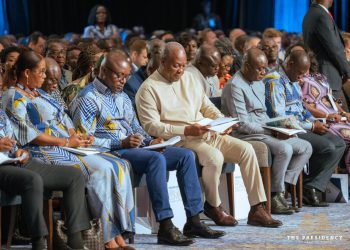
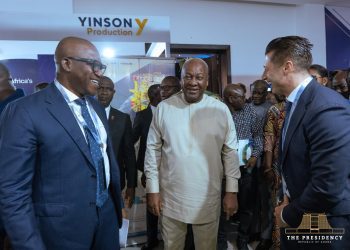
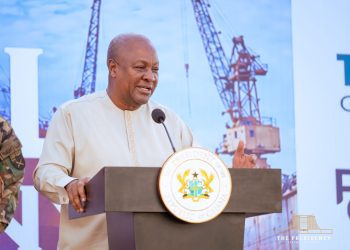
Speaking at the 2026 Petroleum Commission Local Content Conference and Exhibition in Takoradi, President Mahama said the existing legislation had served Ghana well but required adjustments to respond to changing conditions in the global energy industry and improve the country’s competitiveness in attracting petroleum investments.
“In August 2016, I assented to the Petroleum Exploration Development Act 919.
This Act has served us well, both in the current energy transition, but there is a need to amend the Act to provide better incentives to attract investments,” he stated.
He added: “The amendment has been signed by the Ministers of Energy and Finance, and has just been submitted to Cabinet.”
The proposed reforms form part of the government’s broader strategy to restore investor confidence, accelerate exploration, develop new petroleum reserves and reverse the decline in Ghana’s crude oil production.
President Mahama acknowledged that poor governance and regulatory inconsistencies had contributed to a decline in investor interest in Ghana’s petroleum prospects, resulting in some major international oil companies withdrawing or redirecting investments to other jurisdictions.
He said the absence of new drilling activities and delays in signing petroleum agreements had contributed to falling production levels and reduced government revenues.
Ghana’s crude oil production, which peaked at approximately 195,000 barrels per day in 2019, subsequently declined to about 88,000 barrels per day.
However, the President announced that production had recovered to more than 120,000 barrels per day following renewed government engagement with industry partners and efforts to resolve outstanding disputes.
$3.5 Billion Investment Commitments
As part of efforts to revive the sector, President Mahama disclosed that partners in the Jubilee Field had committed US$2 billion, while partners in the Offshore Cape Three Points project had committed another US$1.5 billion.
The investments are expected to finance new wells, subsea infrastructure and the expansion of existing production facilities.
Government is also engaging international oil companies, including ENI, Vitol, Shell, Chevron and Petrobras, on prospective petroleum acreages in Ghana’s western and eastern sedimentary basins.
The President revealed that three memoranda of understanding had been signed on key terms for three blocks, while negotiations on additional petroleum agreements were ongoing.
He further announced that a major obstacle to the development of the Pecan Field had been removed, paving the way for an accelerated development programme.
President Mahama assured international investors that his government remained committed to providing a stable and predictable regulatory environment while resolving disagreements with industry partners in a manner that benefits all parties.
He said the proposed legislative amendments, together with renewed partnerships and increased exploration activities, would help position Ghana as a competitive destination for upstream petroleum investments.
The President, however, stressed that increased foreign investment must translate into tangible benefits for Ghanaians through employment, technology transfer, skills development and expanded opportunities for indigenous businesses.
He urged the Petroleum Commission to ensure that operators and contractors complied with established standards on safety, environmental protection and local participation as the government pursued reforms to strengthen the petroleum industry.
Story: Patrick Asford Boadu