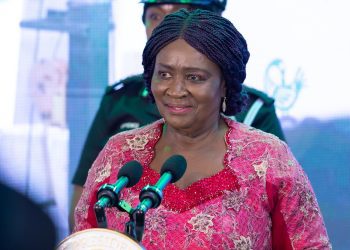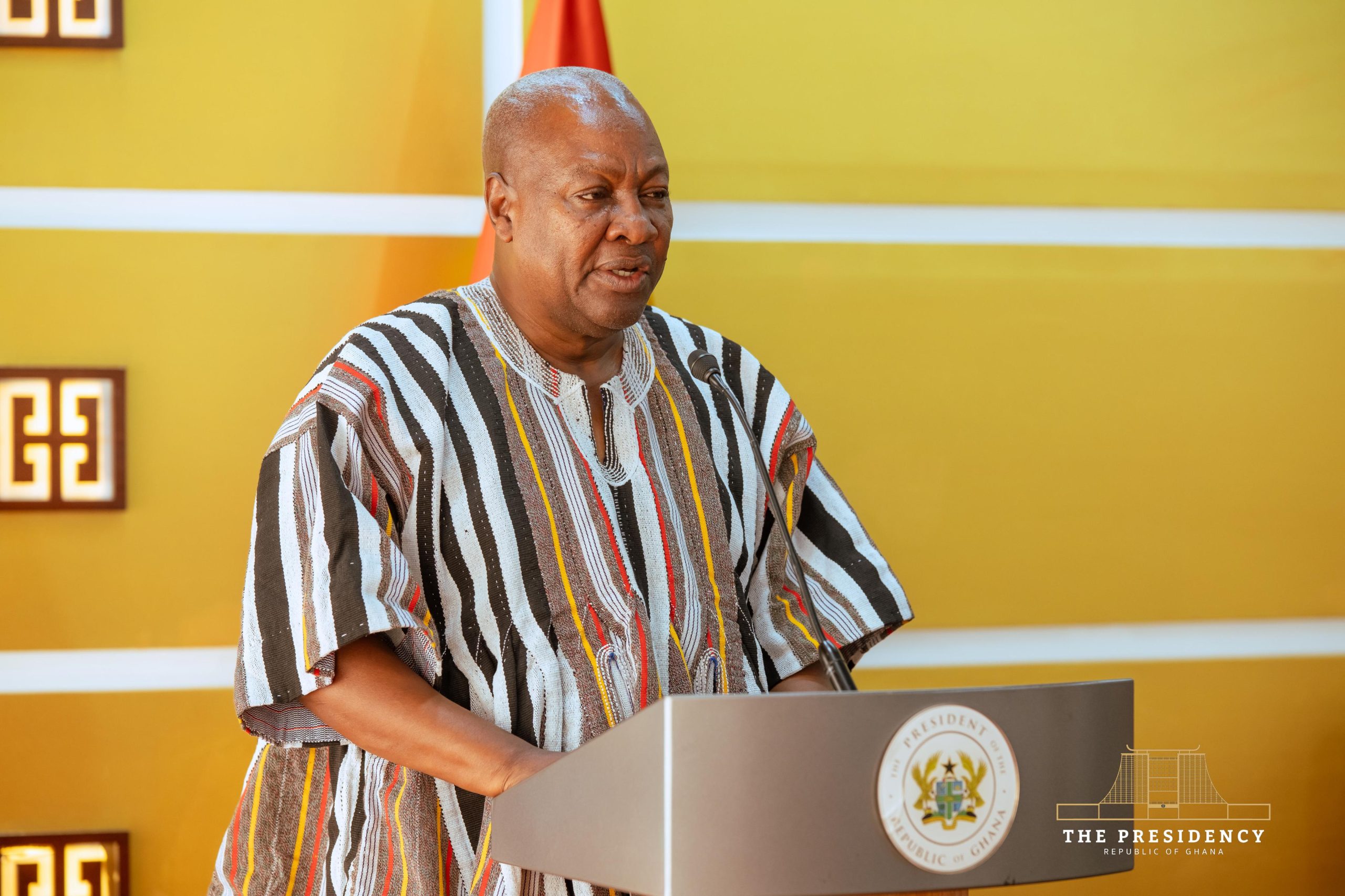
President John Dramani Mahama has inaugurated the committee responsible for steering the GH¢1 billion Bawku Revitalisation Fund, reaffirming his government’s commitment to restoring peace, development and the commercial importance of Bawku.
Speaking at the inauguration ceremony, President Mahama recalled that on December 16, 2025, he received the report of the Otumfuo Mediation Committee and declared that it was time for the guns to be silenced in Bawku.
“I announced that it was time for the guns to be silenced in Bawku and that the issue of Bawku would be resolved through the lawful process, upholding our Constitution and our laws,” the President said.
He noted that there had been significant improvement in the security situation since the mediation report was received, with security services maintaining a firm presence in the area.
President Mahama expressed satisfaction that gunshots were no longer being heard at night and that incidents of impunity had declined.
“I am happy to receive the reports that we no longer hear gunshots at night and that impunity has abated,” he stated.
GH¢1 billion for revitalisation
The President said the government had now allocated GH¢1 billion to the Bawku Revitalisation Fund, paving the way for the implementation of projects aimed at rebuilding and stimulating development in the area.
He explained that the fund, which was initially announced following the receipt of the Otumfuo Mediation Committee’s report, would support infrastructure and other interventions considered necessary by the committee.
“With safety and security prevailing in Bawku and the surrounding areas, this is the time to begin the implementation of the Revitalisation Fund,” President Mahama said.
He stressed that the ultimate objective was to restore Bawku to its former position as one of Ghana’s major commercial centres.
“We want Bawku to recapture its former glory as a major commercial centre in Ghana,” he added.
Conflict disrupted development
President Mahama noted that the prolonged conflict had severely disrupted government services and development activities in the area.
He said the security situation had previously prevented the posting of National Service personnel and medical personnel to Bawku.
He also cited the Tamli Dam project as one of the major development projects affected by the conflict.
According to the President, an employee of the company undertaking the project was killed, forcing the contractor to withdraw from the area.
Consequently, construction of the dam, which is expected to benefit four districts in the Bawku area, was brought to a standstill.
“I am happy that now we have the opportunity to go back and continue the development to enable the people of the area benefit from all the projects that we have been undertaking, and that Bawku gets its fair share of the national cake,” he said.
Committee tasked to drive development
President Mahama explained that the Revitalisation Fund would finance infrastructure projects and other interventions identified by the committee as appropriate.
He called for an inclusive approach to the distribution of the fund, stressing that as many districts within the Bawku area as possible should benefit.
“The Fund will go towards the provision of infrastructure and any other areas that the committee deems appropriate,” he said.
“We expect that as many districts within the Bawku area as possible will benefit from the Revitalisation Fund.”
The President expressed confidence in the members of the committee, describing them as individuals with proven records of integrity and efficiency in public service.
“I have absolute confidence in the membership of the committee, and I know that they will handle this assignment with the usual integrity and efficiency that they have demonstrated in public service over the years,” he said.
President Mahama subsequently declared the Board of the Bawku Revitalisation Fund duly inaugurated, signalling the commencement of efforts to translate the government’s GH¢1 billion commitment into concrete development interventions for Bawku and surrounding communities.
Story: Patrick Asford Boadu