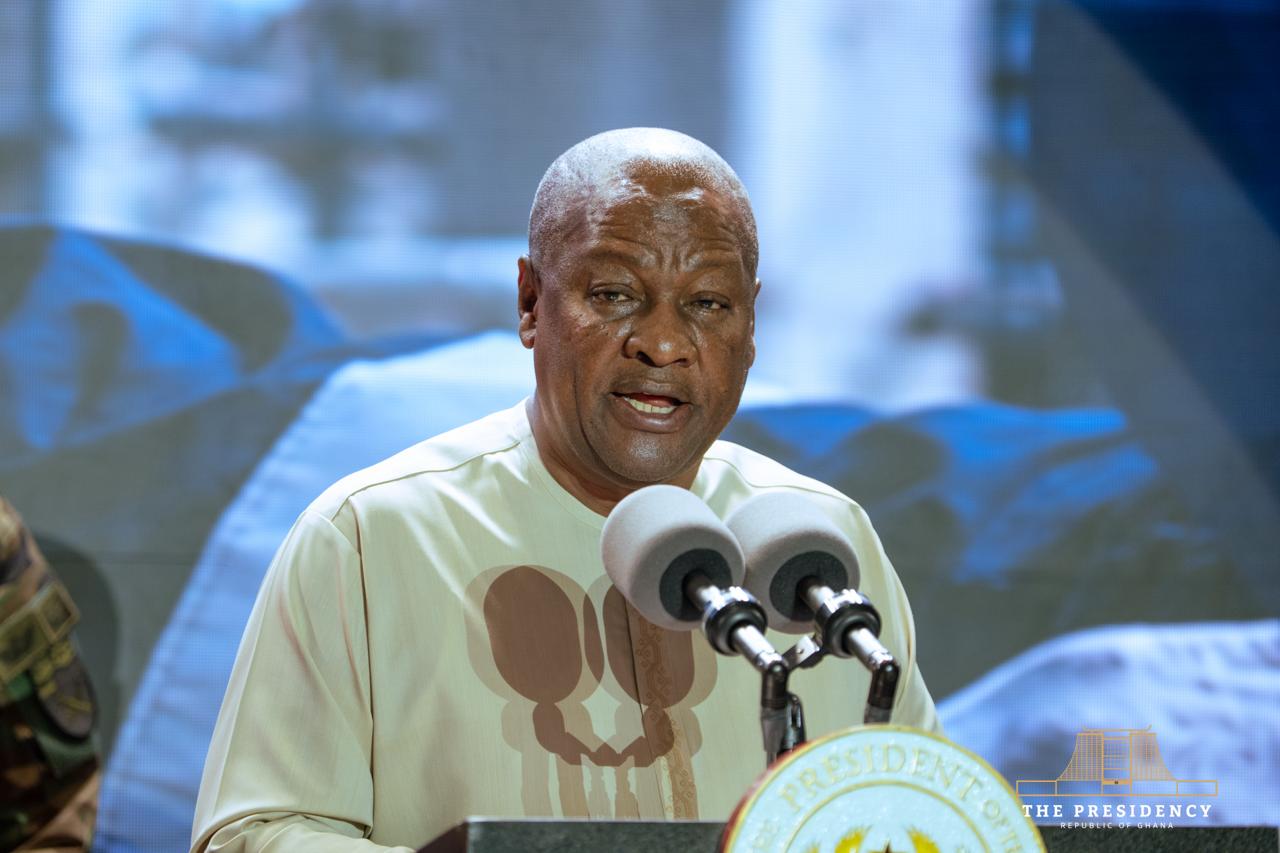
President John Dramani Mahama has announced that the construction of Ghana’s second gas processing plant is underway, with the facility expected to save the country up to $1 billion annually by reducing reliance on imported liquid fuels for power generation.
The President said the project, popularly known as Gas Processing Plant Two (GPP-2), forms part of the government’s broader efforts to strengthen domestic gas supply, reduce energy costs and retain more economic value within the country.
Speaking at the 2026 Petroleum Commission Local Content Conference and Exhibition in Takoradi, President Mahama said construction of the facility at Anochi in the Western Region had commenced under the auspices of the Ministry of Energy and Green Transition and the Ministry of Finance.
He stressed that sustained investment in upstream oil and gas production would be essential to ensuring a reliable supply of natural gas to support the operation of the facility over the long term.
“It is therefore important to secure the upstream investments needed to ensure reliable domestic gas supplies over the long term,” the President said.
President Mahama explained that expanding domestic gas processing capacity would support Ghana’s energy security while reducing the country’s dependence on imported fuels used for electricity generation.
He also highlighted the importance of strengthening collaboration between upstream operators and domestic energy infrastructure projects to ensure a dependable supply of feedstock.
The President said Ghana’s petroleum resources must support a broader industrial economy through stronger links between upstream production, domestic refining, gas processing and petrochemical manufacturing.
As part of that strategy, he called on the Petroleum Commission to work with the Petroleum Hub Development Corporation and upstream operators to arrange reliable feedstock supplies for refineries, gas facilities and petrochemical plants.
President Mahama cited the restart of the Tema Oil Refinery’s crude distillation unit following critical maintenance as an example of the benefits of closer cooperation within the petroleum industry.
He said the Ministry of Energy and Green Transition had facilitated the delivery of Jubilee crude ahead of the refinery’s restart, after which the refinery received 950,000 barrels of Sankofa crude from the Ghana National Petroleum Corporation.
“Refining Ghanaian crude in Tema enables us to process more here and retain more of the value that it creates,” he said.
The President maintained that investments in domestic energy infrastructure, supported by reliable supplies of locally produced oil and gas, would be crucial to reducing import dependence, strengthening industrial development and creating greater economic opportunities for Ghanaians.
He urged industry stakeholders to work together to sustain investment, improve local participation and ensure that the country derives maximum benefits from its petroleum resources.
Story: Patrick Asford Boadu