Ghana’s macroeconomic outlook is showing marked improvement, with stronger growth, easing inflation and a more resilient external position, according to the Bank of Ghana.
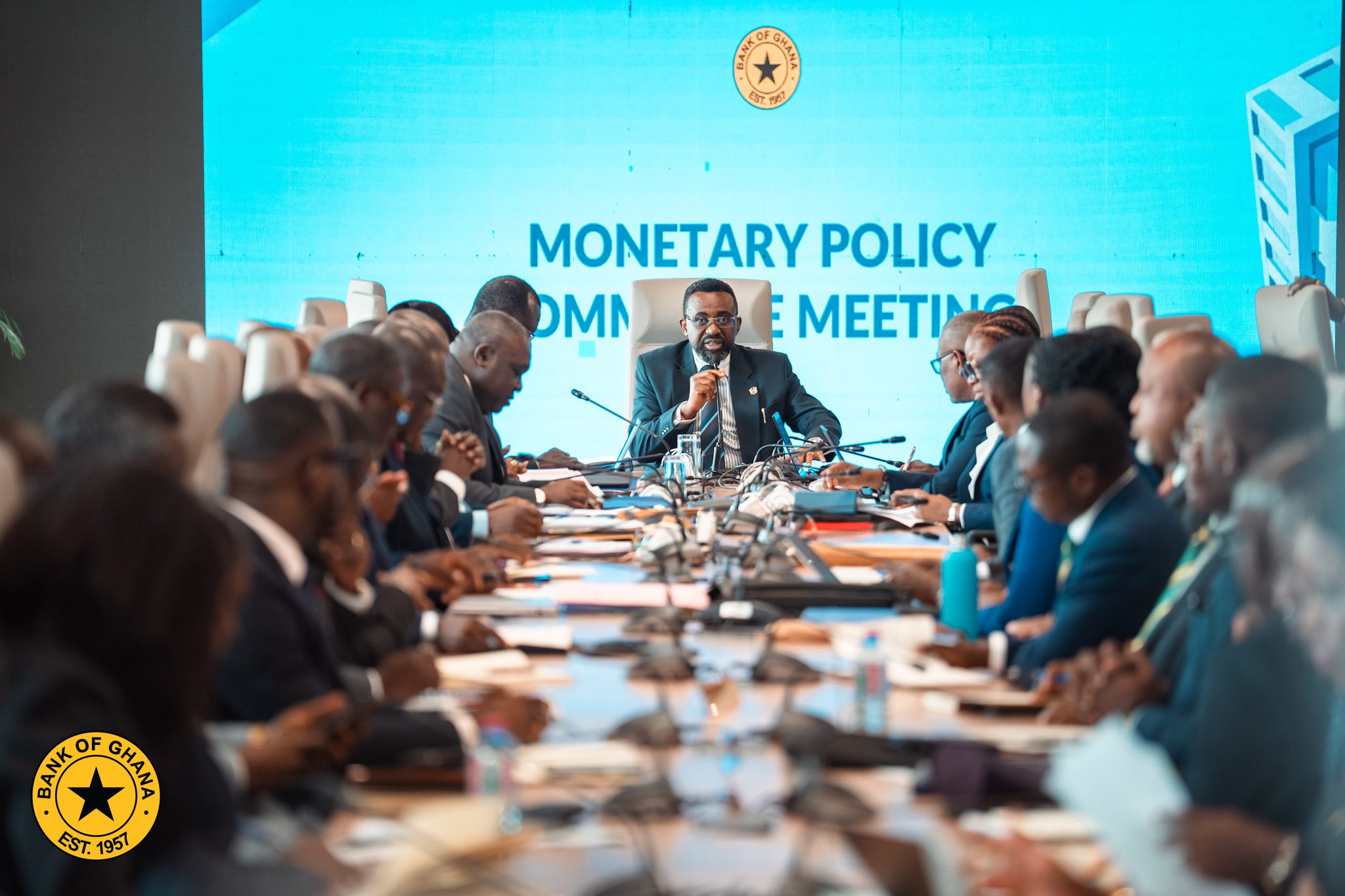
Presenting the outcome of the 129th Monetary Policy Committee (MPC) meeting, Governor Dr. Johnson Pandit Asiama highlighted broad-based gains across key sectors of the economy, pointing to a steady recovery following recent challenges.
Provisional data show that real GDP expanded by 6 percent in 2025, up from 5.8 percent the previous year, while non-oil growth accelerated significantly to 7.6 percent, driven largely by services and agriculture.
Short-term indicators also suggest continued momentum into 2026. The Bank’s Composite Index of Economic Activity recorded an annual growth of 8.4 percent in January, reflecting increased industrial activity, improved trade flows and stronger household and business consumption.
Consumer and business confidence have also strengthened. According to the Bank’s February 2026 surveys, improved sentiment is being driven by easing inflationary pressures and optimism about future economic conditions.
Inflation has declined sharply over recent months, falling to 3.3 percent in February 2026, supported by reductions in both food and non-food prices, as well as stable underlying inflation trends.
Fiscal consolidation efforts have also yielded results. Government recorded a primary surplus of 2.6 percent of GDP in 2025, exceeding its target, while public debt declined significantly to 45.3 percent of GDP, down from 61.8 percent in 2024.
On the external front, Ghana’s position has strengthened considerably. The country recorded a trade surplus of $3.7 billion in the first two months of 2026, driven by higher gold export earnings and moderated imports.
Gross international reserves rose to $14.8 billion, equivalent to 5.8 months of import cover, contributing to relative stability in the local currency.
The banking sector has also shown improved performance, with growth in total assets, enhanced liquidity and declining non-performing loans, although the sector continues to face residual risks.
Despite these positive developments, the Governor cautioned that global conditions remain uncertain, particularly due to geopolitical tensions which could affect external stability.
“Rising geopolitical tensions in the Middle East have deepened uncertainty in the external sector,” Dr. Asiama noted.
The Bank maintains that sustaining the current recovery will require careful monitoring of both domestic indicators and external developments, as it continues to steer the economy towards long-term stability and growth.