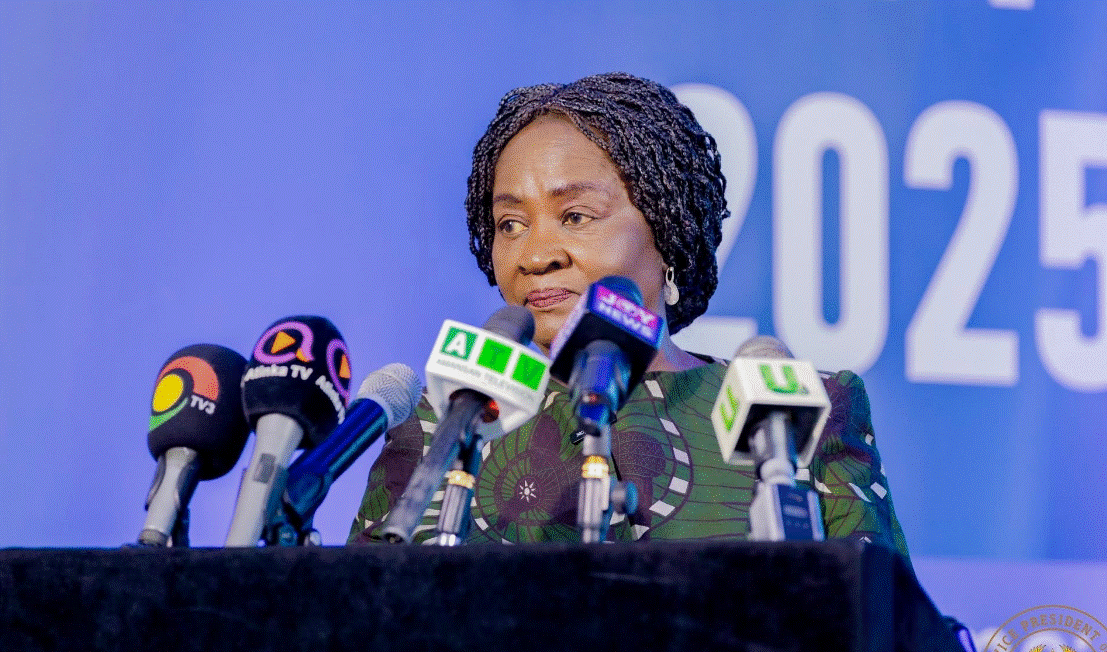
Vice President Prof. Jane Naana Opoku Agyeman has pledged Government’s determination to strengthen local governance through a bold Reset Agenda, which she described as the next phase of Ghana’s decentralisation journey.
Addressing participants at the Maiden National Dialogue on Decentralisation and Responsive Governance in Accra, the Vice President said Ghana cannot build a capable state without functional and ethical local governments. “Each of us lives within a local assembly. For government to be meaningful, it must reach the homes, the schools, and the health centres in our districts,” she told the gathering.
The Vice President revealed that over two billion Ghana cedis have already been released through the District Assemblies Common Fund (DACF) to support development projects across the country. According to her, these investments are proof of Government’s resolve to ensure that the idea of decentralisation translates into real changes that citizens can see and feel in their communities.
But she admitted that funding alone is not enough. “We must ensure that our interventions are guided by evidence, and that citizens have a stronger say in the setting of priorities,” she said. Citing lessons from Uganda, she explained how linking fiscal transfers with citizen monitoring committees had improved outcomes in education and health. She urged Ghana to adopt similar practices to ensure greater accountability and value for money.
As part of the Reset Agenda, the Vice President outlined four priorities:
- Increasing allocations to the DACF to strengthen service delivery,
- Moving towards the election of Metropolitan, Municipal and District Chief Executives (MMDCEs) to deepen democracy,
- Supporting assemblies to boost their own-source revenues, and
- Leveraging local resources to attract private investment and partnerships.
“These measures will ensure that the next time a child enters a classroom, a farmer seeks extension support, or a mother visits a health centre, they will truly feel the presence of Government in their community,” she explained.
The Vice President said the ongoing National Decentralisation Policy and Strategy (2026–2030) will serve as the framework for these reforms. She called on all stakeholders to enrich the policy with practical ideas and to ensure that the document becomes more than just words on paper.
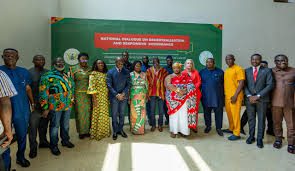
The two-day dialogue, hosted by the Inter-Ministerial Coordinating Committee on Decentralisation (IMCCoD), brings together government officials, traditional leaders, civil society, the private sector, and development partners.
Discussions will focus on issues such as fiscal decentralisation, local economic development, service delivery, citizen participation, and cross-cutting themes like gender, youth, and climate change.
Prof. Opoku Agyeman urged participants to make their contributions count: “Dialogue alone cannot build infrastructure. But when these discussions are translated into bold programmes, we will remake local governance and improve the everyday lives of our people.”