President Nana Addo Danquah Akufo Addo has attributed the fragmented nature of the Economic Community of West African States (ECOWAS) to poor leadership.
The President indicated that the situation can be linked to the poor infrastructural development in the sub – region.
Addressing the 2019 International Conference of the ECOWAS Court of Justice in Accra which was under the theme, “Economic Integration of West Africa: Challenges and Prospects,” President Akufo Addo affirmed the need for strong leadership in the sub region.
“Our problem over the years I suggest has been leadership. The implementation of plans to bring progress and prosperity to the 350 million citizens of ECOWAS has been left to well meaning technocrats and bureaucrats. However well meaning they may be, our region cannot make the bold transforming changes it needs to make without visionary, political leadership. We need leadership that is focused on the region and not on individual countries”.
President Akufo Addo also compared the integration success of the European Union (EU) and that of ECOWAS where he indicated that former was successful due to the effective political leadership of France and Germany.
“Today however, while the EU is central to the life of Europeans, ECOWAS is still somewhat peripheral to the lifes of most West Africans and it is not for the lack of plans or even rules and regulations, it is simply that the political will to make integration real has been less evident than Europe” the President noted. “Once the political will is evident, we can then work together to make ECOWAS a true regional community”.
“Our regional organization nevertheless continues to grapple with a number of challenges in the effort to integrate Member States economically, including the delayed adoption of a single currency for the region, the lack of political will and commitment by Member States to implement community protocols”.

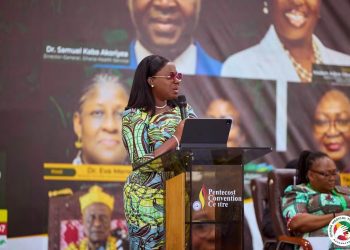
For her part, Minister of Foreign Affairs and Regional Integration, Shirley Ayorkor Botchwey outlined some constraints affecting the development of ECOWAS.
Furthermore, the ECOWAS Trade Liberalization Scheme (ETLS) is experiencing several challenges and occasional non – compliance by Member States which have hampered its successful implementation. A host of other factors continue to limit trade within ECOWAS and other Regional Economic Communities across the continent,” she emphasized.
Madam Ayorkor Botchwey therefore urged all stakeholders in the sub – region to work around the clock for full integration of ECOWAS in order to develop the socio economic infrastructure in the region.
“It is therefore imperative that all Member States and community institutions, including the ECOWAS Court of Justice play their respective roles to facilitate the process of integration towards the establishment of an Economic Union in West Africa.”
“As the Community’s principal legal organ, the ECOWAS Court of Justice has a critical role to play in driving the ECOWAS agenda by providing an enabling legal environment that promotes economic integration.”
She therefore urged the ECOWAS Court of Justice to “effectively discharge its mandate consistent with the Revised ECOWAS Treaty and Supplementary Protocol of 2005. There is the need for a strong regional mechanism to resolve disputes relating to the integration process, including matters relating to the ECOWAS Trade Liberalization Scheme.” She underscored.
On his part, President of the ECOWAS Court of Justice, Justice Edward Amoako Asante, noted that despite the challenges ECOWAS has some successes as the leading Regional Economic Community (REC) in Africa.
“Since the establishment of the Economic Community of West African States (ECOWAS) in 1975, we have achieved great milestones but a lot still remains to be done. This conference therefore offers us a great opportunity to interrogate the challenges and prospects of our integration process” Justice Edward Amoako Asante said.
Meanwhile the ECOWAS Court of Justice is the judicial organ of the Economic Community of West African States (ECOWAS) and is charged with resolving disputes related to the Community’s treaty, protocols and conventions. The ECOWAS Community Court of Justice has competence to hear individual complaints of alleged human rights violations. Founded on May 28, 1975, under the Treaty of Lagos for the purpose of promoting economic integration across the region, ECOWAS comprises 15 West African countries: Benin, Burkina Faso, Cape Verde, Côte d’Ivoire, Gambia, Ghana, Guinea, Guinea-Bissau, Liberia, Mali, Niger, Nigeria, Senegal, Sierra Leone, and Togo.
Story By: Henry George Martinson/radiogoldlive.com