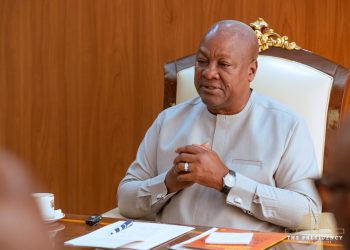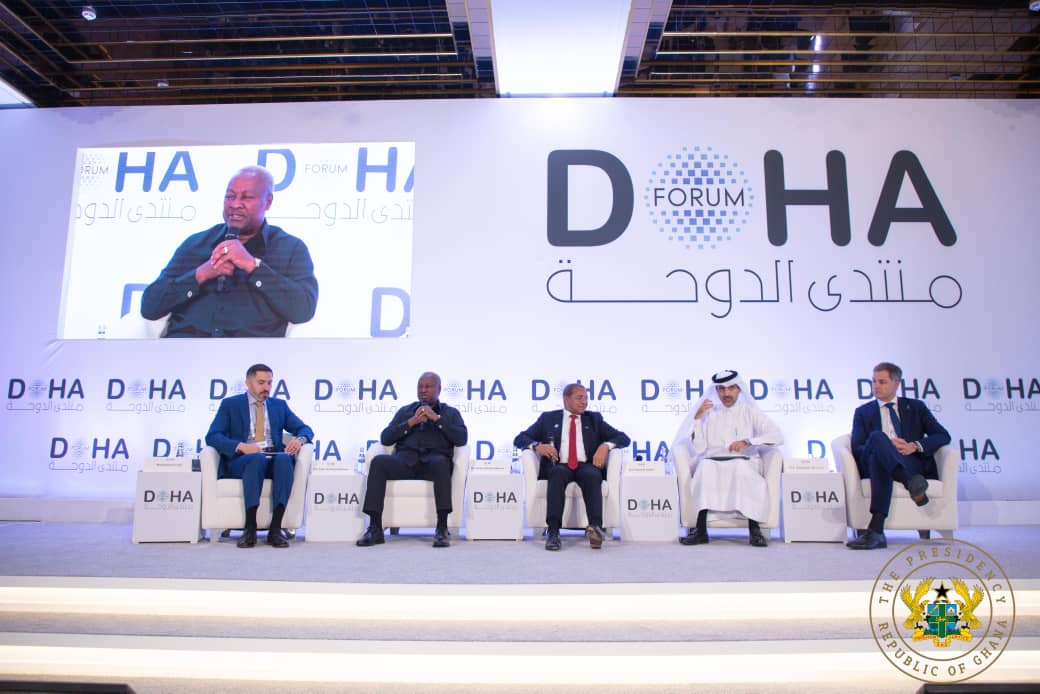
President John Dramani Mahama has called for a renewed global commitment to education, describing it as the “battleground for justice” in a world facing escalating crises ranging from conflicts and climate instability to pandemics and economic shocks.
Speaking at an international forum, President Mahama warned that these global crises are not only dismantling economies but also “destroy the dreams of our children.” He stressed that education must be treated as a life-saving intervention, particularly in times of emergency.
According to him, “Our world today is confronted with multiple, overlapping crises. These crises do not only disrupt economies, they disrupt childhoods. They do not only destroy infrastructure, they destroy the dreams of our children.”
He emphasised that in moments of crisis, education becomes the most reliable tool for protection, stability, and long-term recovery.
“Education is justice when a child uprooted by conflict does not lose her dreams or her future. Education is justice when a child living with disability receives targeted support to thrive,” President Mahama stated.
He added that learning must continue even during pandemics, climate disasters, or economic hardships, saying education equips young people to rebuild their communities and lead global transformation.
President Mahama described the disruption to schooling in Gaza, Afghanistan, Sudan, and other conflict-affected regions as “an unfolding humanitarian tragedy that will play out for decades to come.”
Highlighting Ghana’s own progress, he noted that successive reforms have been undertaken to expand opportunity and strengthen justice through education.
He stressed that education remains the backbone of all sustainable development goals.
“Without education, we cannot end poverty. Without education, we cannot achieve good health, gender equality, decent work, climate adaptation, or peace and strong institutions,” he said.
President Mahama further highlighted the need for modern, equitable, and future-ready education systems.
“Education must be transformational, not transactional. It must be equitable, not exclusive. It must be forward-looking and not outdated,” he remarked.
He concluded with a call for global responsibility, declaring:
“This is the justice we owe our children.”
Story: Patrick Asford Boadu