A quiet but critical battle for public safety is underway, a fight not against traditional contraband, but against the influx of substandard electrical appliances and renewable energy products that threaten to turn Ghanaian homes into hazard zones.
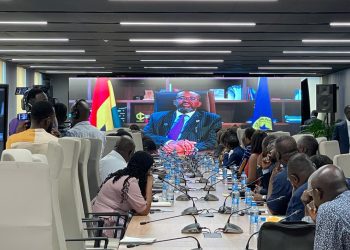
Last Friday, the Board and Management of the Energy Commission (EC) conducted an inspection at Terminal Three of the Tema Port. The message from the Commission’s Board Chairman, Prof. John G. Gatsi, was clear: the era of using Ghana as a “dumping ground” for unsafe energy products must come to an end.
For the average consumer, a cheaper air conditioner or a budget-friendly solar panel may appear to be a good bargain. However, the reality behind many of these non-compliant products is troubling. Substandard electrical goods are among the leading causes of domestic fires, equipment failure, and rising electricity consumption due to inefficiency.
Beyond the immediate safety risks, the economic cost is also significant. Prof. Gatsi disclosed during the inspection that the influx of such products has resulted in considerable revenue losses to the state. An internal investigation uncovered a worrying pattern: between December 2024 and August 2025, a period marked by a board vacancy during the government transition, some importers exploited regulatory gaps.
The findings revealed that solar photovoltaic (PV) systems valued at approximately $98,000 entered the country during that period, with many bypassing mandatory licensing requirements and statutory payments.
Strengthening Enforcement
In response, the Energy Commission says it is intensifying its enforcement efforts. The heightened surveillance at the ports forms part of a broader roadmap aimed at enforcing the nineteen (19) Legislative Instruments (L.I.s) enacted by Parliament to regulate electrical and renewable energy products.
“When products that do not meet our standards enter the market, lives and property are put at risk,” Prof. Gatsi emphasized.
To address the situation, the Commission is implementing several measures:
Increased Personnel: The Board has pledged to deploy additional inspectors to the ports to strengthen monitoring and ensure thorough checks on all shipments of regulated products.
Strict Compliance Checks: All imported electrical and renewable energy products must meet registration and labelling requirements. Non-compliant items will either be re-exported or destroyed in collaboration with the Environmental Protection Agency (EPA) to prevent environmental harm.
Technological Integration: The Commission is enhancing its monitoring system through digital tools such as the Certified Appliance App and QR-coded labels, enabling inspectors and consumers to verify product authenticity and efficiency in real time.
A Call for Collaboration
The Energy Commission acknowledges that its efforts require cooperation from other regulatory and enforcement agencies to close the gaps that have previously been exploited.
The Board Chairman also indicated that the Commission is engaging with the Consumer Electronics & Home Appliances Alliance Ghana (CEHA) and local retailers. While a transition period allows the sale of old stock, with both old and new labels permitted to co-exist until July 2026, the push toward modern, energy-efficient technologies such as inverter air conditioners remains firm.
As the Board prepares to review the full findings of its investigation, the Commission says its priority remains safeguarding public safety and protecting consumers.
By tightening controls at the Tema Port and other entry points, the Energy Commission is not merely regulating imports; it is reinforcing standards that affect household safety, national revenue, and energy efficiency.
In a country where energy demand continues to rise and renewable solutions are expanding rapidly, ensuring that every appliance and solar system installed in homes meets approved standards is not optional, it is essential.
By: Henry George Martinson