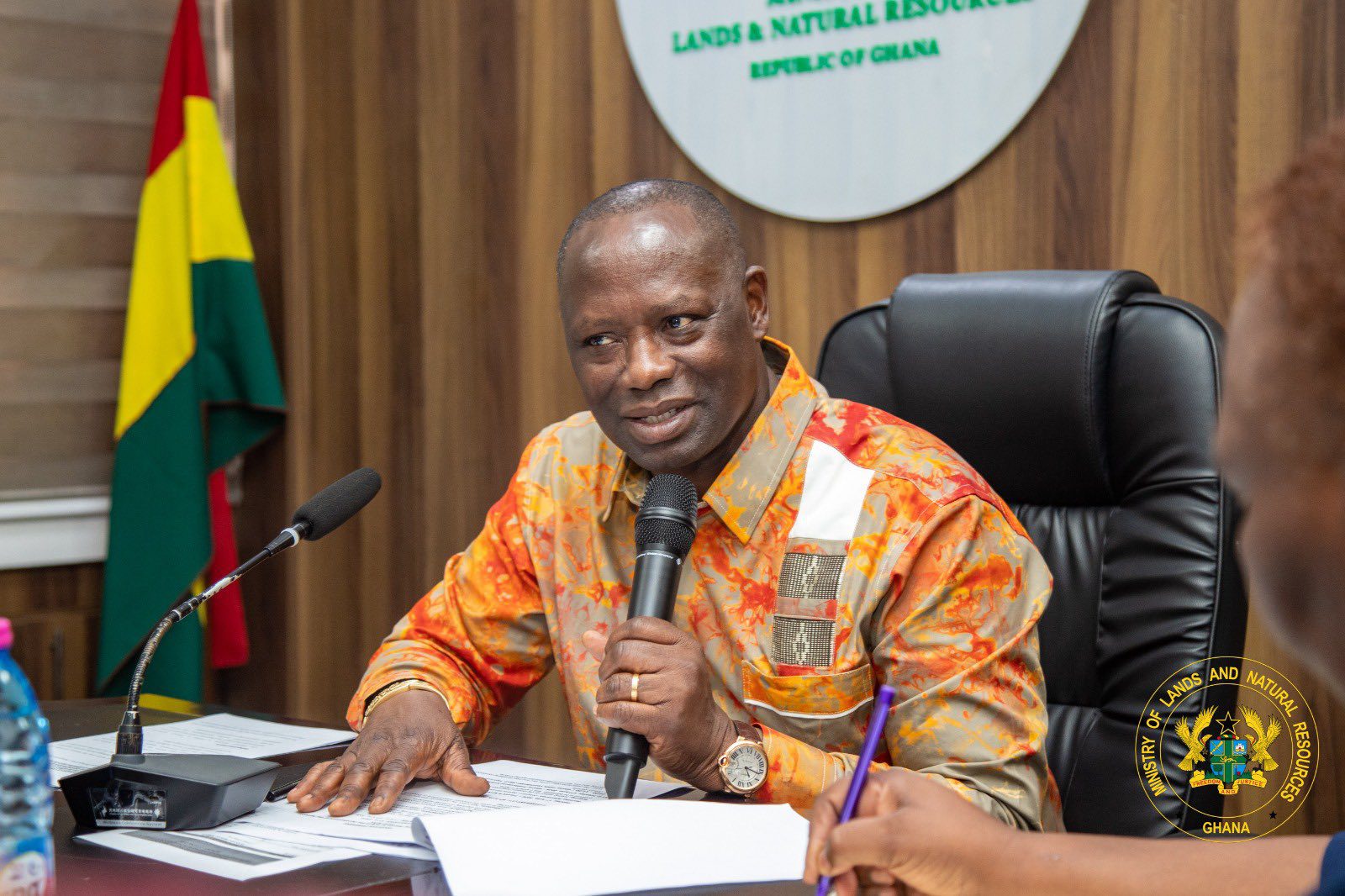
The Minister for Lands and Natural Resources, Hon. Emmanuel Armah-Kofi Buah, has hosted a high-level delegation from the Kingdom of Eswatini as part of efforts to strengthen bilateral cooperation and promote knowledge sharing in land administration and natural resource management.
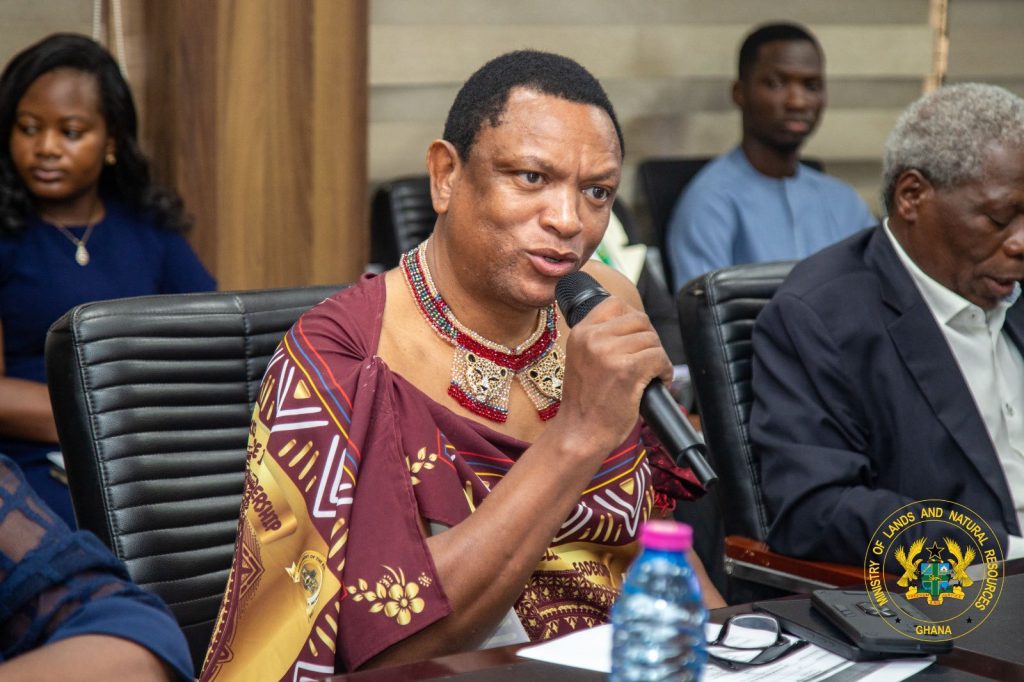
The delegation, which was in Ghana for a benchmarking exercise and bilateral exchange programme, was led by Ms Nonhlanhla Dlamini, Principal Secretary of Eswatini’s Ministry of Tinkhundla Administration and Development (MTAD), and Prince Ngangabani, Chairperson of the Land Management Board (LMB) and outgoing Speaker of Parliament, together with five senior government officials.
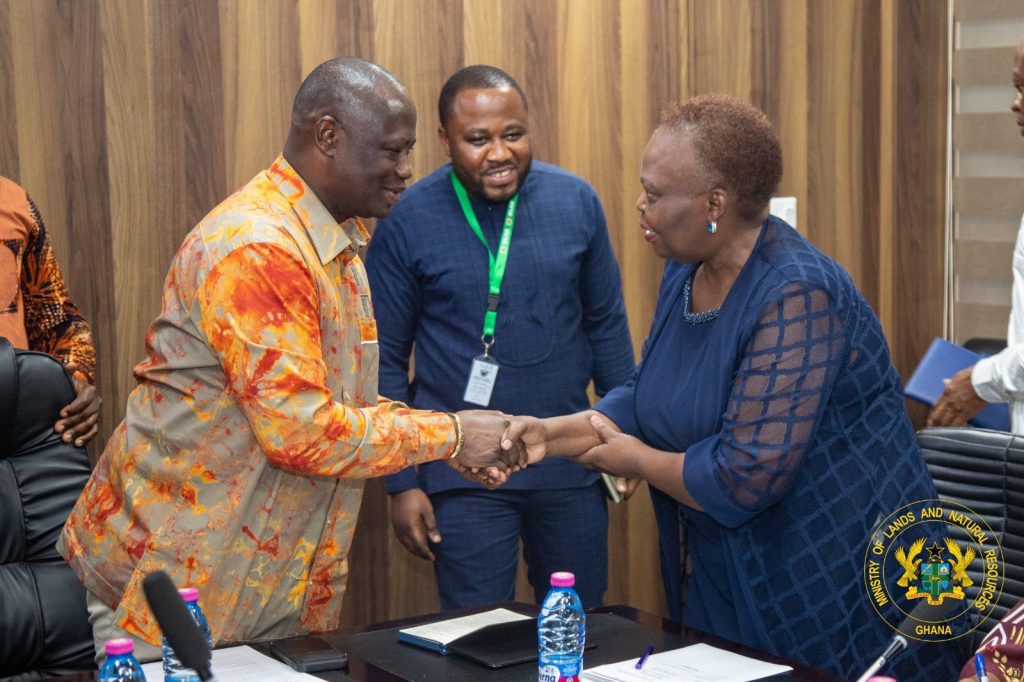
The visit provided an opportunity for both countries to exchange experiences and best practices in the management of land and natural resources, areas that remain critical to economic development, investment attraction, and environmental sustainability.
During the engagement, Hon. Armah-Kofi Buah outlined a number of reforms being pursued by Ghana to modernise land administration, strengthen governance systems, and promote the sustainable use of natural resources.
He noted that effective land management and responsible stewardship of natural resources are essential to national development and long-term prosperity, stressing the need for policies that balance economic growth with environmental protection.
The Minister also highlighted ongoing efforts aimed at improving transparency, efficiency, and accessibility within Ghana’s land administration framework while safeguarding resources for future generations.
According to him, sustainable management of land and natural resources remains a key pillar of government’s broader development agenda.
The Eswatini delegation expressed particular interest in Ghana’s land administration system and sought deeper insights into the structures, reforms, and institutional mechanisms that have shaped the country’s progress in the sector.
The discussions covered a range of issues, including land governance, resource management, institutional coordination, and strategies for improving service delivery within public sector agencies.
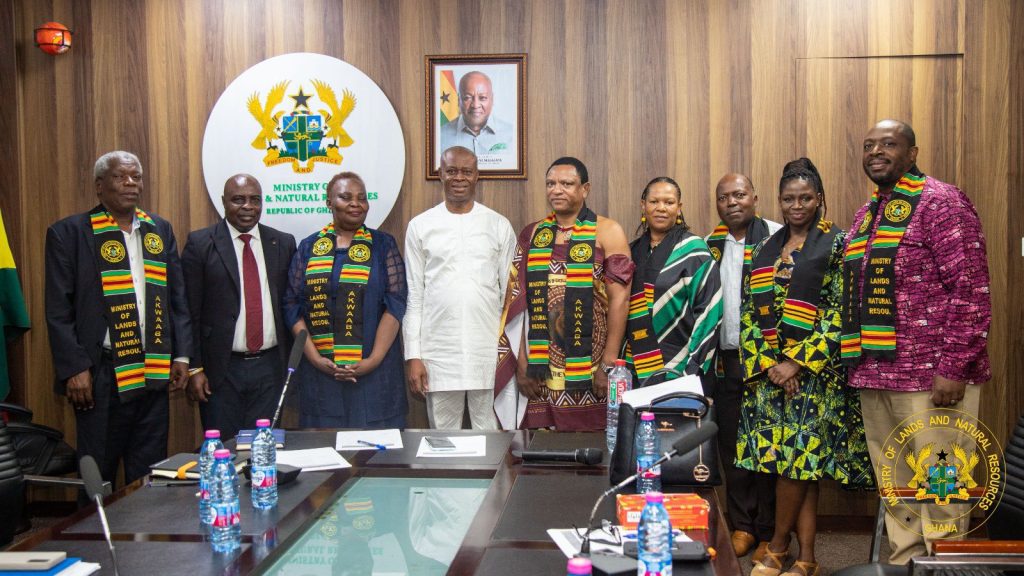
The visit underscores Ghana’s growing reputation as a reference point for policy reforms and institutional development within Africa’s natural resources and land governance sectors.
Both sides expressed optimism that the engagement would pave the way for stronger collaboration and continued knowledge exchange in areas of mutual interest.
The meeting reaffirmed the importance of regional cooperation and peer learning as African countries seek innovative and sustainable approaches to managing their land and natural resources in support of economic growth and national development.