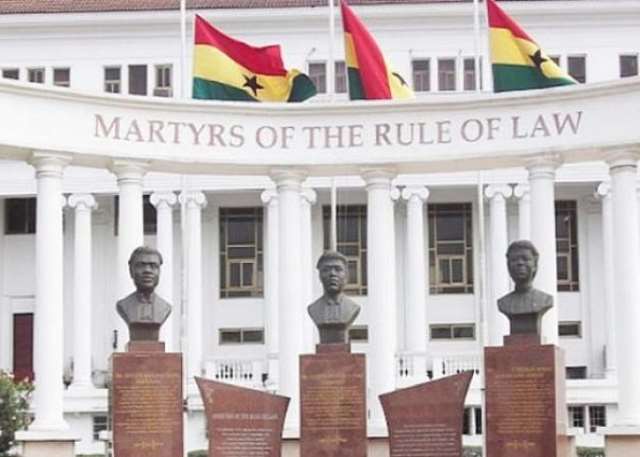
The Supreme Court has ruled that the delegate-based electoral college system used by political parties to elect their presidential and parliamentary candidates is unconstitutional.
In a landmark 5-2 majority decision delivered on Wednesday, a seven-member panel chaired by Chief Justice Paul Baffoe-Bonnie held that restricting the selection of candidates to party executives, officeholders and delegates violates Article 55(5) of the 1992 Constitution.
The court ruled that every registered member of a political party has the constitutional right to participate in the selection of the party’s presidential and parliamentary candidates for general elections, rather than limiting the process to a select group of delegates.
The judgment also established that the Electoral Commission has a statutory responsibility to ensure that the internal operations and electoral processes of political parties comply with Article 55(5) of the Constitution.
To avoid disrupting past political decisions, the court clarified that all appointments, decisions and votes carried out in good faith before the ruling remain valid and will not be invalidated solely because of the judgment.
The Supreme Court said the full reasons for its decision will be made available by August 5, 2026.
Justices Samuel Kwame Adibu-Asiedu and Ernest Yao Gaewu dissented from the majority ruling.