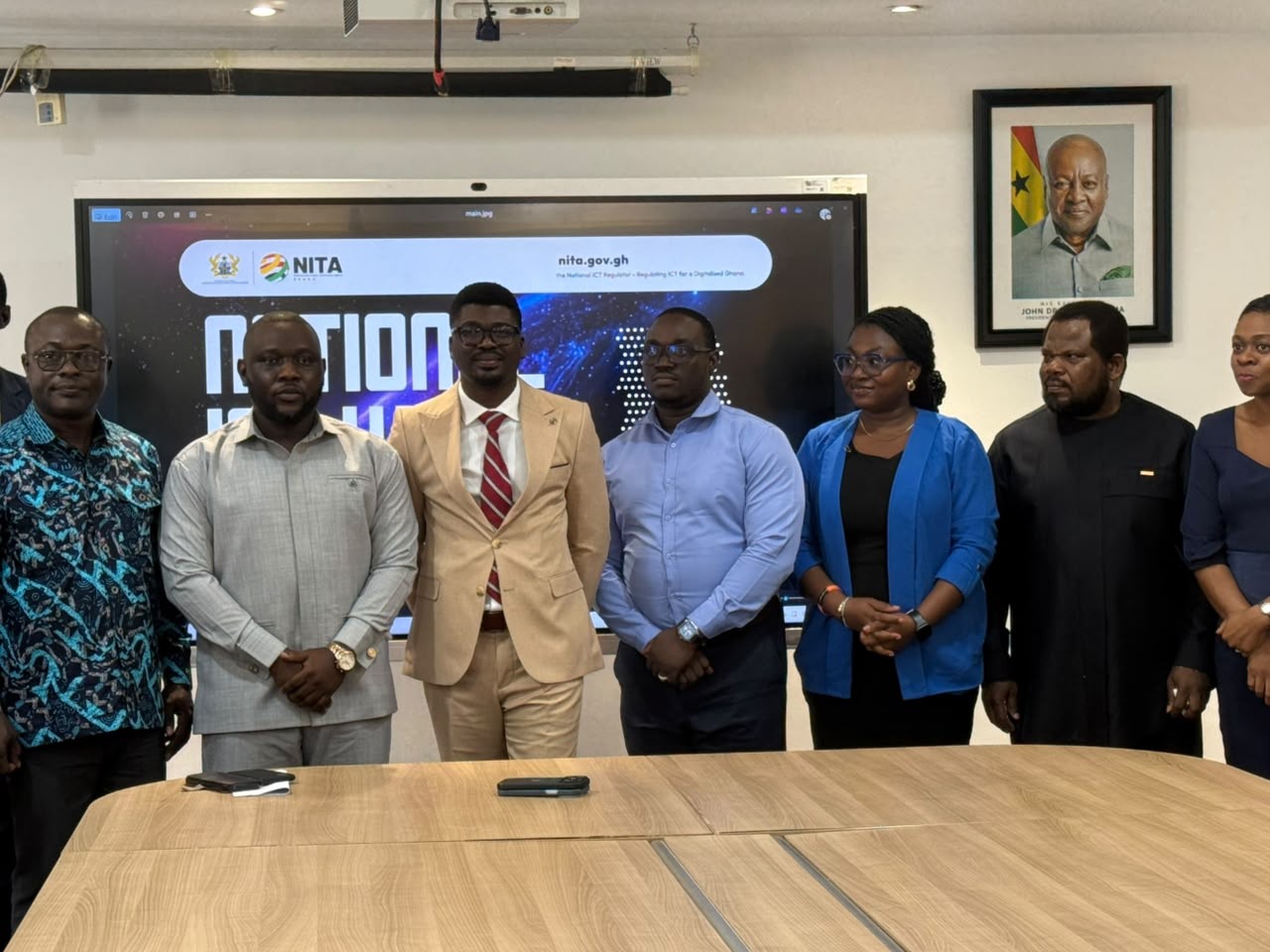
The government’s drive to transform Ghana into a leading digital economy in Africa received a major boost on Wednesday as the National Information Technology Agency (NITA) launched the 2026 National ICT Week, a flagship initiative aimed at accelerating innovation, attracting investment, creating jobs and expanding digital opportunities across the country.
The four-day event, scheduled for August 17–20, 2026, will be held under the theme, “Innovation at Scale: Creating Opportunities Across Ghana’s Digital Ecosystem.”
Launching the programme in Accra, NITA Director-General Nana Yaw Amoah-Yeboah described the event as a national movement designed to bring together government institutions, industry leaders, academia, investors, innovators and citizens to chart a common path toward Ghana’s digital future.
According to him, National ICT Week 2026 will serve as a catalyst for innovation, investment and job creation while strengthening the country’s digital infrastructure and enhancing collaboration across the technology ecosystem.
“This is not just a technology event; it is a national platform to explore how digital innovation can improve lives, transform businesses and strengthen public service delivery,” he said.
Amoah-Yeboah noted that the initiative aligns with government’s broader digital transformation agenda and efforts to position Ghana as a preferred destination for digital investment and talent on the African continent.
As part of the programme, NITA will host the Ghana Digital Transformation Forum, a four-day engagement designed to accelerate the country’s digital agenda across government, business, education and youth development.
The first day will feature a ministerial roundtable involving the Ministries of Finance, Education, Agriculture and Communication, with participating ministries expected to make concrete commitments to Ghana’s digitalisation agenda. The day will conclude with an economic lecture led by the Bank of Ghana focusing on financing the digital economy, while private digital companies will engage in discussions on funding opportunities and investment expectations.
The second day will showcase government digital services through live demonstrations by institutions that have successfully implemented technology-driven solutions. Featured services will include online passport applications, the Driver and Vehicle Licensing Authority’s new vehicle registration system, Ghana Post’s digital initiatives and the Ghana.gov platform. Concurrent sessions will focus on AI-powered human resource management and educational technologies aimed at improving learning outcomes.
Digital trust and cybersecurity will dominate discussions on the third day as stakeholders examine strategies to combat digital fraud and strengthen confidence in online transactions. The programme will include sessions for content creators on platform safety and data protection, discussions on securing the digital economy to support startup growth and innovation, and conversations on e-health, data privacy and the implications of sharing medical information online.
The final day will focus on students and young innovators through practical sessions on artificial intelligence in gaming and emerging technologies. Participants will be encouraged to bring laptops and register in advance for hands-on learning opportunities. The event will conclude with a high-level engagement between technology chief executives and the sector minister to discuss industry challenges, including local data retention, affordable data centre and cloud infrastructure, and broader adoption of artificial intelligence across institutions.
The Director-General revealed that the week will also feature a major technology exhibition showcasing Ghanaian innovations, high-level discussions on artificial intelligence, cybersecurity, digital finance and digital sovereignty, as well as executive dialogues connecting policymakers with industry leaders. Startups and entrepreneurs will also have opportunities to engage investors and establish strategic partnerships that can drive business growth.
He stressed the importance of building secure digital infrastructure, promoting interoperability across government services and strengthening cybersecurity and digital trust as critical pillars of Ghana’s digital economy.
He urged Ghanaians from all sectors—including students, entrepreneurs, investors, researchers and public institutions—to actively participate in the event.
“Technology should not be confined to the tech sector alone. It must impact classrooms, hospitals, farms, businesses and government services. Our goal is to move from conversation to collaboration and from collaboration to action that creates jobs and transforms lives,” he stated.
Meanwhile, NITA has intensified its engagement with the media ahead of the event, describing journalists as indispensable partners in Ghana’s digital transformation journey.
Speaking at the launch, Yaw Boadu Osei, NITA’s Director of Finance and Administration, underscored the critical role of the media in educating the public and promoting awareness of technology initiatives and policies.
He said effective communication and stakeholder engagement remain essential to the success of Ghana’s digital agenda and thanked media organisations for their continued support in promoting national technology initiatives.
Osei reaffirmed NITA’s commitment to working closely with journalists and media houses to increase visibility for National ICT Week 2026 and deepen public awareness of programmes, standards and projects that support the growth of Ghana’s digital ecosystem.
National ICT Week 2026 is expected to bring together policymakers, regulators, technology companies, investors, innovators, students and development partners in what NITA believes will be one of Ghana’s most significant digital economy gatherings.
With preparations underway, NITA believes National ICT Week 2026 will reinforce Ghana’s position as one of Africa’s emerging digital economies while advancing government’s broader vision of leveraging technology for job creation, economic growth and inclusive national development.
Story by Osman Issah Abadoo