The Ghana Export-Import Bank (GEXIM) has committed approximately US$12 million towards the establishment of the Nadkansco Cashew Processing Factory at Tuobodom in the Bono East Region, with an additional 110 million in working capital support to sustain its operations.
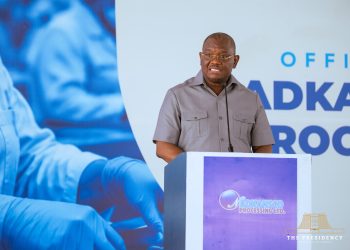
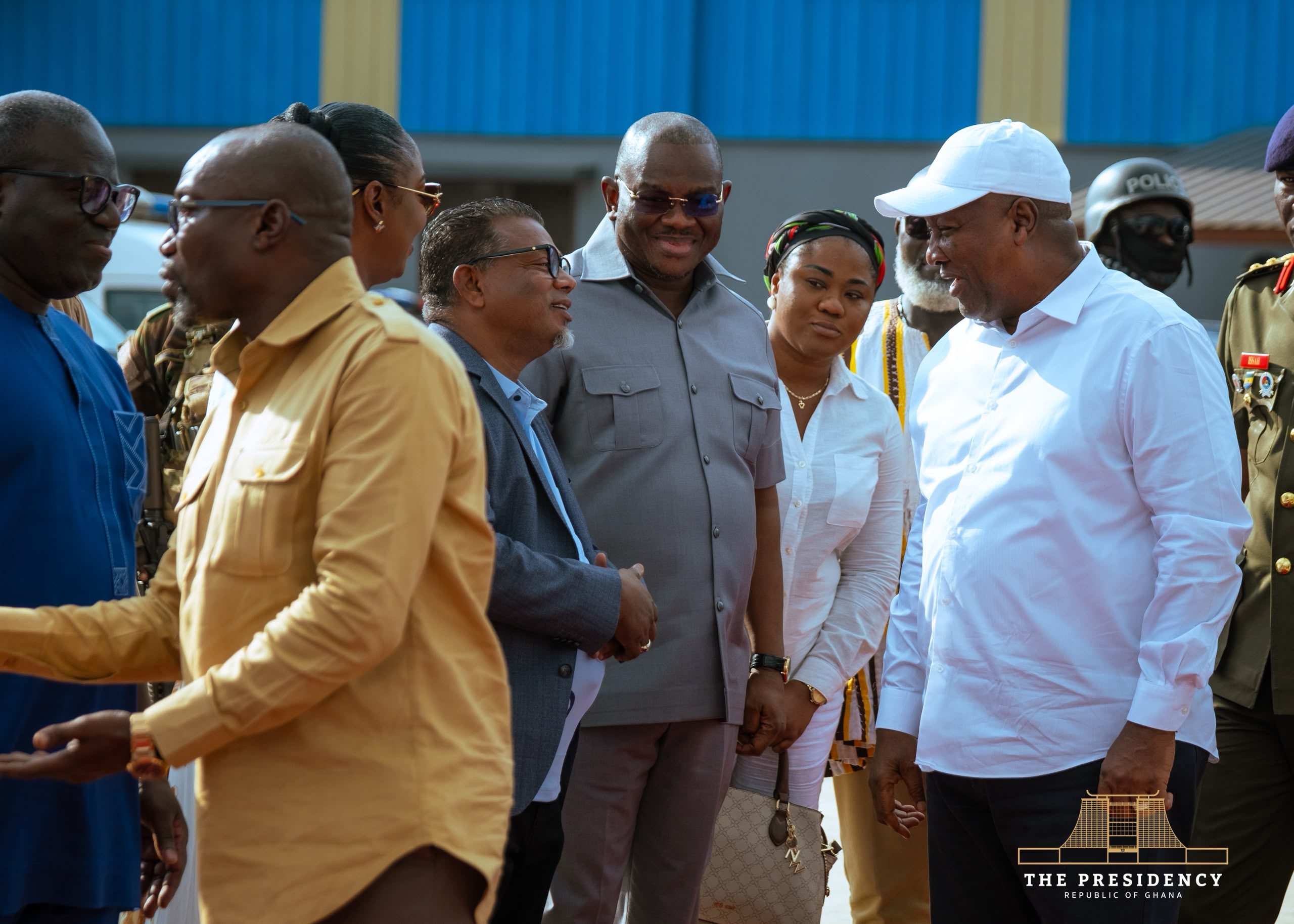
Chief Executive Officer of GEXIM, Hon. Sylvester Adinam Mensah, disclosed this during the commissioning of the factory by President John Dramani Mahama.
He said the bank’s investment was aimed at demonstrating that large-scale cashew processing could thrive in Ghana, create sustainable employment and retain more economic value within the country.
Quoting Joel Barker, Mr. Mensah said: “Vision without action is merely a dream, and action without vision just passes the time. Vision with action can change the world.”
He noted that the commissioning represented more than the inauguration of an industrial facility, describing it as an example of what could be achieved when local entrepreneurship was supported by strategic financing.
“Today, it is about vision meeting action. It is about a Ghanaian-owned business that dared to look beyond the raw nut trade and a national bank that believed in a vision enough to finance it,” he said.
Mr. Mensah said President Mahama’s policy commitment to ending the export of raw cashew nuts and promoting domestic processing was beginning to materialise through investments such as the Nadkansco facility.
“This is what that policy looks like when it leaves the podium and arrives on the factory floor. Value addition is no longer a slogan. It is a building, it is machinery and it is young Ghanaians earning a living right here in Techiman,” he stated.
He explained that when Nadkansco presented its proposal to GEXIM, the bank recognised an opportunity beyond an ordinary commercial venture, particularly because of the factory’s location within Ghana’s cashew-growing belt and its capacity to purchase directly from farmers for local processing.
US$12m investment and 110m working capital
According to the GEXIM CEO, the bank’s approximately US$12 million commitment covered the acquisition of state-of-the-art automated processing equipment, working capital and training for the factory’s workforce.
He disclosed that the automated equipment installed across the facility was financed by GEXIM at a cost slightly exceeding US$3 million.
On working capital, which he described as critical to the factory’s operations, Mr. Mensah said the bank had provided support amounting to 110 million.
He explained that the factory would require at least 30,000 metric tonnes of raw cashew nuts annually to operate throughout the year, from January to December, with adequate supplies.
The working capital facility, he said, would enable the company to procure approximately 5,000 metric tonnes of raw cashew nuts.
Mr. Mensah assured management of the bank’s continued support, indicating that GEXIM had committed to providing affordable and patient financing for three cropping seasons.
“We have committed to affordable patient financing for three crops because we understand that cashew is not a quick-return business. We are not here to write a cheque and walk away. We are here for the long haul,” he said.
Factory to process almost twice Ghana’s 2025 output
Mr. Mensah revealed that Ghana produced more than 262,000 metric tonnes of raw cashew nuts last year, but only approximately 17,000 metric tonnes were processed locally.
He said the majority of the country’s cashew production was exported in its raw state, resulting in the loss of potential jobs, technical skills and additional export earnings that could have been generated through domestic processing.
He noted that the first phase of the Nadkansco facility had the capacity to process up to 33,000 metric tonnes of raw cashew nuts annually, representing almost twice the volume processed across the entire country in the previous year.
The factory has an installed processing capacity of 100 metric tonnes of raw cashew nuts per day under a two-shift operation.
According to him, although the facility was currently operating slightly below its installed capacity, it had already created close to 1,000 direct jobs and supported an additional 3,000 indirect livelihoods.
These include opportunities for farmers, aggregators, transport operators, packers, loaders and other players within the cashew value chain.
He said the jobs and economic activities generated by the factory would strengthen household incomes, support children’s education, improve access to healthcare and stimulate local businesses.
“Every worker here earns an income, pays taxes, contributes to social security and helps produce kernels that earn foreign exchange for Ghana. We are not merely financing machines and buildings; we are investing in people, in productive livelihoods and in a stronger community,” he stated.
Cashew processing to support 24-hour economy
The GEXIM CEO said the factory’s operations aligned with the government’s 24-hour economy agenda by maximising productive capacity, running multiple shifts and retaining more wealth within the domestic economy.
He explained that processed cashew kernels could fetch approximately four to five times the value of raw cashew nuts per tonne, highlighting the economic benefits of domestic value addition.
He added that achieving the factory’s full production capacity would require increased purchases of raw cashew nuts from farmers, expanded operations and additional employment opportunities.
Mr. Mensah disclosed that Nadkansco was preparing to supply several products to international and domestic markets.
For export markets, the products include cashew kernels of various grades, cashew nut shell liquid and briquettes, while the domestic market would be supplied with cashew cakes, briquettes and roasted cashew kernels.
He appealed to the management of Nadkansco to increase production and operate at full capacity to maximise the benefits of the investment.
GEXIM pledges long-term support
Mr. Mensah assured the company of GEXIM’s continued partnership, stressing that the bank would remain committed to identifying and financing viable businesses capable of adding value to Ghana’s agricultural produce, expanding exports and creating sustainable employment.
He also called on the people of Techiman and surrounding cashew-growing communities to protect and support the facility, noting that its long-term success would depend on cooperation among the company, workers, farmers and the wider community.
He expressed optimism that the Nadkansco investment would inspire other Ghanaian entrepreneurs to establish processing facilities and contribute to the country’s industrial transformation.
The commissioning of the facility forms part of the government’s broader efforts to promote local manufacturing, strengthen agricultural value chains, reduce the export of unprocessed commodities and increase Ghana’s earnings from value-added exports.
Story: Patrick Asford Boadu