President John Dramani Mahama has challenged leaders of the Economic Community of West African States (ECOWAS) to translate decades of regional integration commitments into concrete actions, warning that persistent trade barriers, inadequate infrastructure and weak political will continue to undermine economic cooperation in the sub-region.
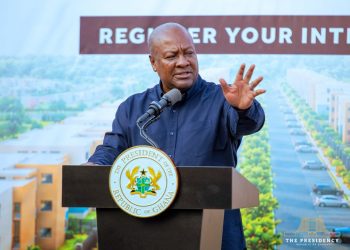
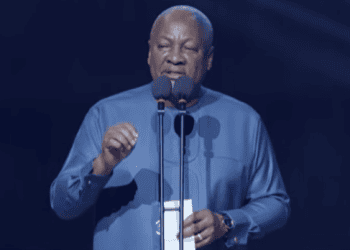
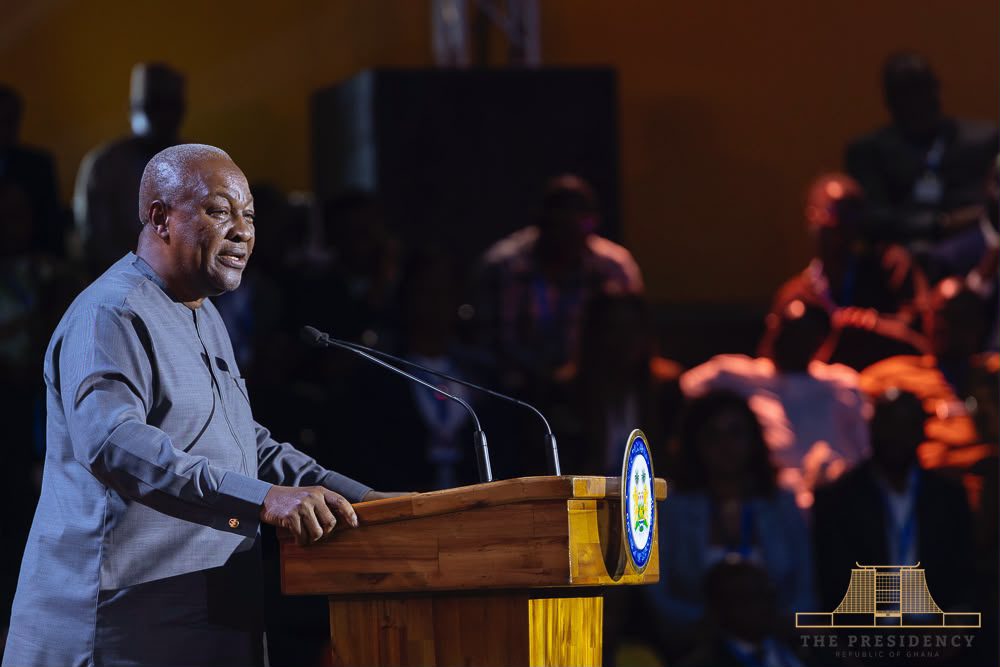
Addressing the West Africa Integration and Investment Summit (WAIIS) 2026 in Freetown, Sierra Leone, President Mahama said the time had come for West African countries to move beyond political declarations and implement practical measures to facilitate the movement of goods, services, capital and people across national borders.
He described the summit, convened by Sierra Leonean President Julius Maada Bio, as a potential catalyst for unlocking the region’s economic integration agenda.
President Mahama commended President Bio for operationalising the initiative and sustaining his commitment to regional integration despite having handed over the ECOWAS chairmanship to Senegal.
He noted that regional leadership should extend beyond the period a leader occupies a particular position.
“Regional leadership goes beyond tenure,” President Mahama said, praising his Sierra Leonean counterpart for continuing to champion integration after leaving the ECOWAS chairmanship.
He recalled that the West African Integration and Investment Summit initiative had been placed on the agenda and officially endorsed as an ECOWAS function during an earlier regional summit.
ECOWAS must become an organisation of the people
President Mahama questioned why ECOWAS, established in 1975 as one of the world’s longstanding regional integration initiatives, had made limited progress in achieving its original objectives.
He observed that for many years, the organisation had largely been associated with meetings and engagements among Heads of State rather than tangible benefits experienced by ordinary citizens, particularly young people.
He called for a people-centred integration agenda that would give citizens ownership of the regional project.
“Too much lip service has been paid to integration. But we all know what the obstacles to integration are. It is the political will and the leadership to remove those obstacles that we need now,” he stated.
The President cited the ECOWAS Trade Liberalisation Scheme (ETLS), adopted in 1990, as an example of a regional policy whose implementation had fallen short of expectations.
Although the scheme was designed to facilitate the movement of qualifying goods across member states without customs duties, he said businesses continued to encounter numerous non-tariff barriers at border crossings.
He explained that even manufacturers with the required ETLS certificates were sometimes subjected to additional regulatory demands, making intra-regional trade difficult and expensive.
President Mahama lamented that trade among West African countries remained between 12 and 15 per cent, arguing that the situation undermined the region’s economic potential.
He called for decisive action to eliminate unnecessary border restrictions and establish efficient transport and logistics systems to facilitate regional commerce.
Governments must create an enabling environment for investment
President Mahama also emphasised the importance of collaboration between governments, private sector operators and development finance institutions in accelerating investment and economic transformation.
He maintained that governments should serve as enablers of private sector growth rather than attempting to operate businesses themselves.
According to him, governments must establish sound macroeconomic conditions, strengthen the rule of law, ensure accountability and provide the infrastructure required to attract and sustain investment.
He identified currency stability, manageable inflation, affordable interest rates, transparent judicial systems, reliable roads and efficient port facilities as essential elements of an investment-friendly environment.
He called on institutions such as the African Development Bank and the Africa Finance Corporation to provide affordable long-term financing to support strategic public and private sector projects.
President Mahama said such collaboration would help attract investors and translate investment opportunities into productive ventures capable of creating employment for young people.
Africa must reduce food imports and add value to agriculture
Turning to agriculture, President Mahama expressed concern that West African countries continued to import significant quantities of food despite possessing vast areas of arable land.
He cited palm oil production as an example, noting that oil palm originated in West Africa but countries in the region now import substantial quantities of palm oil from Malaysia and Indonesia.
Using Ghana as an example, he disclosed that the country imports approximately $3 billion worth of food products annually, including rice and poultry.
He questioned why Ghana and other African countries should continue importing poultry when they possess the resources and capacity to develop competitive domestic poultry industries.
The President argued that agricultural development must go beyond supporting farmers to increase production.
He said governments must also encourage investment in processing facilities and other infrastructure that would enable farmers to add value to their produce.
Referencing Nigerian industrialist Aliko Dangote, President Mahama said excessive dependence on imported products amounted to exporting economic value and importing poverty.
He stressed that local production, processing and manufacturing were essential to creating jobs and retaining wealth within African economies.
Mahama defends Ghana’s Gold Board and mineral royalty reforms
President Mahama called for a fundamental reassessment of how African countries manage their mineral resources, insisting that the continent’s natural wealth must generate greater prosperity for its people.
He argued that African countries had for too long allowed the benefits of mineral extraction to flow disproportionately to foreign interests while communities hosting mining operations continued to experience poverty.
Using Ghana as an example, he highlighted the establishment of the Ghana Gold Board and reforms introduced to strengthen state oversight of artisanal and small-scale gold production and exports.
He disclosed that Ghana’s artisanal and small-scale mining sector produced 64 tonnes of gold valued at approximately $4.6 billion in 2024.
Following the introduction of the Gold Board framework, production increased to 104 tonnes, with the sector generating approximately $10.8 billion for the Ghanaian economy, according to the President.
He described the reforms as an exercise of national sovereignty over the country’s natural resources.
President Mahama also highlighted changes to the royalty regime for large-scale mining companies, replacing fixed royalty arrangements with a sliding-scale system linked to prevailing gold prices.
He said the revised arrangement allows royalties to range from five per cent to 12 per cent, depending on market prices.
According to him, since the new law was passed, the government had collected GH¢7.8 billion in royalties from large-scale gold mining.
He called on other African countries to review their mineral agreements and fiscal arrangements to ensure that resource extraction delivers meaningful benefits to their populations.
Calls for stronger regional electricity trade
On energy, President Mahama called for accelerated investment in cross-border electricity transmission infrastructure to deepen cooperation under the West African Power Pool.
He observed that electricity exchanged among West African countries remained relatively low, accounting for approximately seven per cent, despite the region’s potential to generate and distribute power more efficiently.
He argued that countries with excess electricity should be able to supply those experiencing shortages instead of every country independently investing in expensive generation infrastructure.
President Mahama disclosed that Ghana had made further offshore gas discoveries and was expanding its gas-fired thermal generation capacity, which he said was cheaper than relying on diesel and fuel oil.
He indicated that Ghana could potentially contribute up to 2,000 megawatts of excess electricity to the regional power market, provided the necessary transmission infrastructure was available.
He expressed optimism that with the right investments, electricity exchanges within West Africa could increase to nearly 30 per cent over the next five years.
According to him, affordable and reliable electricity is critical to industrialisation and the competitiveness of businesses across the region.
Mahama laments delays in Abidjan-Lagos corridor
President Mahama also identified inadequate transport infrastructure as a major obstacle to regional trade and economic integration.
He cited the proposed Abidjan-Lagos corridor as an example of a strategic regional infrastructure project that had suffered prolonged delays.
Recalling his early years in politics, he said discussions about the corridor began around 1998 and 1999, but the project remained unrealised decades later.
He argued that completing the corridor would significantly improve the movement of goods and people across West Africa and provide a foundation for advancing the proposed Abidjan-Dakar highway.
President Mahama called for modern highways, efficient ports, railway infrastructure and coordinated border management systems to reduce the cost and time associated with cross-border trade.
He advocated common border posts without unnecessary police and security barriers that impede the movement of goods.
President Mahama renews call for gradual introduction of ECO currency
President Mahama further advocated a gradual approach to introducing the proposed ECO common currency for West Africa.
He recalled the longstanding difficulties associated with meeting the convergence criteria required for all ECOWAS member states to adopt a common currency.
He said he and President Bio had proposed at an earlier ECOWAS summit that countries ready to adopt the ECO should be allowed to begin, with other member states joining when they meet the necessary requirements.
Under the proposal, the ECO could initially operate alongside existing national currencies and be used to settle trade transactions among participating countries without relying on the United States dollar.
He argued that the approach could provide a practical pathway towards monetary integration rather than indefinitely delaying the project until all member states meet the convergence requirements.
WAIIS must deliver concrete outcomes
President Mahama expressed confidence that the West Africa Integration and Investment Summit could provide the platform needed to bring political leaders, the ECOWAS Commission, private sector operators and financial institutions together to advance the region’s integration agenda.
He urged participating leaders and stakeholders to accept their respective responsibilities and translate the summit’s discussions into practical investment commitments and development projects.
He said West Africa must move from repeatedly discussing integration to implementing the infrastructure, policies and institutional reforms required to make it a reality.
President Mahama concluded that WAIIS should become the key that finally unlocks the region’s long-standing integration ambitions.
Story: Patrick Asford Boadu