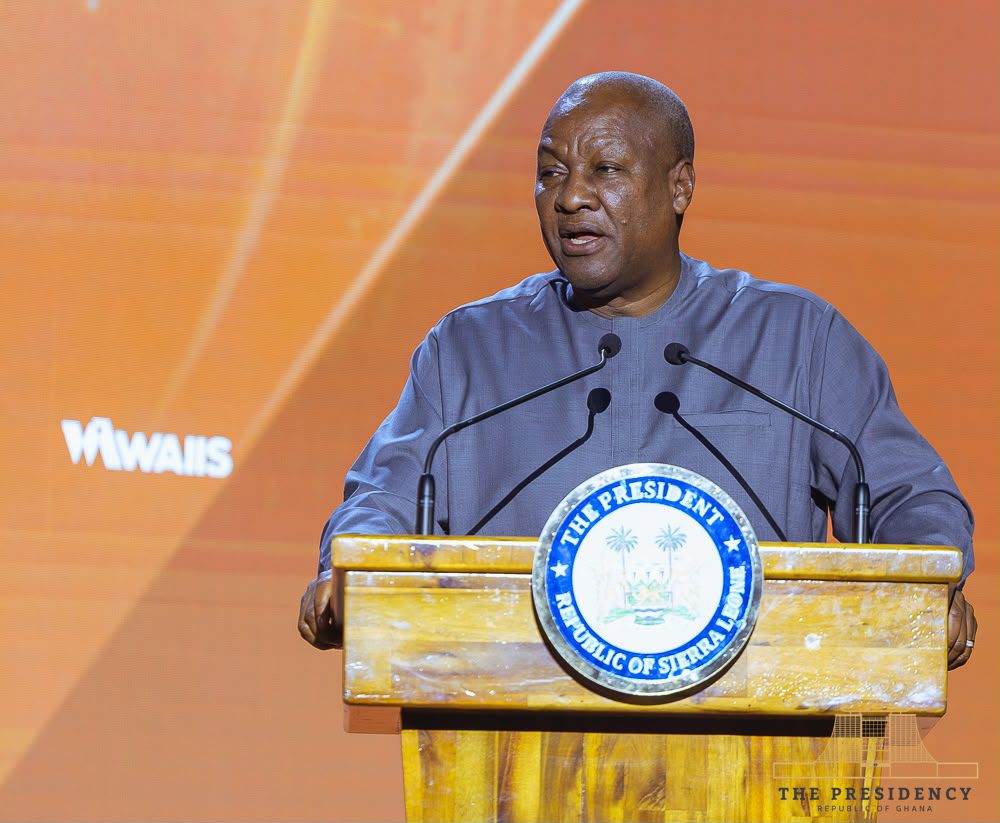
President John Dramani Mahama has called for increased investment in cross-border electricity transmission infrastructure, expressing optimism that electricity trade among West African countries could rise from the current seven per cent to nearly 30 per cent within the next five years.
He said stronger regional electricity cooperation would enable countries with excess power generation capacity to supply those experiencing shortages, reduce the cost of electricity and provide the reliable energy required to accelerate industrialisation.
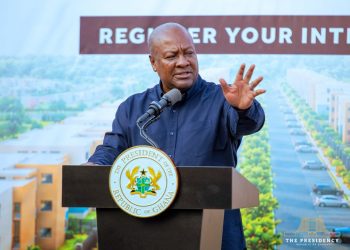
President Mahama made the call while addressing the 2026 West Africa Integration and Investment Summit (WAIIS) in Freetown, Sierra Leone, where he participated in discussions on energy, minerals and industrial value chains.
He identified inadequate investment in transmission infrastructure as a major constraint to the effective utilisation of the West African Power Pool, despite the region’s considerable energy generation potential.
According to him, West African countries should move away from independently investing in electricity generation facilities when they can benefit from a properly connected regional electricity market.
“We do not all have to build hydro dams. We do not all have to build gas plants. We do not all have to build power plants. We can exchange electricity amongst ourselves at tariffs that are affordable,” he stated.
President Mahama said the West African Power Pool had the potential to transform electricity supply across the sub-region if governments prioritised investments in interconnected national electricity grids.
He cited Sierra Leone and Burkina Faso as countries that could benefit from access to cheaper and more reliable electricity through regional power exchanges.
The Ghanaian leader disclosed that his country had made additional offshore gas discoveries and was expanding its gas-fired thermal generation capacity to provide more affordable electricity.
He explained that gas-fired thermal generation was comparatively cheaper than relying on diesel and fuel oil, creating opportunities for Ghana to contribute additional electricity to the regional market.
“Ghana has discovered more offshore gas. Just last week, we made another discovery, and we are doing a lot of gas-fired thermal, which is cheaper than using diesel or fuel oil,” he said.
President Mahama indicated that Ghana could potentially make up to 2,000 megawatts of excess electricity available to the West African Power Pool.
However, he cautioned that additional generation capacity would not translate into regional electricity supply without adequate transmission infrastructure to evacuate and distribute the power.
“If we have excess power, 2,000 megawatts, put it on the West African Power Pool. But the problem is if you put it on, where are you going to evacuate it to if you are not connected?” he questioned.
He therefore urged ECOWAS leaders and development finance institutions to prioritise investments in cross-border transmission lines and the interconnection of national electricity grids.
President Mahama expressed confidence that the necessary investments could increase electricity exchanges within West Africa to almost 30 per cent over the next five years.
“I believe that in the short term, if we do those investments that are necessary, we can increase electricity exchange within ourselves over the next five years to almost 30 per cent, and that should help industrialisation,” he said.
He stressed that affordable and reliable electricity remained fundamental to the region’s industrialisation ambitions, warning that investment commitments in manufacturing and other productive sectors would be difficult to realise without dependable power supply.
“You cannot industrialise when you do not have affordable power. So we might go into the deal room. We will strike all the deals, but if there is no power, we can’t do that,” President Mahama stated.
He called for stronger collaboration among governments, private investors and development finance institutions to mobilise the capital required to expand regional electricity infrastructure.
The President maintained that governments must provide the enabling environment for private sector investment, while regional and continental financial institutions should support strategic infrastructure projects with affordable long-term financing.
His remarks formed part of a broader call for practical economic integration at WAIIS 2026, which is bringing together African leaders, investors, business executives and development finance institutions to explore investment opportunities and partnerships across West Africa.
Story: Patrick Asford Boadu