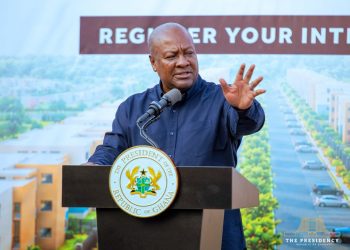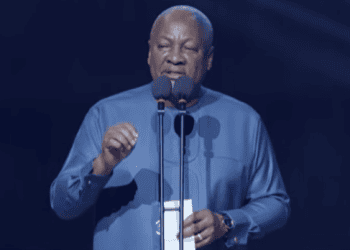
President John Dramani Mahama has challenged leaders of the Economic Community of West African States (ECOWAS) to urgently dismantle trade barriers and accelerate the implementation of regional trade agreements, warning that persistent restrictions continue to undermine economic integration and cross-border commerce.
He said intra-regional trade in West Africa remained between 12 and 15 per cent, despite decades of commitments to facilitate the free movement of goods and services among member states.
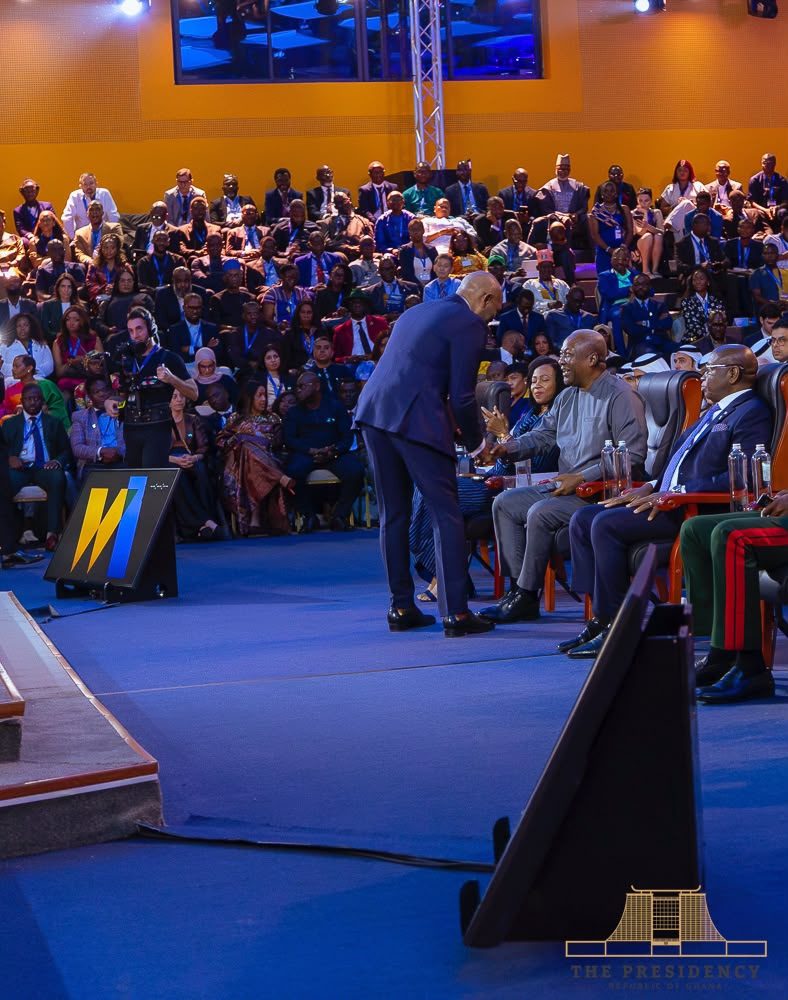
President Mahama made the remarks at the 2026 West Africa Integration and Investment Summit (WAIIS) in Freetown, Sierra Leone, where he called for renewed political commitment to remove obstacles preventing businesses from taking full advantage of the regional market.
He questioned why ECOWAS, established in 1975, had failed to achieve deeper economic integration despite being among the world’s oldest regional economic communities.
According to him, the region had made significant policy commitments but continued to struggle with their implementation, particularly in facilitating cross-border trade.
“Too much lip service has been paid to integration. But we all know what the obstacles to integration are. It is the political will and the leadership to remove those obstacles that we need now,” he stated.
ETLS implementation undermined by non-tariff barriers
President Mahama identified the ECOWAS Trade Liberalisation Scheme (ETLS), adopted in 1990, as one of the key regional instruments that should have significantly improved trade among member states.
The scheme was designed to facilitate the movement of qualifying products originating from ECOWAS countries without the payment of customs duties and other equivalent charges.
He explained that while the arrangement initially facilitated the movement of unprocessed agricultural products and other raw materials, its real test was the ability of manufacturers to trade finished products across national borders.
Under the scheme, qualifying manufactured products meeting the required rules of origin, including the stipulated local content requirements, can benefit from preferential access to markets across the sub-region.
However, President Mahama lamented that businesses continued to encounter multiple administrative and regulatory obstacles even after obtaining the necessary ETLS certification.
He cited complaints from Ghanaian business operators who face additional certification requirements when attempting to export their products into neighbouring countries.
“Several of our business people come to me and say, I have my ETLS certificate but when I get to the border in Nigeria, they ask me for NAFDAC certificate,” he said.
He clarified that the problem was not a criticism of any particular country but a reflection of the wider challenges confronting regional trade.
President Mahama said such requirements, coupled with numerous checkpoints and other non-tariff barriers, increase the cost of doing business and discourage traders from exploring markets within the region.
He illustrated the difficulties by pointing to the challenges businesses encounter when transporting goods between major West African commercial centres.
“Try to move goods from Freetown to Accra, and you will regret it and never try again. Try to move goods from Accra to Lagos. And you get so frustrated that you will not try again,” he stated.
Calls for removal of border restrictions
The President argued that West African governments must take decisive measures to eliminate unnecessary restrictions and create an efficient regional trading environment.
He warned that without addressing the obstacles confronting businesses, ECOWAS countries would continue to hold meetings and make declarations without achieving meaningful progress in economic integration.
He said governments must invest in the infrastructure and logistics systems required to facilitate the movement of goods across borders.
“Until we take the difficult decisions that open the highways, that put in the logistics so that we can move goods between our countries, we will continue to assemble every year and talk about this, go back home, come back, assemble, talk about it,” he cautioned.
President Mahama further called for improved roads, railways, ports and coordinated border management systems to reduce transportation costs and facilitate regional commerce.
He cited the proposed Abidjan-Lagos corridor as an important infrastructure project that could transform trade and connectivity across the sub-region.
Recalling his early years in politics, he said discussions about the corridor began around 1998 and 1999, yet the project remained uncompleted decades later.
He argued that completing the corridor would improve connectivity among major West African economies and create opportunities for further expansion of regional trade.
Mahama advocates stronger private sector participation
President Mahama maintained that governments alone could not drive the region’s economic transformation and called for stronger partnerships with private investors and development finance institutions.
He identified the private sector as a critical driver of regional trade, industrialisation and job creation, while urging governments to focus on creating an enabling environment for businesses.
“Government is the enabler. Government cannot be the operator,” he said.
He explained that governments must ensure macroeconomic stability, uphold the rule of law, strengthen accountability and provide the necessary infrastructure to attract investment.
He also called on development finance institutions, including the African Development Bank and the Africa Finance Corporation, to provide affordable long-term financing for strategic infrastructure and productive-sector investments.
President Mahama said removing trade barriers and improving regional connectivity would enable businesses to expand their operations, access larger markets and create employment opportunities for young people.
WAIIS must translate commitments into action
The President expressed hope that the West Africa Integration and Investment Summit would provide the platform for ECOWAS leaders, the Commission, private sector operators and financial institutions to agree on practical measures to accelerate regional integration.
He said the region could no longer afford to delay the implementation of policies and infrastructure projects that would unlock its economic potential.
President Mahama urged leaders to accept their responsibilities and demonstrate the political will required to remove longstanding barriers to trade.
He said the ultimate objective must be to build a regional economy in which businesses can move goods freely, access affordable infrastructure and compete effectively across national borders.
The WAIIS 2026, convened by Sierra Leonean President Julius Maada Bio, brings together African leaders, investors, development finance institutions and business executives to mobilise investment and advance strategic economic partnerships across West Africa.
Story: Patrick Asford Boadu