Ghana’s public debt has climbed to GH¢759.3 billion, representing 47.5% of Gross Domestic Product (GDP), while the country’s gross international reserves have fallen by US$1.7 billion since the beginning of the year.
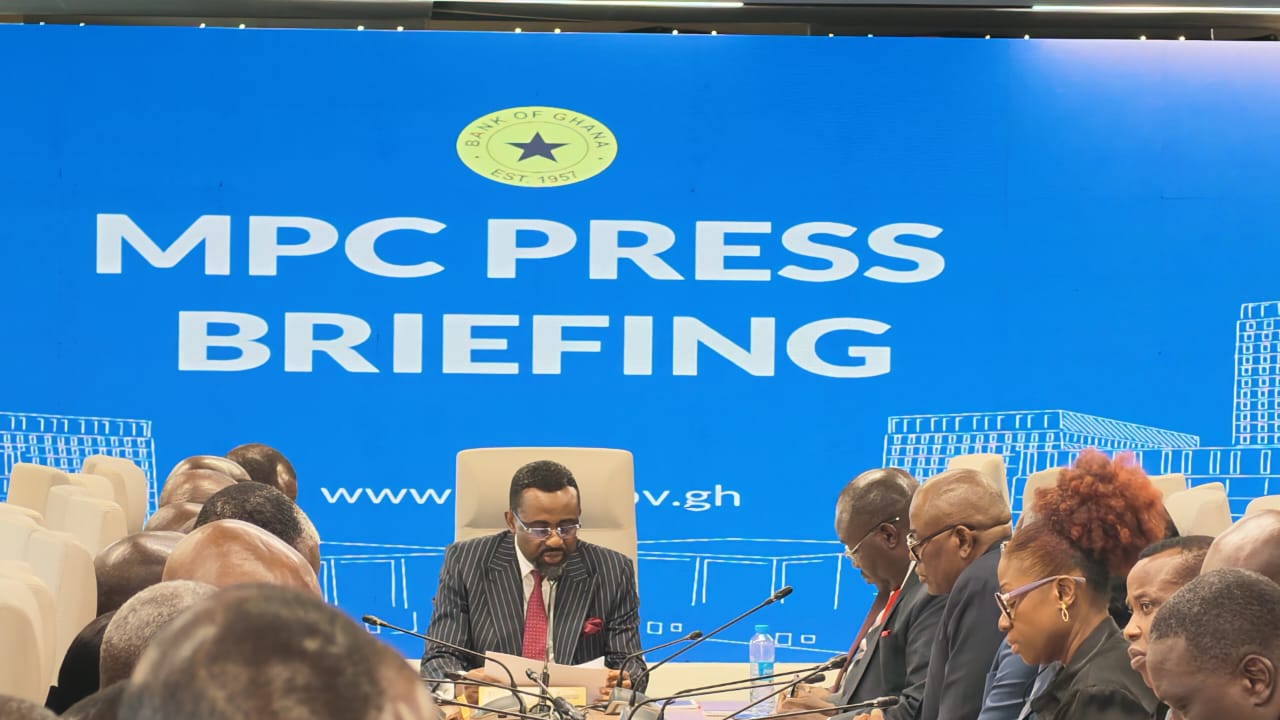
Bank of Ghana Governor Dr Johnson Pandit Asiama disclosed the figures at the Monetary Policy Committee’s press briefing, highlighting important developments in the country’s fiscal and external positions.
According to provisional figures, Ghana’s public debt increased from GH¢641.1 billion, equivalent to 44.7% of GDP, at the end of December 2025 to GH¢759.3 billion by October 2026.
Despite the increase, the Governor reported that fiscal consolidation remained on track.
The government’s overall fiscal deficit on a commitment basis stood at 1.0% of GDP during the first ten months of 2026, significantly below the programmed target of 3.0%.
The primary balance also recorded a surplus of 1.4% of GDP, approaching the full-year target of 1.5%.
On the external front, Dr Asiama revealed that Ghana’s gross international reserves had declined from US$13.8 billion at the end of December 2025 to US$12.1 billion as of November 17, 2026.
The decline reduced the country’s import cover from 5.7 months to approximately 4.4 months.
He attributed the pressure on reserves largely to increased external payment obligations associated with geopolitical tensions and foreign exchange demand.
However, Ghana’s trade performance remained strong, with the trade surplus increasing to US$13 billion between January and October 2026, compared with US$8.7 billion during the corresponding period in 2025.
Gold accounted for approximately 67% of total export earnings, making it the principal driver of export growth.
The Governor maintained that the external sector remained sufficiently strong to provide buffers against future economic shocks, despite uncertainties in global financial and commodity markets.