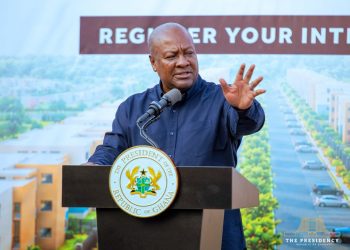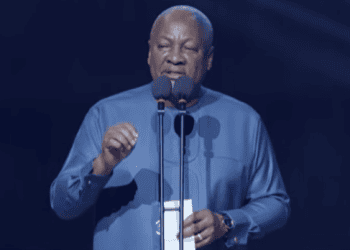
President John Dramani Mahama has raised concerns over Ghana’s continued dependence on imported food products, disclosing that the country spends approximately US$3 billion annually on food imports despite its considerable agricultural potential.
He has called for increased investment in domestic food production, agro-processing and value addition to reduce the import bill, create employment opportunities and retain more wealth within the Ghanaian economy.
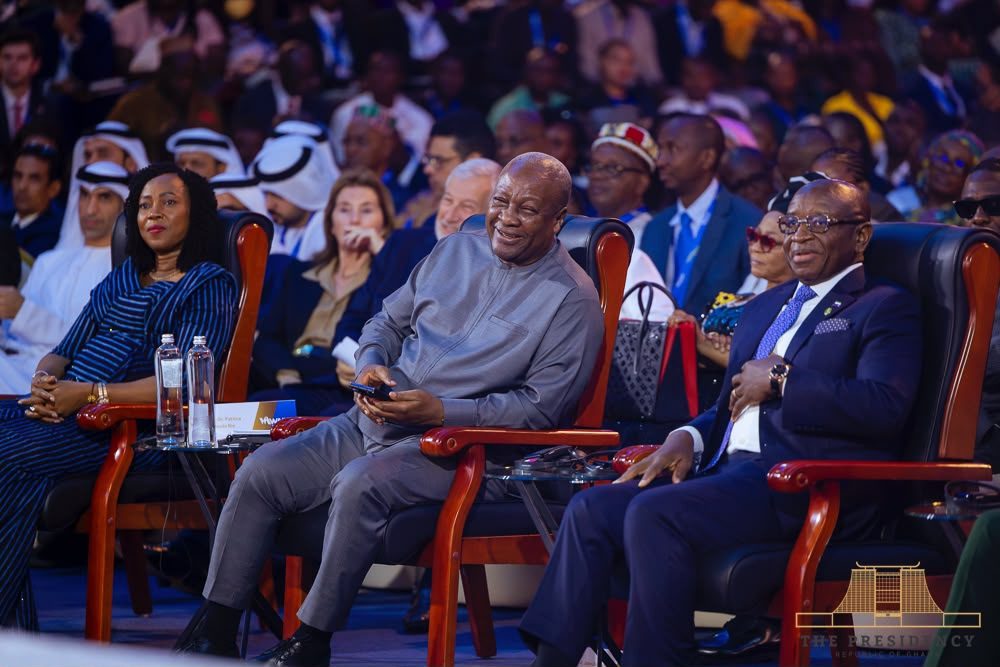
President Mahama made the remarks while addressing the 2026 West Africa Integration and Investment Summit (WAIIS) in Freetown, Sierra Leone, where he outlined agriculture as one of the critical sectors requiring urgent investment to accelerate economic transformation across West Africa.
He questioned why countries in the sub-region continued to import basic food products when they possessed the arable land, human resources and climatic conditions needed to produce them locally.
Using Ghana as an example, the President disclosed that the country imports approximately US$3 billion worth of food products annually, including rice, poultry and chicken.
He expressed concern about the decline in domestic poultry production, recalling a time when households in Ghana largely depended on locally raised chickens.
“When we were young, the chickens were all over the house, running all over. If it was time to eat a chicken, our mothers and fathers would commission us to chase one of the fowls and bring it,” he recalled.
President Mahama questioned why Ghana, despite its agricultural resources, had become heavily dependent on imported poultry products.
“We were self-sufficient in chicken. Who needed to import chicken? Yet, today, if you look at the amount of poultry my own country imports, I mean, what is the rocket science in growing poultry?” he asked.
He identified rice, sugar and poultry as some of the products that African countries could produce in sufficient quantities to reduce their dependence on imports.
Calls for investment in agro-processing
President Mahama stressed that increasing agricultural production alone would not solve the problem of food imports unless governments and the private sector also invested in processing infrastructure.
He explained that farmers required access to markets and processing facilities to ensure that their produce could be transformed into finished products capable of competing with imported alternatives.
According to him, supporting farmers with fertiliser and other agricultural inputs without establishing the necessary processing capacity would limit the benefits of increased production.
He cited rice production as an example, arguing that domestic farmers must be supported with the infrastructure required to process locally produced rice into finished products for consumers.
“If you give the farmers fertilizer, you support them, they produce the rice, and then you leave them to their devices, with no processing facilities, people will eat imported rice,” he stated.
He added: “So, we must either put in the processing capacity or enable the private sector to do that.”
The President therefore called for stronger partnerships between governments, financial institutions and private investors to establish agro-processing facilities and develop competitive agricultural value chains.
Mahama calls for revival of oil palm production
President Mahama also highlighted the irony of West African countries importing palm oil from Malaysia and Indonesia, despite the crop’s historical origins in the region.
He observed that oil palm seeds were taken from West Africa and introduced to Asia, where countries had developed large-scale production and processing industries.
“That seed, in history, was taken from West Africa and sent to Asia. Today it is a shame that we import palm oil from Malaysia and Indonesia when originally that seed was taken from here and sent there,” he said.
He argued that West Africa had the available arable land to develop a competitive oil palm industry capable of meeting domestic demand and supplying international markets.
The President called for deliberate investment in agricultural production and processing to reverse the trend and position the region as a major food-producing and agro-industrial hub.
Agriculture as a source of jobs and economic prosperity
President Mahama maintained that reducing food imports and increasing local value addition were essential to creating economic opportunities for the region’s growing youth population.
He warned that continued dependence on imported products resulted in the transfer of economic value from African economies to foreign producers, while limiting opportunities for local businesses and farmers.
Referencing Nigerian industrialist Aliko Dangote, he said: “Any time we use an imported product, you’re exporting value and bringing poverty back home.”
He stressed that African countries must prioritise local production and processing to ensure that more of the wealth generated from consumption remains within their economies.
The President’s remarks formed part of his broader call at WAIIS 2026 for African governments to mobilise investment into agriculture, energy, mineral processing and infrastructure as part of efforts to accelerate regional integration and industrialisation.
The summit, convened by Sierra Leonean President Julius Maada Bio, brings together African Heads of State, investors, development finance institutions and business leaders to identify strategic investment opportunities and partnerships across West Africa.
Story: Patrick Asford Boadu