The consequences of poor sanitation weigh heavily on communities across Ghana, and Ablekuma West is no exception. Choked gutters, indiscriminate dumping of refuse, and inadequate waste management continue to undermine public health, stretch hospitals, and drain the national economy.
Health experts warn that diseases such as cholera, malaria, and diarrhoea thrive where sanitation fails. In Ablekuma West, frequent outbreaks and clogged drainage systems have led to higher healthcare costs and lost productivity. Hospitals are forced to divert scarce resources to treat preventable illnesses, while families lose income caring for the sick. Economists say the impact is far-reaching, reducing national output and placing additional pressure on government budgets.
At a community engagement event in Gbegbeyise, Municipal Chief Executive Hon. Nii George Kpakpo Allotey stressed that the Assembly is determined to turn the tide. He said improving sanitation was not only a health matter but a duty to protect livelihoods and secure the municipality’s future.
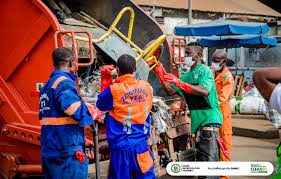
To address the crisis, the Ablekuma West Municipal Assembly has introduced a comprehensive package of interventions aimed at cleaning up the municipality and safeguarding public health. Among the key measures are:
Waste segregation: Encouraging households and institutions to separate waste at the source for easier collection and recycling.
Partnership with Tricycle operators (Aboboyaa): Collaborating with local transport operators to ensure timely evacuation of waste from homes.
Monthly clean-up exercises: Organising regular clean-ups in line with the national initiative launched by the President to keep communities free from filth.
Desilting of gutters and drains: Deploying equipment and logistics to clear choked drains and reduce flooding during rains.
Law enforcement: Ensuring strict compliance with sanitation laws to deter indiscriminate dumping and enforce proper waste disposal.
Community education: Using information centres and information vans to sensitise residents about the dangers of poor sanitation and the benefits of keeping their environment clean.
Provision of waste bins: Distributing bins to households to help manage refuse responsibly until waste trucks arrive for collection.
Hon. Allotey emphasised that these efforts are being pursued with community involvement, traditional leaders, and civil society. The Assembly, he said, is committed to creating a culture of cleanliness where every resident plays a part.
With determined leadership, active citizen participation, and strict enforcement, the Assembly believes Ablekuma West can shed its sanitation burden and become a model for other municipalities.