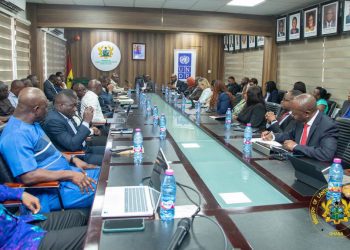
In a move aligning regional trade ambitions with global climate action, the African Continental Free Trade Area (AfCFTA) has underscored its commitment to the decarbonization of the maritime industry. At the Green Shipping Corridor Pre-Feasibility Study Consortium Incubation Workshop in Accra, Roslyn Ngeno, a senior investment expert , AFCTA secretariat, highlighted the initiative as a crucial step toward realizing the vision of a sustainable and integrated African economy.
She emphasized that the current trajectory of maritime emissions poses a significant threat to climate and sustainable development objectives, making immediate and concerted action an imperative. The AfCFTA’s work, she affirmed, anchored in the Pan-African vision of an integrated and prosperous Africa, champions industrial development, structural economic transformation, and sustainable growth. The recently adopted AfCFTA Protocol on Investment actively encourages investments that mitigate greenhouse gas emissions and promote renewable energy and climate-friendly technologies.
Roslyn Ngeno revealed that the vision aligns perfectly with the objectives of Green Shipping Corridors, which are designed to pilot and demonstrate zero-emission fuels and technologies on specific trade routes. She noted that Africa’s abundant solar, wind, and geothermal resources are not just a blessing but a strategic asset that can position the continent as a global leader in providing low- and zero-carbon maritime fuels, fostering energy security and generating substantial income.
The workshop, according to the Investment Expert serves as a preliminary assessment to map potential green corridors within the region, identifying those with the highest maturity, technological readiness, and a conducive regulatory environment. The collective effort, she explained is to solidify a concrete list of potential corridors for deeper assessment and eventual implementation.
She stated that Ghana’s proactive stance in this transition is highly commendable as the nation has recently commenced work on a National Action Plan to cut greenhouse gas emissions from shipping, aligning with the IMO’s GHG Strategy. This commitment is further evidenced by Ghana’s existing National Energy Transition Framework and significant investments in related infrastructure, such as multi-products pipelines, which indicate a clear move toward efficient transport of critical resources.
She further acknowledged the challenges of transitioning to a greener maritime economy, including the high capital costs of new technologies and the absence of specific regulatory frameworks. However, the benefits are far-reaching. For fuel producers, these corridors enhance understanding of technology and safety requirements and foster innovative business models. For ports like Tema and Takoradi, the initiatives will elevate their branding as leaders in sustainable practices and inform strategic decisions for a low-carbon future. Ship operators and cargo owners will find new opportunities to expand sustainable service lines and leverage incentives. For governments and regulators, the study will be instrumental in mapping policy frameworks and assessing the equitable impacts of the transition.
In conclusion, her speech framed the workshop as a “collaborative incubation space” where the groundwork is being laid for a sustainable and prosperous maritime future for Ghana and the entire African continent. The collective efforts, she noted, directly advance the objectives of the AfCFTA and the ambitious vision of Agenda 2063.
Story By: Eugenia Ewoenam Osei