The Ghana National Gas Company (GNGC) is demonstrating innovation and efficiency in its operations, earning high marks from the Chamber of Petroleum Consumers (COPEC).
However, key issues relating to inter-agency mandate confusion and inconsistent cash flow are stalling its full potential, according to comments made by COPEC’s Executive Secretary, Duncan Amoah.
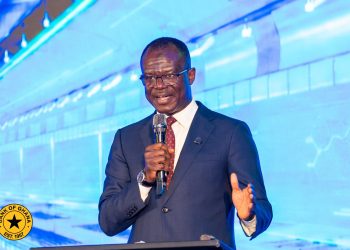
Mr. Amoah’s comments, made during a recent engagement with the media, highlighted a shift in the country’s energy security since the establishment of Ghana Gas. “We are looking at a much more efficient company that delivers to the benefit of the Ghanaian,” he stated. While acknowledging that Ghana Gas has historically been a “silent operator,” he praised their efforts, noting, “You have power on now, and for most of the country, we are enjoying reliable power. we should credit them for the work they are doing to keep supplying LNG to the power plants.”
He pointed to GNGC’s strategic initiatives, including collaborations with stakeholders like Axel (AXA) and Sunon Asogli, to build integrated pipelines that deliver cleaner gas at a more affordable rate. “In the past, you would hear we owe NGAS, Nigeria Gas, so much, and for which reason we would be sleeping in darkness. I think that with the coming on stream of Ghana Gas, it’s becoming not such a feature as it used to be any longer,” he added, expressing COPEC’s support for the company to fulfill its national mandate.
Despite the successes, Duncan Amoah stressed two critical areas requiring urgent attention from the Ministry of Energy and the Presidency. He noted a functional “interconnectedness” between Ghana Gas and older institutions like GNBC, leading to operational uncertainty. “I think that the Minister for Energy, together with Mr. President, will need to look at a new gas master plan that clearly demarcates their operational remit,” he advocated. Given that gas is a “very useful but dangerous product,” its handling should not be fragmented across multiple agencies.
He insisted that if GNGC is mandated to manage gas transmission infrastructure, it must be backed by adequate authority to operate without undue interference. Furthermore, the Executive Secretary highlighted the adverse impact of outstanding legacy debts and inconsistent cash flows on GNGC’s ability to invest and operate. “You are simply stifling and killing them (Ghana Gas) if they operate without getting the monies for which they have produced,” Amoah warned.
He welcomed the implementation of the Cash Waterfall Mechanism (CWM), which appears to be improving revenue collection across the power sector. He further advocated for a net-off program to allow Ghana Gas to offset its debts to institutions like GNRA, ensuring that the remaining funds are promptly paid to them. “We want to build world-class institutions that are able to stand on their own, even without governmental budgetary funding. But that can only be done when we pay for what they deliver,” he asserted.
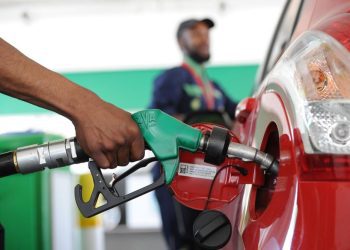
Turning to the domestic LPG market, the Executive Secretary expressed hope that the completion of the gas processing plant’s second phase would increase GNGC’s market dominance, potentially enabling it to drive down prices. “We from COPEC insist that the gas we produce locally should at all times be cheaper than that which we have brought from across Europe,” he said, calling on Ghana Gas to fulfil its obligation to lower the cost of domestic LPG.
Addressing the Cylinder Recirculation Model (CRM) policy, Mr. Duncan Amoah expressed reservations about its current structure, arguing that the need to purchase pre-filled bottles clashes with the economic reality of the average Ghanaian. “The economic disposition of the average Ghanaian is such that they don’t have too much resources at their disposal every single time to pick an already prefilled bottle,” he explained.
He criticized the CRM’s current challenge of expecting consumers to afford a GH¢300 pre-filled bottle when the existing model allows them to buy in smaller, affordable quantities like GH¢20 or GH¢30. He concluded that the pre-existing retail model, which allows consumers to buy even GH¢10 worth of gas, should be preserved.
Simultaneously, he called on authorities to strictly enforce the use of visible, certified weigh-in scales and electronic display boards at all LPG outlets to ensure pricing transparency and combat fuel theft.
Story By: Eugenia Ewoenam Osei