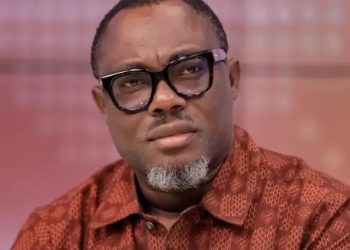
Legal practitioner George Sarpong has warned that operators of illegal small-scale mining, locally known as galamsey, are now funding political parties and parliamentary candidates at the local level. He cautioned that this trend poses a grave threat to Ghana’s democratic governance.
Sarpong revealed that whenever enforcement agencies attempt to clamp down on illegal miners, Members of Parliament routinely intervene by instructing police commanders to abort operations. Drawing parallels to national security challenges in Nigeria and Sierra Leone, he noted that both nations suffered severely when illicit capital infiltrated mainstream politics.
If Ghana fails to properly manage political party and campaign financing, Mr. Sarpong cautioned, the country will soon witness a scenario where the illegal miners themselves run for office.
He warned that Ghana risks handing state authority to criminal actors if the current trend remains unchecked, endorsing a statement by security analyst Prof. Kwesi Aning that this infiltration is already underway. Failure to regulate campaign finance exposes the political system to capture by organized crime and drug lords, effectively pricing public-spirited citizens out of contesting elections.
Sarpong further warned of the constitutional risks if galamsey financiers secure seats in Parliament. A compromised legislature could enact restrictive legislation designed to silence anti-galamsey advocates and curb investigative journalism.
If these operators unite in Parliament to silence critics, he stated, they can easily pass laws intended to limit media inquiries into their activities. He urged immediate legislative intervention to regulate campaign financing as a critical first step to protect the political system from illicit influence.
Speaking on the core principles of professional journalism, Sarpong emphasized that factual truth alone is insufficient without ethical reporting, detailing the essential distinctions between fairness, balance, and objectivity.
Fairness relates to the gathering process, whereas balance concerns the final output. Fairness requires giving every party an equitable opportunity to speak under conditions where they can express themselves freely without intimidation or spatial limitations. Balance, on the other hand, demands proportional representation in the actual report. If a news story details twelve specific allegations, it must also publish the respondent’s specific answers to each individual point rather than issuing a brief, generic denial.
Objectivity requires journalists to recognize and actively suppress their personal biases so these preferences do not distort their reporting. Under the “theory of fair pairs,” a journalist’s analytical standards must remain consistent across similar cases regardless of who is involved; actions that warrant criticism for one group must draw the exact same response when committed by another.
Finally, while legal frameworks do not govern factual interpretation, different media outlets may interpret identical events differently based on their editorial perspectives. Consumers seeking comprehensive insight must therefore engage with multiple sources to gain a complete picture of complex issues.
Unregulated campaign financing is opening the door for illegal miners to capture political power. Legal practitioner George Sarpong warns that without urgent reforms, criminal actors will soon hold state authority and enact laws to silence the media.
Eugenia Ewoenam Osei